







 :
:#OilPricesRise
The Fire This Time: Oil at $110, Iran at War & What It All Means for Crypto
A Full Discussion for Gate Square — April 2026
Setting the Stage: This Is Not a Drill
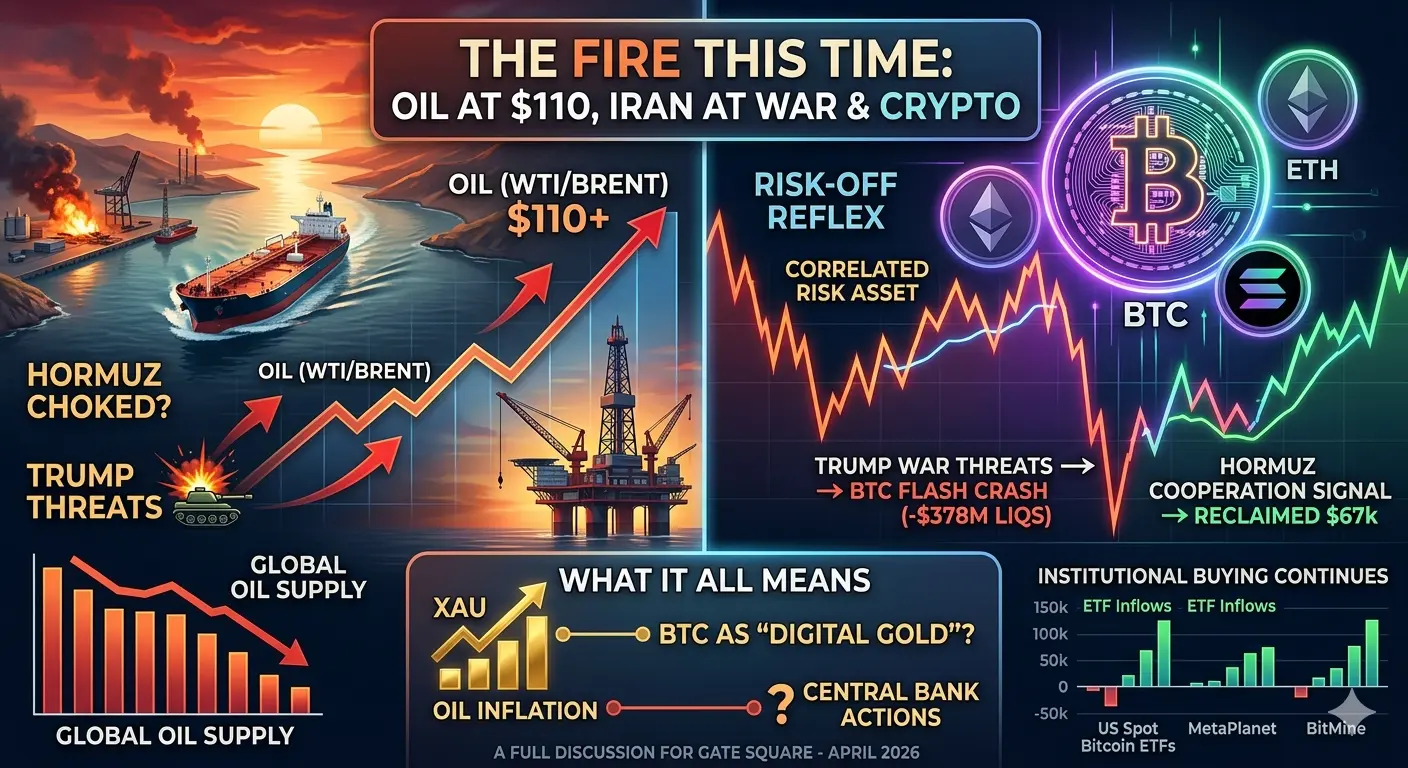
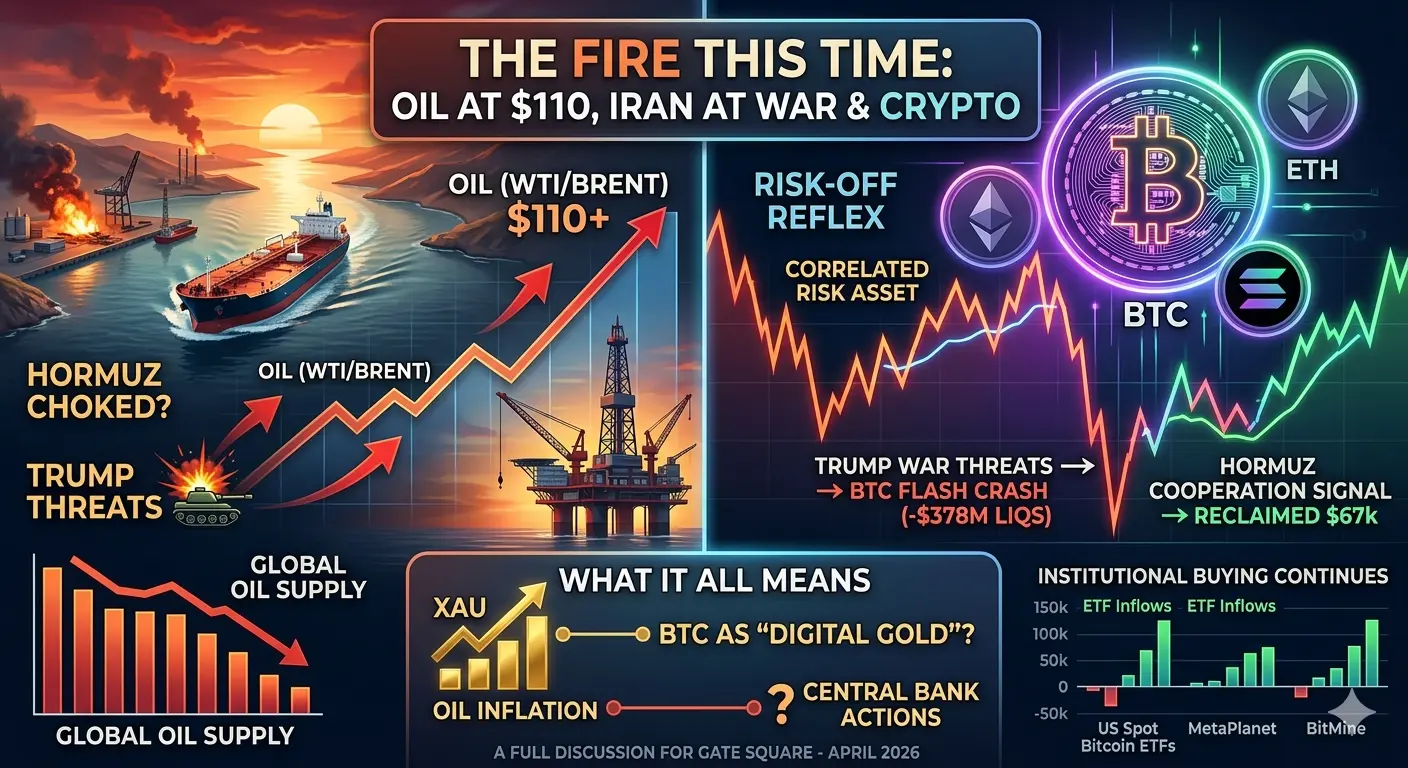
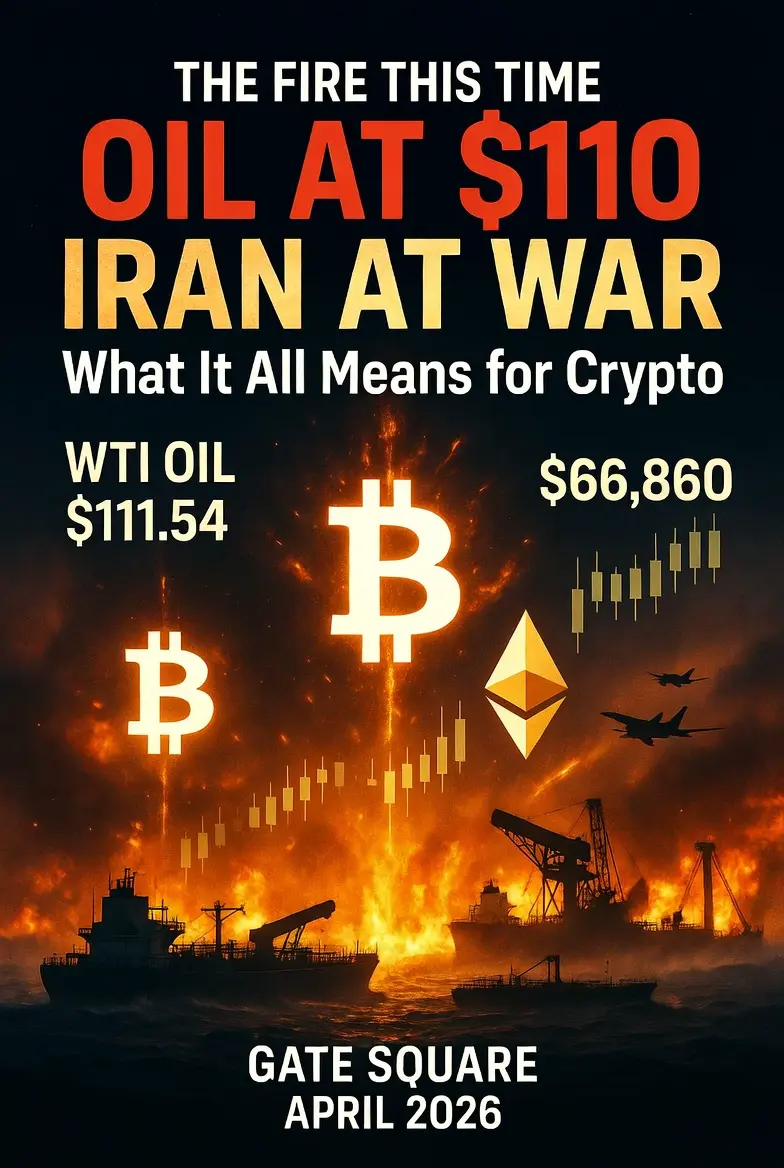
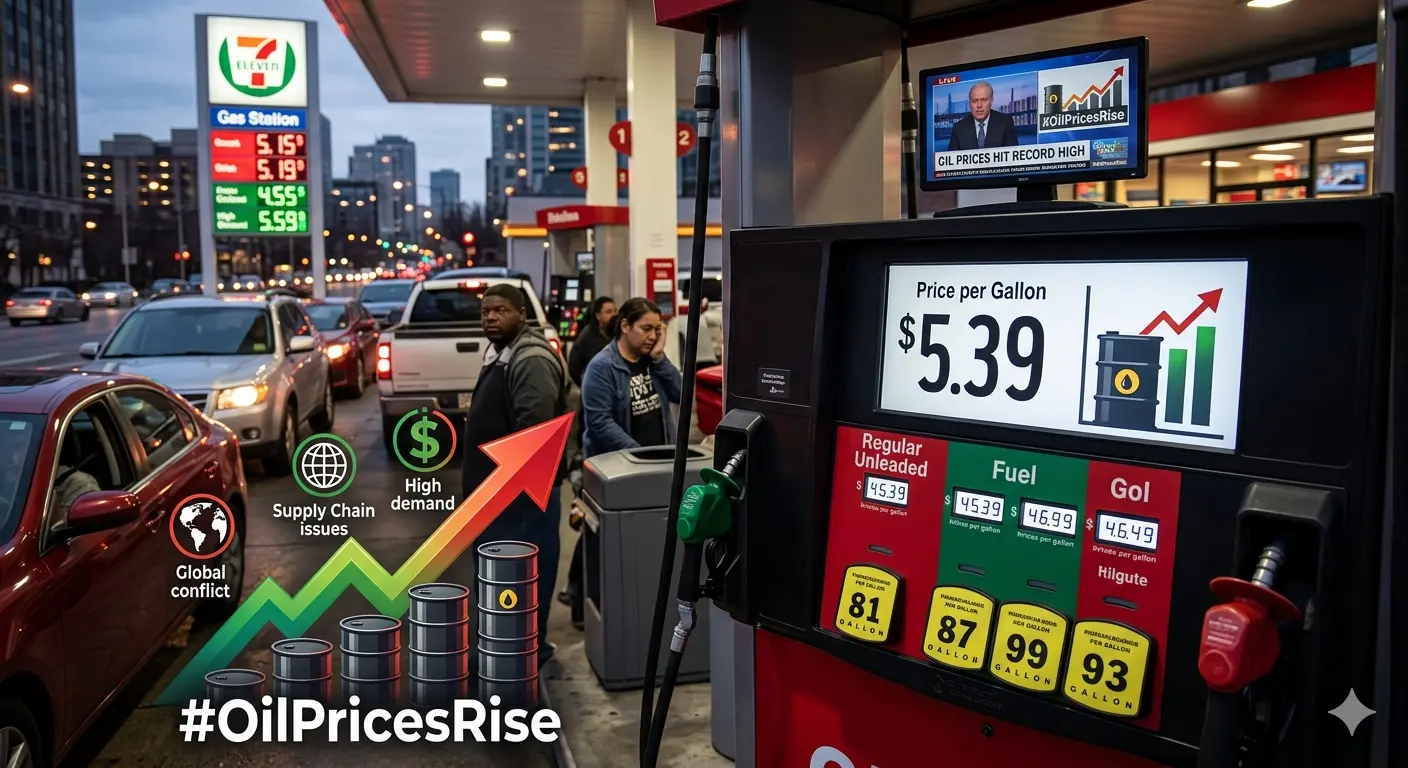
Let us be absolutely direct about what is happening right now. This is not a regional skirmish. This is not sabre-rattling between diplomats. The US and Israel launched coordinated military strikes against Iran on February 28, 2026. What followed was the most violent geopolitical rupture the energy markets have seen since 2022 — and arguably the most consequential since the 1973 oil embargo. Iran's immediate response was to effectively choke the Strait of Hormuz, the narrow waterway through which roughly one-fifth of the world's entire oil and liquefied natural gas supply passes every single day. The attack on the bridge in Karaj on April 3 is not an isolated incident. It is part of a cascading pattern of escalation that now stretches from Tehran to the Red Sea to the waters off Dubai, where Iran targeted a Kuwaiti tanker just days ago. WTI crude settled at $111.54 on April 3, up +11.94% in a single week — the biggest single-week move since 2020. Brent crossed $109. US gasoline topped $4 per gallon for the first time since 2022. Macquarie analysts are openly modelling a path to $200 per barrel if two more months of active warfare unfold. This is the context. Everything else flows from here.
Question 1: Is the Conflict Becoming Uncontrollable?
The honest answer is: the escalation ladder has never felt more fragile. Consider the sequence. The US and Israel struck Iran. Iran closed Hormuz. Trump threatened to obliterate Iran's electricity plants, oil facilities, and desalination infrastructure. Iran targeted a Kuwaiti tanker. Houthi forces in Yemen launched missiles at Israel. 2,500 US Marines and hundreds of special operations forces arrived in the region. Pakistan brokered a meeting and said peace talks were coming "in the coming days." Oil briefly pulled back $5 on Strait of Hormuz cooperation signals from Iran-Oman. Then Trump declared the war would continue. Oil surged back above $115 intraday before settling. What this back-and-forth reveals is a market that is pricing uncertainty, not certainty. Neither side has yet crossed the threshold that would make a full-scale ground invasion politically survivable domestically. There is still a diplomatic window. Pakistan's role as facilitator is real. Oman has been in active contact with Tehran. But the risk of miscalculation is structural. When military assets are moving at the speed they currently are — airstrikes, tanker attacks, missile salvos, Marine deployments — the gap between "controlled escalation" and "uncontrollable escalation" narrows dramatically. The $200 oil scenario from Macquarie is not an absurdist forecast. It is what the math looks like if Hormuz stays effectively closed through June. The conflict is not yet uncontrollable. It is, however, one bad decision away from becoming so.
Question 2: Did You Catch This Oil Rally? Strategy Breakdown
Let's talk about how traders have been navigating this. The Setup Was Visible — If You Were Watching Hormuz. When the initial US-Israel strikes hit on February 28, Brent was trading around $73 per barrel. That was the entry level for anyone who understood one simple thesis: a war involving Iran almost certainly disrupts Hormuz, and Hormuz disruption means supply shock, and supply shocks historically produce parabolic oil moves. The thesis played out almost exactly. Brent surged more than 50% through March, WTI posted its biggest monthly gain since 2020.
Strategies That Worked: Long crude futures on the initial strike news offered straightforward directional trades, entry at $73-75 and exit above $100 was a multi-week opportunity with excellent risk/reward. Energy equities and ETFs surged: BP, Shell, and US shale producers with domestic production insulated from Hormuz all saw strong moves. Volatility plays worked as implied volatility on crude options exploded. Gate TradFi — XAUUSD and energy CFDs — offered crypto-native traders cross-asset exposure; gold and energy correlated strongly during the conflict.
The Trap to Avoid: Chasing the rally after a 50%+ move is dangerous. Oil at $111 is pricing in sustained supply disruption. Peace signals like the Iran-Oman Hormuz protocol on April 2 can trigger violent retracements in minutes. Position sizing matters more than direction. If trading oil-adjacent instruments now, size conservatively and keep stop-losses tight.
Question 3: How Does This Conflict Impact the Crypto Market?
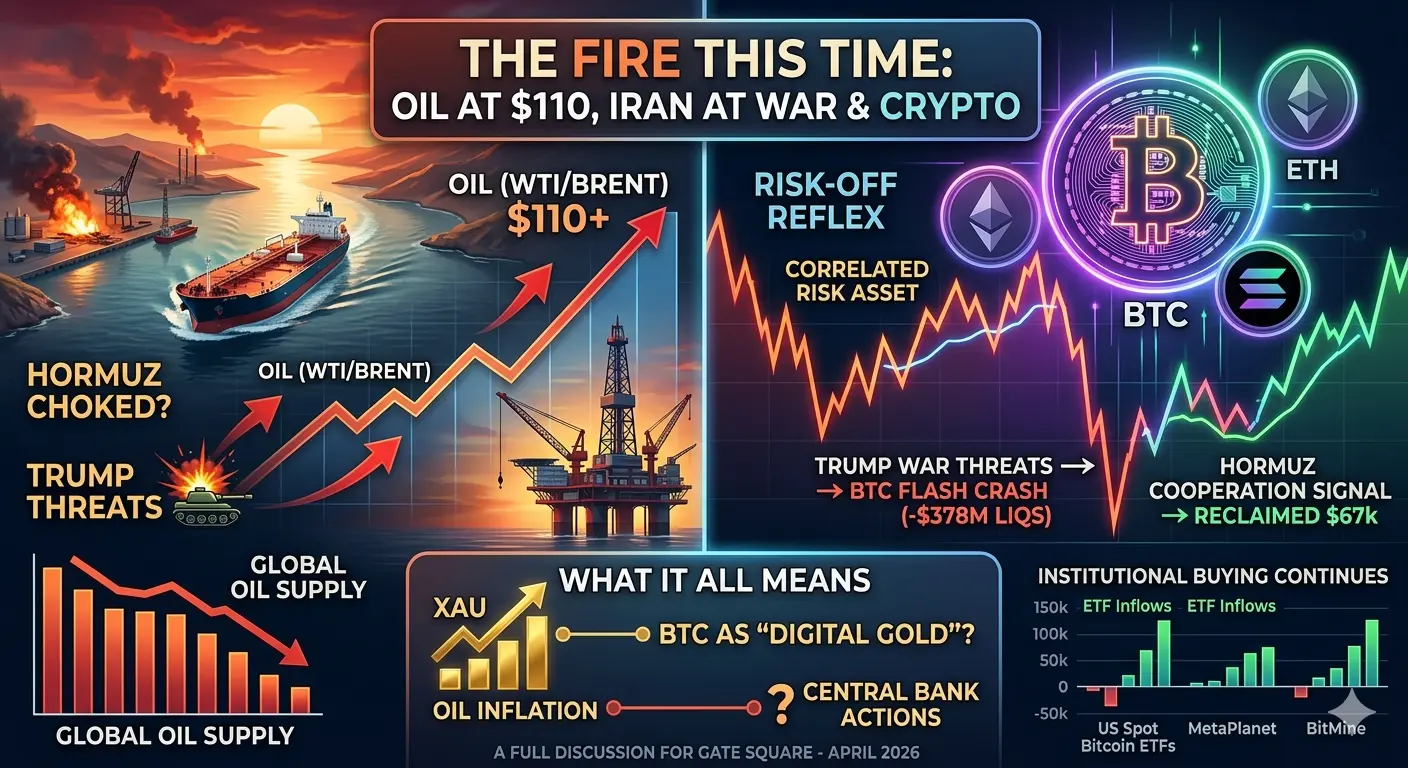
This is the question that matters most for this community, and the answer is complex. The Immediate Reaction: When Trump's renewed war threats hit on March 30, BTC fell sharply, briefly breaking below key support. ETH dropped below $2,000. Over $378 million in BTC and ETH positions were liquidated in 24 hours, mostly long positions. This is the risk-off reflex: sell risk, buy safety. Crypto, equities, and emerging market assets all fell together. Oil and gold rose.
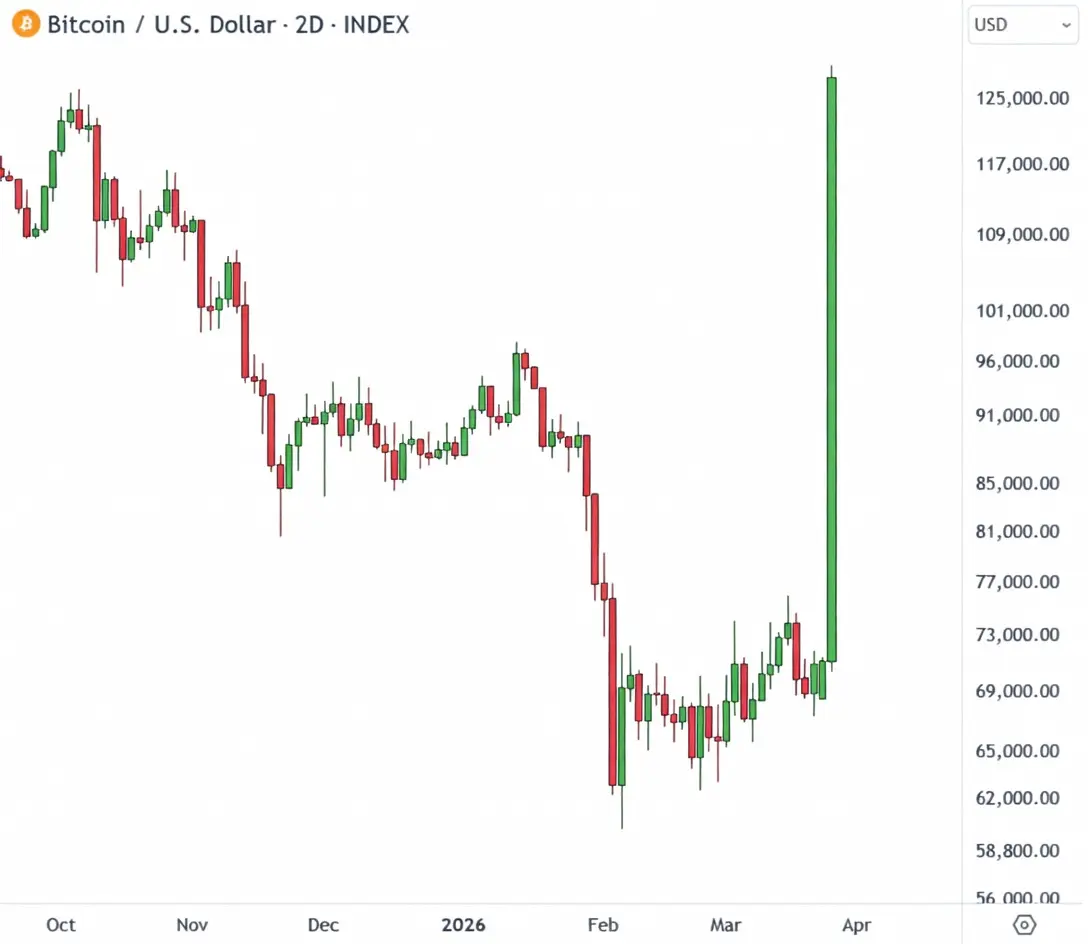
The Recovery Signal: Iran-Oman Hormuz cooperation on April 2 triggered Bitcoin reclaiming $67,000 and ETH above $2,000, in lockstep with oil pullback and Nasdaq recovery. Crypto is trading as a correlated risk asset, not as an uncorrelated hedge. BTC at $66,860, flat 24h (+0.3%), 7-day gain +1.28%, Fear & Greed index 11 (Extreme Fear). 30-day return -1.8%, 90-day -28.8%.
The Medium-Term Picture: Bearish pressures: high oil → higher inflation → restrictive central banks → headwind for risk assets. Institutional BTC liquidation in late March, ETF outflows -$173.73M on April 1. Bullish: MetaPlanet bought 5,075 BTC in Q1 (total 40,177 BTC), US spot Bitcoin ETFs bought $1.32B in March, BitMine added 71,179 ETH, Ethereum Foundation staking 70,000 ETH. Large BTC transfers into exchanges suggest positioning, not panic.
Structural argument: if conflict persists, inflation stays elevated, Middle Eastern energy erodes, dollar pressured by war, BTC as "digital gold" gains relevance. Short-term: sell-off; medium-term 3-6 months: depends on peace; long-term: BTC as sovereign risk hedge. Gold already moved, BTC historically follows.
Where Are Markets Going From Here?
Oil: Base case $100-115 if Hormuz constrained. Ceasefire: $85-90. Further strikes: $130-150+, $200 tail risk.
BTC: Cautious but not broken. MA7 < MA30 < MA120 on 4H/daily, MACD divergence suggests selling momentum slowing. $66,000-67,000 is current battle line. Break $68,500 on volume signals re-accumulation. Risk: institutional de-risking if oil >$120 and equities sell off.
ETH: Underperforming BTC (-0.19% vs +0.3% 24h), but institutional staking supports medium term. Sentiment divided: 45% positive vs 41% negative, reflecting macro uncertainty.
Final Thought
Middle East conflict is macro, not crypto, but macro drives crypto’s ceiling and floor. Traders must read dominant forces: risk-off or accumulation-on-dips. Fear & Greed 11 closer to bottom; conditions forming. Watch Hormuz, Trump's statements, BTC ETF flows. Gate TradFi offers oil exposure in crypto ecosystem.
The Fire This Time: Oil at $110, Iran at War & What It All Means for Crypto
A Full Discussion for Gate Square — April 2026
Setting the Stage: This Is Not a Drill
Let us be absolutely direct about what is happening right now. This is not a regional skirmish. This is not sabre-rattling between diplomats. The US and Israel launched coordinated military strikes against Iran on February 28, 2026. What followed was the most violent geopolitical rupture the energy markets have seen since 2022 — and arguably the most consequential since the 1973 oil embargo. Iran's immediate response was to effectively choke the Strait of Hormuz, the narrow waterway through which roughly one-fifth of the world's entire oil and liquefied natural gas supply passes every single day. The attack on the bridge in Karaj on April 3 is not an isolated incident. It is part of a cascading pattern of escalation that now stretches from Tehran to the Red Sea to the waters off Dubai, where Iran targeted a Kuwaiti tanker just days ago. WTI crude settled at $111.54 on April 3, up +11.94% in a single week — the biggest single-week move since 2020. Brent crossed $109. US gasoline topped $4 per gallon for the first time since 2022. Macquarie analysts are openly modelling a path to $200 per barrel if two more months of active warfare unfold. This is the context. Everything else flows from here.
Question 1: Is the Conflict Becoming Uncontrollable?
The honest answer is: the escalation ladder has never felt more fragile. Consider the sequence. The US and Israel struck Iran. Iran closed Hormuz. Trump threatened to obliterate Iran's electricity plants, oil facilities, and desalination infrastructure. Iran targeted a Kuwaiti tanker. Houthi forces in Yemen launched missiles at Israel. 2,500 US Marines and hundreds of special operations forces arrived in the region. Pakistan brokered a meeting and said peace talks were coming "in the coming days." Oil briefly pulled back $5 on Strait of Hormuz cooperation signals from Iran-Oman. Then Trump declared the war would continue. Oil surged back above $115 intraday before settling. What this back-and-forth reveals is a market that is pricing uncertainty, not certainty. Neither side has yet crossed the threshold that would make a full-scale ground invasion politically survivable domestically. There is still a diplomatic window. Pakistan's role as facilitator is real. Oman has been in active contact with Tehran. But the risk of miscalculation is structural. When military assets are moving at the speed they currently are — airstrikes, tanker attacks, missile salvos, Marine deployments — the gap between "controlled escalation" and "uncontrollable escalation" narrows dramatically. The $200 oil scenario from Macquarie is not an absurdist forecast. It is what the math looks like if Hormuz stays effectively closed through June. The conflict is not yet uncontrollable. It is, however, one bad decision away from becoming so.
Question 2: Did You Catch This Oil Rally? Strategy Breakdown
Let's talk about how traders have been navigating this. The Setup Was Visible — If You Were Watching Hormuz. When the initial US-Israel strikes hit on February 28, Brent was trading around $73 per barrel. That was the entry level for anyone who understood one simple thesis: a war involving Iran almost certainly disrupts Hormuz, and Hormuz disruption means supply shock, and supply shocks historically produce parabolic oil moves. The thesis played out almost exactly. Brent surged more than 50% through March, WTI posted its biggest monthly gain since 2020.
Strategies That Worked: Long crude futures on the initial strike news offered straightforward directional trades, entry at $73-75 and exit above $100 was a multi-week opportunity with excellent risk/reward. Energy equities and ETFs surged: BP, Shell, and US shale producers with domestic production insulated from Hormuz all saw strong moves. Volatility plays worked as implied volatility on crude options exploded. Gate TradFi — XAUUSD and energy CFDs — offered crypto-native traders cross-asset exposure; gold and energy correlated strongly during the conflict.
The Trap to Avoid: Chasing the rally after a 50%+ move is dangerous. Oil at $111 is pricing in sustained supply disruption. Peace signals like the Iran-Oman Hormuz protocol on April 2 can trigger violent retracements in minutes. Position sizing matters more than direction. If trading oil-adjacent instruments now, size conservatively and keep stop-losses tight.
Question 3: How Does This Conflict Impact the Crypto Market?
This is the question that matters most for this community, and the answer is complex. The Immediate Reaction: When Trump's renewed war threats hit on March 30, BTC fell sharply, briefly breaking below key support. ETH dropped below $2,000. Over $378 million in BTC and ETH positions were liquidated in 24 hours, mostly long positions. This is the risk-off reflex: sell risk, buy safety. Crypto, equities, and emerging market assets all fell together. Oil and gold rose.
The Recovery Signal: Iran-Oman Hormuz cooperation on April 2 triggered Bitcoin reclaiming $67,000 and ETH above $2,000, in lockstep with oil pullback and Nasdaq recovery. Crypto is trading as a correlated risk asset, not as an uncorrelated hedge. BTC at $66,860, flat 24h (+0.3%), 7-day gain +1.28%, Fear & Greed index 11 (Extreme Fear). 30-day return -1.8%, 90-day -28.8%.
The Medium-Term Picture: Bearish pressures: high oil → higher inflation → restrictive central banks → headwind for risk assets. Institutional BTC liquidation in late March, ETF outflows -$173.73M on April 1. Bullish: MetaPlanet bought 5,075 BTC in Q1 (total 40,177 BTC), US spot Bitcoin ETFs bought $1.32B in March, BitMine added 71,179 ETH, Ethereum Foundation staking 70,000 ETH. Large BTC transfers into exchanges suggest positioning, not panic.
Structural argument: if conflict persists, inflation stays elevated, Middle Eastern energy erodes, dollar pressured by war, BTC as "digital gold" gains relevance. Short-term: sell-off; medium-term 3-6 months: depends on peace; long-term: BTC as sovereign risk hedge. Gold already moved, BTC historically follows.
Where Are Markets Going From Here?
Oil: Base case $100-115 if Hormuz constrained. Ceasefire: $85-90. Further strikes: $130-150+, $200 tail risk.
BTC: Cautious but not broken. MA7 < MA30 < MA120 on 4H/daily, MACD divergence suggests selling momentum slowing. $66,000-67,000 is current battle line. Break $68,500 on volume signals re-accumulation. Risk: institutional de-risking if oil >$120 and equities sell off.
ETH: Underperforming BTC (-0.19% vs +0.3% 24h), but institutional staking supports medium term. Sentiment divided: 45% positive vs 41% negative, reflecting macro uncertainty.
Final Thought
Middle East conflict is macro, not crypto, but macro drives crypto’s ceiling and floor. Traders must read dominant forces: risk-off or accumulation-on-dips. Fear & Greed 11 closer to bottom; conditions forming. Watch Hormuz, Trump's statements, BTC ETF flows. Gate TradFi offers oil exposure in crypto ecosystem.