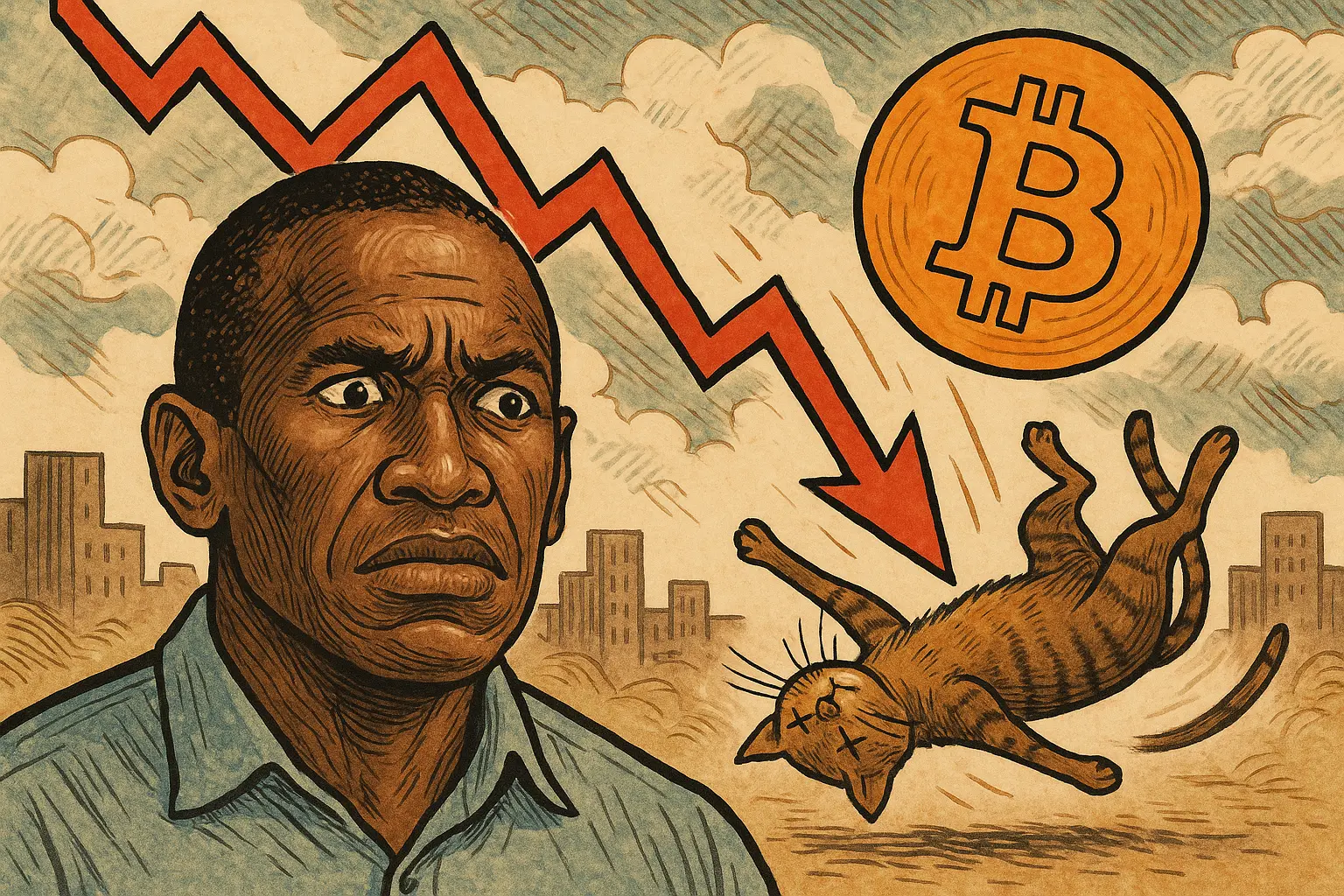
Legendary trader Arthur Hayes posted on social platform X on Wednesday, sharing a chart that shows Bitcoin and the US SaaS Software ETF (IGV) have been highly synchronized over the past year. He explicitly stated that Bitcoin has not yet decoupled from US SaaS tech companies, and the current rebound may only be a “dead cat bounce,” urging investors to remain patient.
Chart Interpretation: One-Year Synchronization of BTC and SaaS
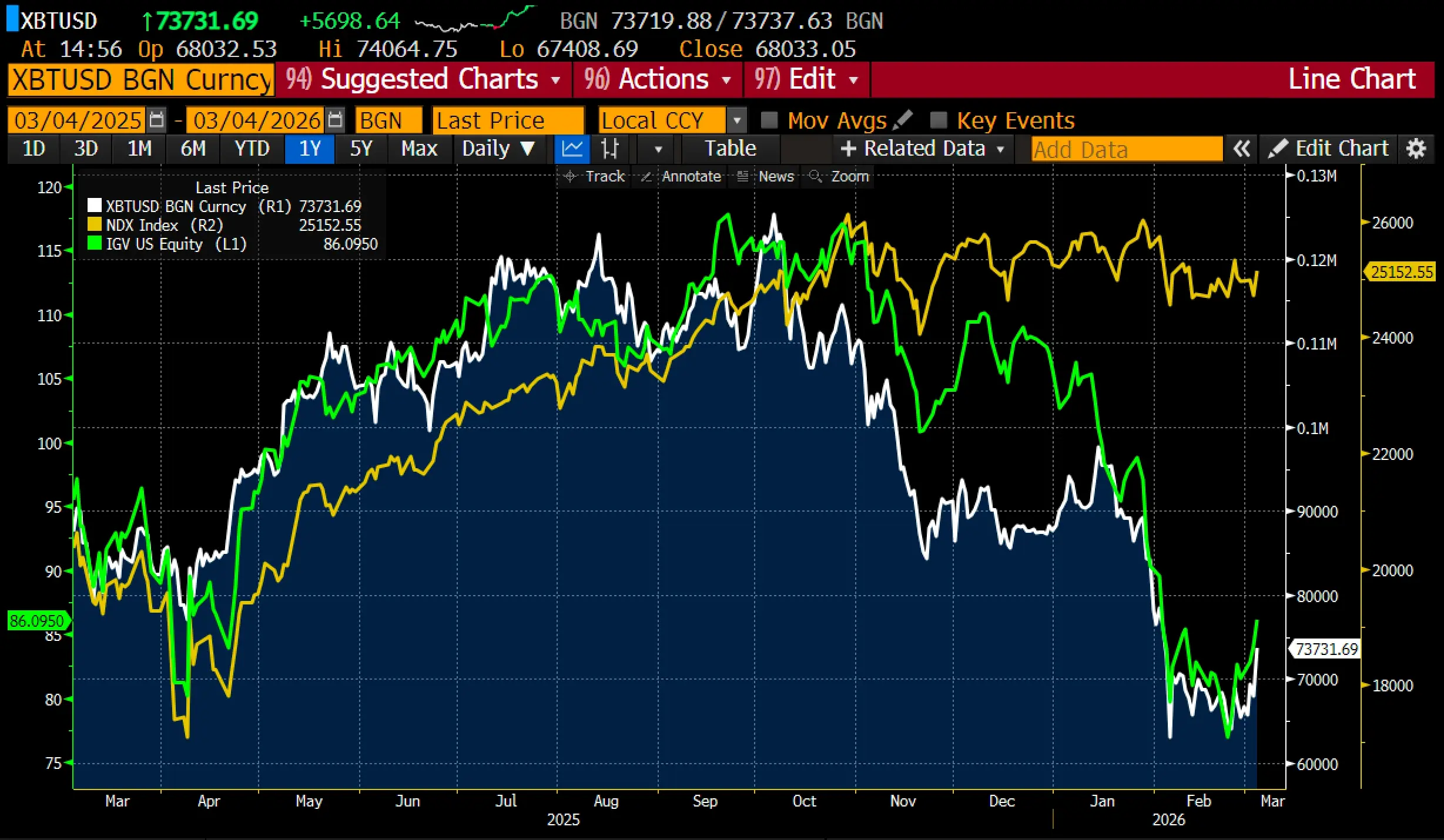
(Source: Arthur Hayes X)
The chart shared by Hayes covers exactly one year from March 2025 to March 2026, displaying the trends of Bitcoin (white line), Nasdaq 100 Index (NDX, yellow line), and iShares North American Technology Software ETF (IGV, green line). The three lines show clear synchronization at the following points: rising together in summer 2025, peaking together in October to November, crashing at the end of January 2026, and rebounding nearly equally over the past two weeks.
IGV is currently around 86, with a decline similar to Bitcoin. The synchronized pullback from their respective highs clearly indicates that Bitcoin is still viewed by institutions as a “high Beta tech asset” in the current market context, rather than an independent store of value. As long as the US SaaS sector remains under pressure, Bitcoin will find it difficult to break out into an independent trend.
Dead Cat Bounce Mechanism: How to Distinguish Short-Term Rebound from True Bottom
A “dead cat bounce” is a classic technical analysis pattern—an asset experiences a brief rebound after a prolonged decline, only to continue falling afterward. This pattern essentially reflects a temporary easing of selling pressure and technical correction, not a structural reversal confirming a market bottom.
Key Points to Identify a Dead Cat Bounce in Current Market Conditions
Cross-Asset Correlation: Bitcoin and SaaS tech stocks (IGV) continue to move in high sync, lacking independent upward momentum from tech stocks.
Volume Confirmation: Genuine bottoms are usually confirmed with increased volume; a rebound on declining volume raises doubts about sustainability.
Macro Environment: The macro factors driving SaaS sector declines—interest rate expectations, tech valuation corrections—have not fundamentally changed.
Hayes’ Position Shift: He previously set an extremely bullish target of $500,000 to $750,000 by year-end. His recent warning to “remain patient” is seen as a strong signal of short-term caution.
Decoupling as the True Bullish Start: Historical Precedents and Current Gaps
On-chain analyst PlanB pointed out that after Bitcoin decoupled from US stocks in 2015, BTC surged nearly tenfold over the next two years. Dissolving correlation often signals the start of a new major rally. However, Hayes’ chart clearly shows that, at least for now, this decoupling has not occurred. Before Bitcoin truly breaks away from the high correlation with SaaS tech stocks, any rebound should be cautiously evaluated for its sustainability, rather than being seen as a confirmed trend reversal.
FAQs
Q: Why does Arthur Hayes believe the current rebound is a dead cat bounce rather than a true bottom?
A: Hayes’ reasoning is based on the chart showing synchronized movements of Bitcoin and IGV (SaaS ETF), indicating both are still driven by the same macro forces. The lack of independent outperformance by Bitcoin suggests the rebound is more likely a technical correction rather than a trend reversal.
Q: What is IGV, and why is it an important indicator for Bitcoin decoupling?
A: IGV (iShares Expanded Tech-Software Sector ETF) tracks major US SaaS and tech software companies, including Salesforce, ServiceNow, and others with high valuations. These assets are high-risk, high-growth, and highly sensitive to interest rate and liquidity changes. The correlation between IGV and Bitcoin is a key reference for assessing whether Bitcoin is entering an independent trend.
Q: When will Bitcoin truly decouple from SaaS tech stocks?
A: Historically, decoupling requires Bitcoin to demonstrate independent demand—such as the effects of halving, institutional buying breakthroughs, or significant on-chain activity increases. Hayes’ chart shows high correlation still persists; a true decoupling signal will be confirmed only when Bitcoin consistently outperforms IGV on a relative basis.
Disclaimer: The information on this page may come from third parties and does not represent the views or opinions of Gate. The content displayed on this page is for reference only and does not constitute any financial, investment, or legal advice. Gate does not guarantee the accuracy or completeness of the information and shall not be liable for any losses arising from the use of this information. Virtual asset investments carry high risks and are subject to significant price volatility. You may lose all of your invested principal. Please fully understand the relevant risks and make prudent decisions based on your own financial situation and risk tolerance. For details, please refer to
Disclaimer.
Related Articles
SHIB Struggles to Recover as Fresh Developments Fail to Lift Price Action
SHIB trading activity rises, but price stays trapped in a tight consolidation range.
Whale accumulation increases while some long-term holders, including Aoki, exit positions.
Strong derivatives volume and inflows fail
CryptoNewsLand51m ago
Macro Recovery Drives Risk Asset Inflows; Crypto Market Shows Divergence Between Mainstream and Altcoins
Global risk appetite rose on easing Middle East tensions, lower energy prices, and strong institutional support, pushing equities to new highs; gold held gains while crypto and ETFs posted modest moves.
Global risk sentiment improved as tensions eased and energy prices fell, with equities at highs, gold firm, and crypto modestly higher; regulatory steps included France backing euro stablecoins and Circle's USDC Bridge.
GateNews1h ago
XRP’s Explosive Rise Isn’t Over Yet: Breaking Down Its Massive Returns
XRP delivered massive historical returns, contradicting claims of no appreciation.
Analyst highlights “Bifrost Bridge” channel as key to long-term bullish structure.
Current consolidation and ecosystem growth signal potential for another major breakout.
Critics often claim that Ripple’s
CryptoNewsLand1h ago
Bitcoin Jumps 2.7% on Market Optimism Over Trump's Iran Ceasefire Extension
Gate News message, April 22 — Bitcoin surged 2.7% on Wednesday after President Donald Trump announced an extension of the ceasefire with Iran, boosting market confidence. The cryptocurrency traded around $77,500 at 1 p.m. Singapore time, marking its highest price since Friday when it touched a two-m
GateNews2h ago
Crypto Fear and Greed Index Falls to 33, Signaling Panic Conditions
Crypto Fear and Greed Index fell to 33, down from yesterday, signaling panic. The 7-day average is 27 and the 30-day average 16, indicating sustained bearish sentiment over the past month.
The Crypto Fear and Greed Index fell to 33, signaling panic in the market. The 7-day average is 27 and the 30-day average is 16, indicating bearish sentiment has persisted for a month.
GateNews2h ago
Aave TVL Falls $15.1B in 3.5 Days; Spark Leads Gains
On April 22, on-chain analyst Yu Jin monitoring showed that, impacted by the rsETH/KelpDAO incident, Aave funds continued to flow out; within three and a half days, total deposits fell from $48.5 billion to $30.7 billion. Morpho saw a modest outflow of $1.5 billion over the same period. The most notable contrast comes from Spark, whose SparkLend business TVL rose against the trend from $1.9 billion to $3.2 billion.
MarketWhisper3h ago


