On February 21, 2026, Singapore-based Bitcoin mining company Bitdeer (鹿比特) released a weekly report on its official social media channels that broke industry conventions. Data shows that as of February 20, 2026, Bitdeer’s proprietary Bitcoin holdings (excluding customer deposits) have dropped to zero. During the reporting period, the company produced 189.8 BTC and sold all of it, while net reducing its holdings by as much as 943.1 BTC, completely clearing its Bitcoin reserves.
This “deleveraging” sale has caused significant turbulence in the crypto mining industry. Notably, this move occurred at a highly dramatic time: according to the latest data, Bitdeer’s self-mining hash rate just surpassed 63.2 EH/s, overtaking veteran giant Marathon Digital’s 60.4 EH/s, making it the largest publicly traded self-mining operation in the world by hash rate.
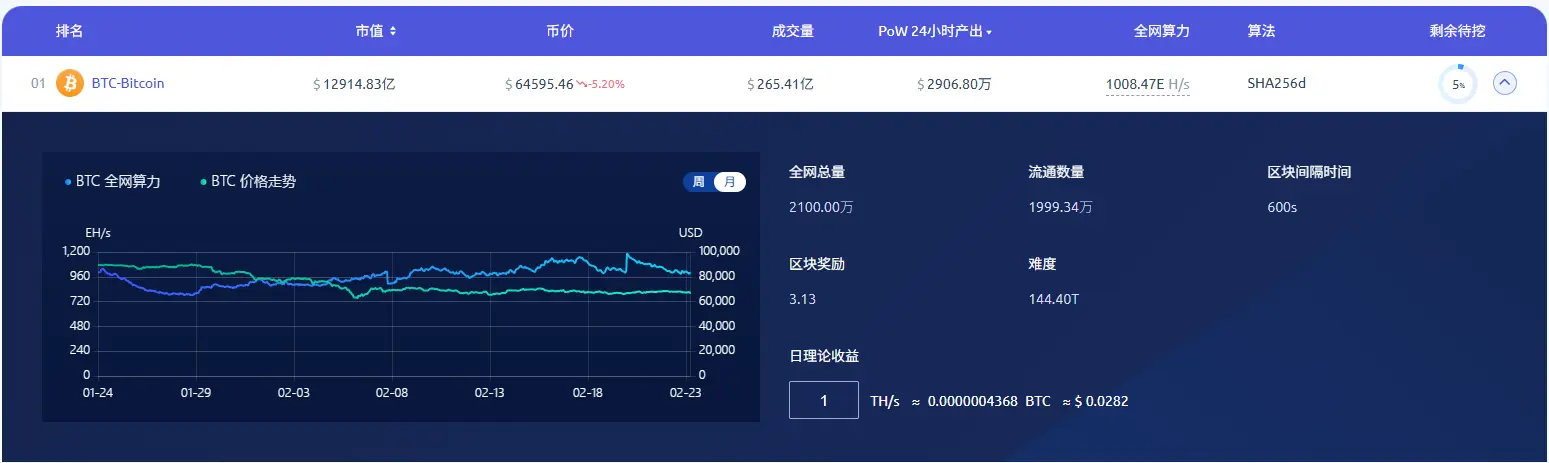
Owning the world’s top hash rate but choosing not to hold a single Bitcoin. This seemingly paradoxical strategic choice not only signals the end of the traditional mining “HODL” belief but also reflects how, under extreme hash rate economics, leading mining companies are accelerating their transformation toward Wall Street-style corporate finance operations and AI computing infrastructure providers.
Bitdeer’s liquidation of Bitcoin reserves is not due to a bearish outlook but is constrained by the severely deteriorating fundamentals of the current mining industry. To understand the necessity of this move, one must look beneath the surface of the Bitcoin network’s underlying data.
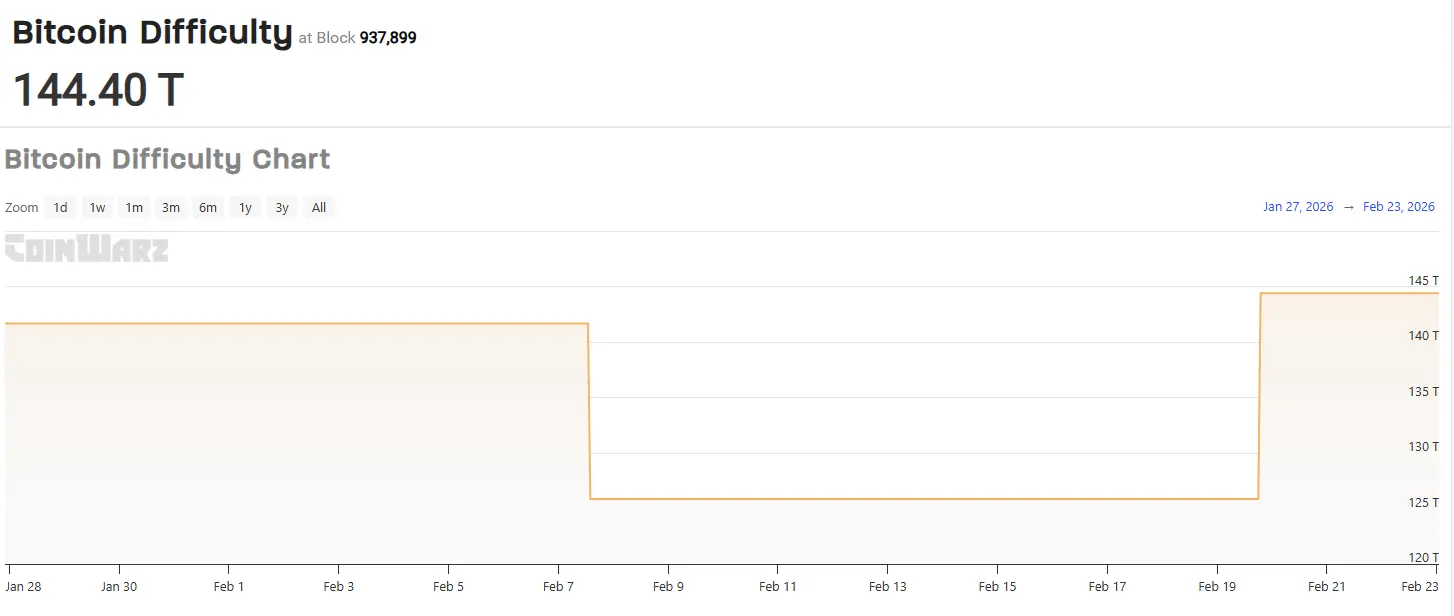
Recent data shows that on February 19, network difficulty surged from 125.86T to 144.39T, a 14.72% increase— the largest single adjustment since May 2021. This difficulty adjustment directly wiped out all operational breathing room miners had gained earlier this year. The sharp increase in difficulty means miners must deploy more hash power and incur higher electricity costs to maintain their previous share of production.
Even more critical is the collapse of Hashprice—the core metric measuring miners’ profitability, representing the expected fiat income per unit of hash power (usually 1 PH/s) per day. Driven by the twin pressures of skyrocketing difficulty and volatile coin prices, the entire network Hashprice has plummeted below $30 per PH/s per day, approaching historic lows.
With Hashprice falling below the $30 threshold, most miners using outdated equipment or facing electricity costs above $0.06 per kWh are already at the edge of profitability or even in negative margins. For a giant like Bitdeer, despite scale advantages and some energy cost benefits, the severely compressed profit margins make it impossible to continue risking assets anchored in highly volatile single cryptocurrencies.
In today’s environment of high capital costs, holding Bitcoin is an implicit opportunity cost for miners. Each BTC held means less cash flow available for expansion, equipment upgrades, or debt repayment. During periods of razor-thin margins, “cash is king” replaces “holding coins is king,” and liquidating holdings becomes the most direct defense against liquidity crunches.
Wall Street Financial Tactics: Convertible Bonds and Defensive Debt Restructuring
Faced with declining hash rate yields, Bitdeer’s response extends beyond simply selling Bitcoin; its actions in the capital markets demonstrate sophisticated financial engineering. On February 20, Bitdeer announced an increase in its private placement of convertible senior notes to $325 million, with settlement expected by February 24, and initial purchasers holding an option to buy an additional $50 million in notes.
This $375 million financing is meticulously designed, serving as a textbook example of defensive balance sheet restructuring:
Debt Extension and Swap ($138.2 million): Bitdeer plans to use $138.2 million to repurchase its existing 5.25% convertible senior notes due 2029. This “refinancing” operation, in the context of complex interest rate environments, effectively aims to optimize capital structure and extend debt maturity (duration), providing the company with more ample cash runway for future strategic shifts. During a period of low Hashprice, alleviating short-term debt repayment pressure is crucial for survival.
Cap-Triggered Options (Capped Call Transactions) ($29.2 million): Bitdeer allocated $29.2 million for capped call options—highly specialized derivatives used as anti-dilution hedges. Convertible bonds, with their embedded conversion rights, can lead to significant equity dilution if the stock price surges, as bondholders exercise their conversion options. The capped call acts as a “dilution insurance,” allowing the company to buy call options that offset potential dilution when the stock price rises within a certain range. This signals to the market that management is confident in the company’s long-term valuation and is committed to protecting existing shareholders’ interests.
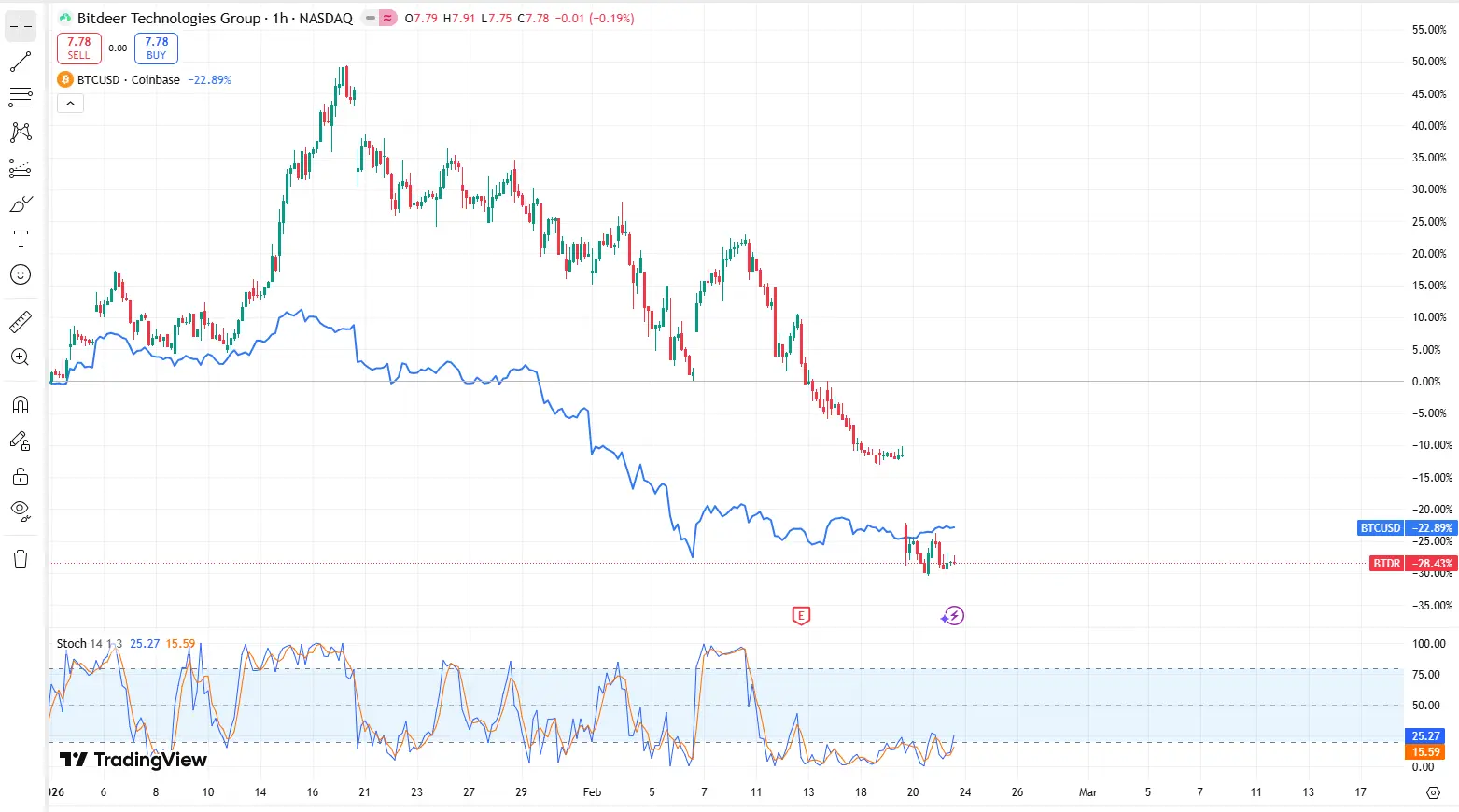
This complex combination indicates that Bitdeer’s financial strategy has moved beyond the early, rough-and-tumble phase of crypto industry finance, entering a period of refined, Nasdaq-level capital operations.
After accounting for debt restructuring and options hedging costs, the remaining funds—several hundred million dollars raised and the cash from liquidated Bitcoin—reveal Bitdeer’s true ambition: to shed the label of “pure Bitcoin miner” and fully expand into high-performance computing (HPC) and artificial intelligence (AI) cloud services.
Amid the explosive growth of generative AI, the global computing market faces unprecedented supply-demand imbalances. Training and inference of large AI models require massive computing clusters, which in turn demand enormous energy infrastructure (power and cooling data centers).
Bitcoin miners have a unique arbitrage advantage in this macro context. Essentially energy arbitrageurs, they control some of the world’s cheapest, largest-scale electricity resources and highly scalable data center sites. Bitdeer explicitly states that new funds will be used to:
- Expand HPC and AI cloud business scale.
- Develop proprietary ASIC mining hardware (to vertically integrate hardware supply chains and reduce Capex).
- Build high-standard data centers.
Transforming low-margin Bitcoin hash infrastructure into high-margin, stable cash flow AI data centers is the core narrative of major miners’ current strategic shift. AI clients typically sign long-term, fixed-rate service contracts (like PPAs), contrasting sharply with Bitcoin mining’s daily fluctuating revenue driven by Hashprice volatility.
By liquidating Bitcoin holdings and issuing convertible bonds, Bitdeer is essentially investing in a more predictable future (AI infrastructure) with the proceeds from an inefficient past (hodling).
Despite leading the global hash rate at 63.2 EH/s, Bitdeer has set a record of “zero coin holdings.” This phenomenon marks a fundamental divergence in the business models of publicly listed miners: owning the largest hash rate no longer equates to holding the most coins but rather to having the biggest cash flow engine and energy load capacity. When profits from this machine fall below a certain threshold, the rational response is to reallocate capital into higher-yield, red-hot AI sectors—aligning with quantitative and capital allocation principles.
In this challenging post-halving cycle of 2026, blindly hoarding coins is no longer a universal remedy. For investors in financial markets, this is no longer a story about “mining,” but a hard-core narrative about energy, hash rate scheduling, and Wall Street capital efficiency.
Disclaimer: The information on this page may come from third parties and does not represent the views or opinions of Gate. The content displayed on this page is for reference only and does not constitute any financial, investment, or legal advice. Gate does not guarantee the accuracy or completeness of the information and shall not be liable for any losses arising from the use of this information. Virtual asset investments carry high risks and are subject to significant price volatility. You may lose all of your invested principal. Please fully understand the relevant risks and make prudent decisions based on your own financial situation and risk tolerance. For details, please refer to
Disclaimer.


