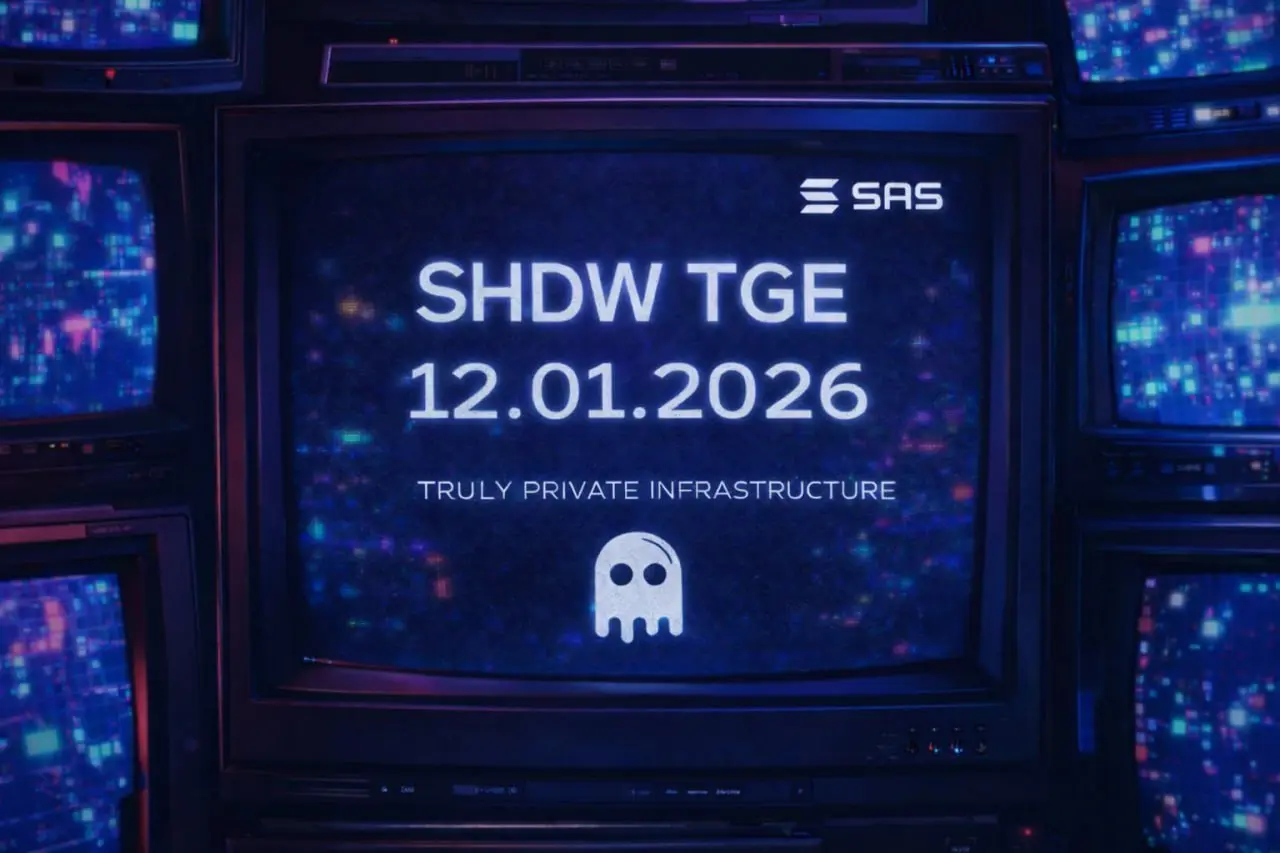
As the privacy narrative within the Solana ecosystem surges, a new privacy application called SHDW has become embroiled in significant controversy on the eve of its TGE on January 12. The app promises to provide users with privacy-focused transactions and transfers, but early testers report that its core “unmasking” feature has failed, preventing fund withdrawals and lacking effective customer support.
(Source: X)
Despite SHDW’s previous large-scale promotion through influencers and its inclusion in the ongoing Solana Privacy Hackathon (ending January 30), its technical feasibility and legitimacy have been seriously questioned. This incident serves as a safety warning for the currently hot blockchain privacy sector, highlighting the potential risks of fund custody issues and smart contract vulnerabilities when pursuing transaction anonymity. Currently, under the overall positive outlook for privacy ecosystem development, SOL price once surged to $141.23.
SHDW Application Controversy: From Privacy Promise to Fund Trap
Recently, an application called SHDW within the Solana ecosystem has attracted community attention in a particularly unflattering way. The app positions itself as a privacy hub, promising to add a privacy layer for user deposits and transactions on the Solana chain. Its promotional language is quite appealing: by integrating aggregators like Jupiter to optimize transaction paths, it aims to enable “private and invisible” transactions, eliminating front-running risks. More ambitiously, SHDW envisions a future where it launches a standard called X402, supporting asset swaps between AI agents with privacy verification, enabling off-chain validation and settlement. This series of cutting-edge concepts, combined with high-profile social media marketing and influencer promotion, quickly attracted early users eager to try privacy features.
However, the promising promises quickly unraveled in real-world testing. Feedback from multiple early users indicates two fatal fundamental issues. First, its core privacy feature—“shielding” assets for private transactions—may be flawed; some tests show transactions are not as fully private as claimed. Second, and more seriously, once users deposit assets into the app, they cannot withdraw funds via its “unshield” button. This means users lose control over their assets, which are effectively locked in an unverified and insufficiently audited smart contract. To make matters worse, although the app provides a contact form, users report being unable to reach effective customer support, with the project team uncontactable.
These issues coincided with the scheduled launch of its native token SHDW (January 12, 20:00 UTC). Ironically, the token has no relation to another project with the same name that had previously failed, but this name confusion has increased market uncertainty and risk. Currently, SHDW only offers two basic features: “SHDW Swap” and “SHDW Wallet” browser plugin. Its promised advanced features like X402 standard transactions, prediction markets, and data filters have not materialized. The entire event is shifting from a flawed product test to a potential “soft rug pull”—a scam where funds are drained.
Root Cause Analysis: The “Shadow” of Privacy Narratives and Security Gaps
The SHDW incident is not an isolated technical failure; it exposes several high-risk patterns prevalent in the crypto space, especially in the emerging privacy sector. The primary risk stems from “narrative-driven” hype. The Solana ecosystem is focusing heavily on privacy, not only integrating established privacy assets like ZCash via OmniBridge but also hosting a $100,000 hackathon dedicated to privacy projects. SHDW precisely taps into this hot market, depicting a grand vision of privacy transactions, AI proxies, and cross-chain settlement, gaining rapid attention. However, such glamorous narratives often mask significant gaps in code security, economic models, and practical implementation.
Second, lack of transparency and verifiability is common in such projects. Despite claiming to use advanced privacy tech, SHDW has not publicly disclosed its core privacy implementation details (e.g., zero-knowledge proofs) or provided audit reports. Its promise of “off-chain verification and settlement” further increases centralization risks and trust costs—users must believe the project operators will honestly handle off-chain servers. When the “unshield” function fails, the code’s opacity prevents the community from diagnosing issues quickly; users cannot recover assets on-chain and can only wait for project team responses, which are often absent.
Finally, influencer marketing combined with a lack of due diligence creates a dangerous mix. Before the incident, SHDW was heavily promoted by crypto influencers, boosting its token launch hype. Such promotion often relies on superficial narratives and airdrop expectations rather than deep technical or team background checks. Many ordinary users, trusting influencers, invested without verifying the contract independently, becoming the actual risk bearers. This pattern repeats frequently in crypto, emphasizing the importance of investor education and personal due diligence. Privacy is a tool, not a shield for project concealment or evasion.
SHDW Incident Risk Points Summary
Funds Lockup: The core “unshield” feature failure leads to inability to withdraw deposits, creating substantial custodial risk.
Lack of Technical Support: Contact channels are ineffective; the project team is unreachable, leaving users with no recourse.
Discrepancy Between Promises and Functionality: Privacy transaction effects are doubtful; most promised features (X402, AI proxies) are undeveloped.
Marketing vs. Reality: Heavy influencer promotion contrasts with fragile infrastructure, characteristic of a “paper project.”
Related Risks: Token name overlaps with a failed project, increasing market confusion and potential malicious imitation.
Ecosystem Context: Gained exposure via Solana Privacy Hackathon and ecosystem hype, possibly without rigorous vetting or audits.
Solana’s Privacy Ambitions and Ecosystem Security Challenges
Setting aside the specific SHDW case, it’s necessary to look at Solana’s overall privacy strategy. Undoubtedly, the Solana Foundation aims to develop privacy features as a core competitive advantage in the next phase. This is exemplified by the Solana Privacy Hackathon running from late 2024 to January 30, 2026, offering a $100,000 prize pool to incentivize developers to build privacy-preserving applications, tools, and infrastructure on Solana. This initiative has spurred some privacy-related project ideas and temporarily supported SOL’s market price, pushing it near $141.23.
However, the SHDW incident is a wake-up call: privacy and security are not synonymous, and sometimes even conflict. Traditional finance and many DeFi projects on public chains achieve a degree of auditability and community oversight through transparent on-chain ledgers. Privacy applications, by design, hide transaction details, which protects user privacy but also creates potential hiding spots for malicious code, money laundering, and project misconduct. Balancing strong privacy with systemic security and anti-fraud mechanisms is a major challenge for Solana and the broader crypto industry.
For Solana’s ecosystem, this may be a critical juncture. On one hand, embracing privacy is essential for expanding financial use cases and attracting broader users. On the other, rapid growth brings uneven project quality. Hackathons and innovation events can stimulate activity but also risk attracting immature or malicious projects that leverage ecosystem hype for promotion. This underscores the need for infrastructure providers, auditors, CEX listing teams, and community KOLs to enforce stricter screening and risk warnings. Under the shadow of privacy, a more solid security foundation is vital; otherwise, privacy narratives risk being undermined by a few major incidents.
Investor Warning: How to Avoid Risks in the Privacy Sector
For investors and users interested in participating in Solana or any public chain’s privacy ecosystem, the SHDW incident offers a painful but valuable lesson. When pursuing alpha gains and cutting-edge tech experiences, fund safety must come first. Here are some specific risk mitigation tips to help readers establish a basic self-protection framework when exploring privacy and emerging sectors.
First principle: Be extremely cautious of unverified, closed-source projects. Any smart contract handling user funds, especially those claiming to use complex cryptography, must have undergone comprehensive audits by reputable firms like CertiK, Quantstamp, or Trail of Bits, with reports fully public. If a project like SHDW is vague about its core tech, with code not open or only partially available, it should be regarded as a “high-risk project” and avoided for main investments. Users can check contract creator info, verification status, and transaction history on block explorers to preliminarily assess transparency.
Second, perform small-scale tests and functionality verification. Before trusting a new product with significant funds, conduct a minimal deposit, interact with core features, and attempt withdrawal. Confirm that the entire fund flow is smooth and under your control. SHDW users who did this could have detected critical withdrawal flaws early. Do not rely solely on social media screenshots or videos; hands-on testing is the only reliable method.
Finally, approach marketing with skepticism and conduct in-depth background checks. Don’t blindly follow influencer recommendations. Seek information about the project team, their past experience, and previous projects. For hackathon projects, consider awards and judges’ comments, but remember this does not guarantee safety. In crypto, especially with complex privacy tech, maintaining a healthy dose of skepticism is essential. True innovation withstands community scrutiny and time, not just pre-sales and hype.
Further Reading: Other Participants and Directions in Solana’s Privacy Ecosystem
Despite the negative example of SHDW, many teams in Solana are advancing privacy tech more prudently. Understanding these legitimate directions helps us distinguish authenticity. Currently, privacy development on Solana mainly focuses on:
-
Privacy Asset Integration: As mentioned, bridging established privacy coins like ZCash via cross-chain bridges is the most direct approach. Users can hold and trade tokenized ZEC on Solana, leveraging its native privacy features.
-
Privacy Transaction Protocols: Some projects aim to build Tornado Cash-like mixers or zero-knowledge proof-based privacy DeFi protocols, such as privacy swaps or privacy lending. These tend to prioritize infrastructure robustness and auditability.
-
Privacy Computing and Data Protection: This area explores enterprise-level applications or specific data scenarios, like on-chain analytics under privacy constraints.
Investors should prioritize projects with open-source code, clear audit reports, transparent teams, and well-defined roadmaps. Implementing privacy requires deep cryptographic expertise and engineering capability—something rushed or marketing-driven teams cannot deliver.
Self-Check Checklist: Five Must-Do Steps Before Engaging with New DeFi/Privacy Projects
To help readers develop systematic risk avoidance habits, here is a concise self-checklist. Before investing in any new DeFi or privacy project, complete these five steps:
-
Check Audits: Find security audit reports on the project’s official site or documentation. Confirm that reputable auditors like CertiK, Quantstamp, or Trail of Bits have reviewed it, and read key findings and risks.
-
Verify Contracts: On block explorers like Solscan or Etherscan, locate the main contract address. Check if it’s verified, review recent transactions for anomalies or large transfers.
-
Research Reputation: Search for the project name and contract address on Twitter, Discord, crypto forums (e.g., Reddit), and security communities. Look for reports of issues, vulnerabilities, or scams.
-
Test Small: Use a tiny amount of funds to go through the entire process—deposit, interact, and withdraw. Confirm each step works as expected and that you retain ultimate control over your assets.
-
Assess Team: Gather information about the team or main developers. Anonymous teams are high risk; those with public profiles and successful past projects are more trustworthy. Be wary of projects with only grand narratives and no solid technical background.
By consistently following this simple process, you can filter out most “scam” projects like SHDW, protecting your assets while enjoying crypto innovation. Remember, longevity in the market is more valuable than short-term gains.


