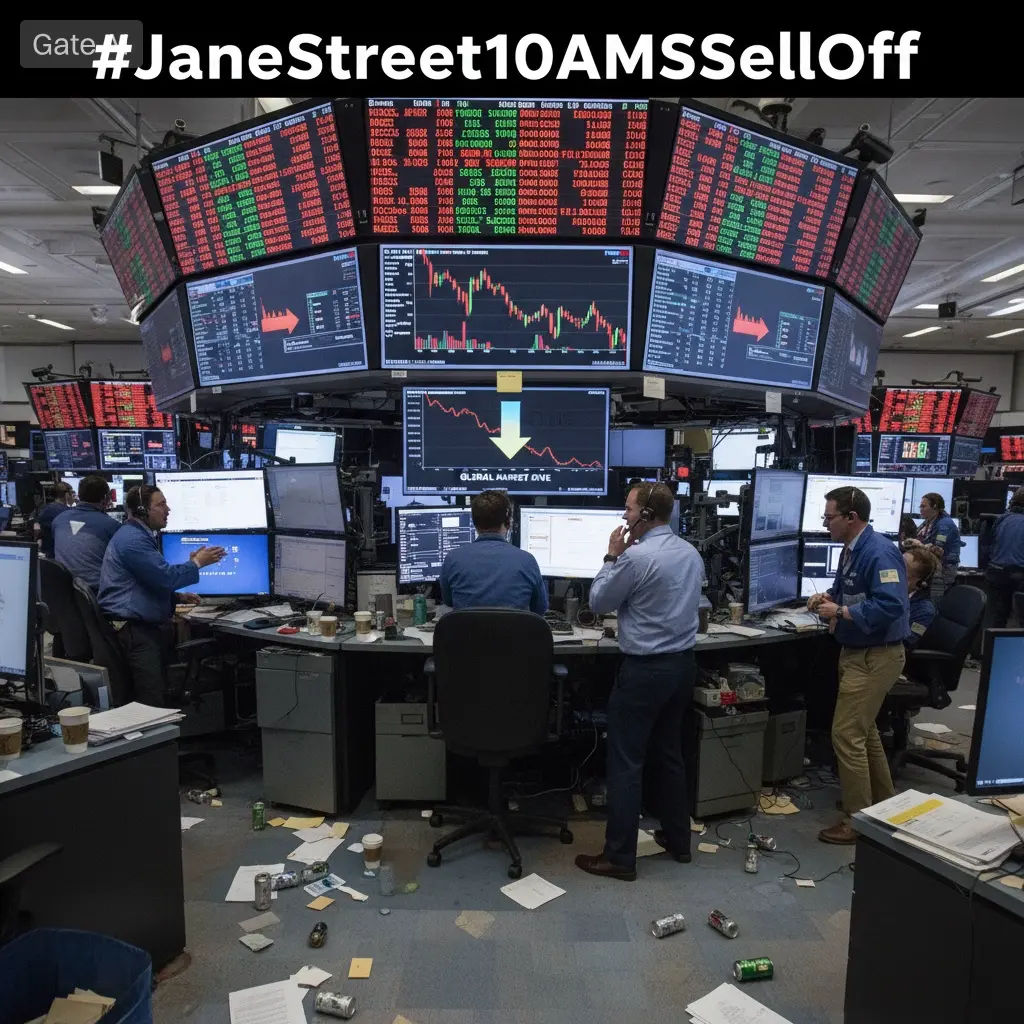
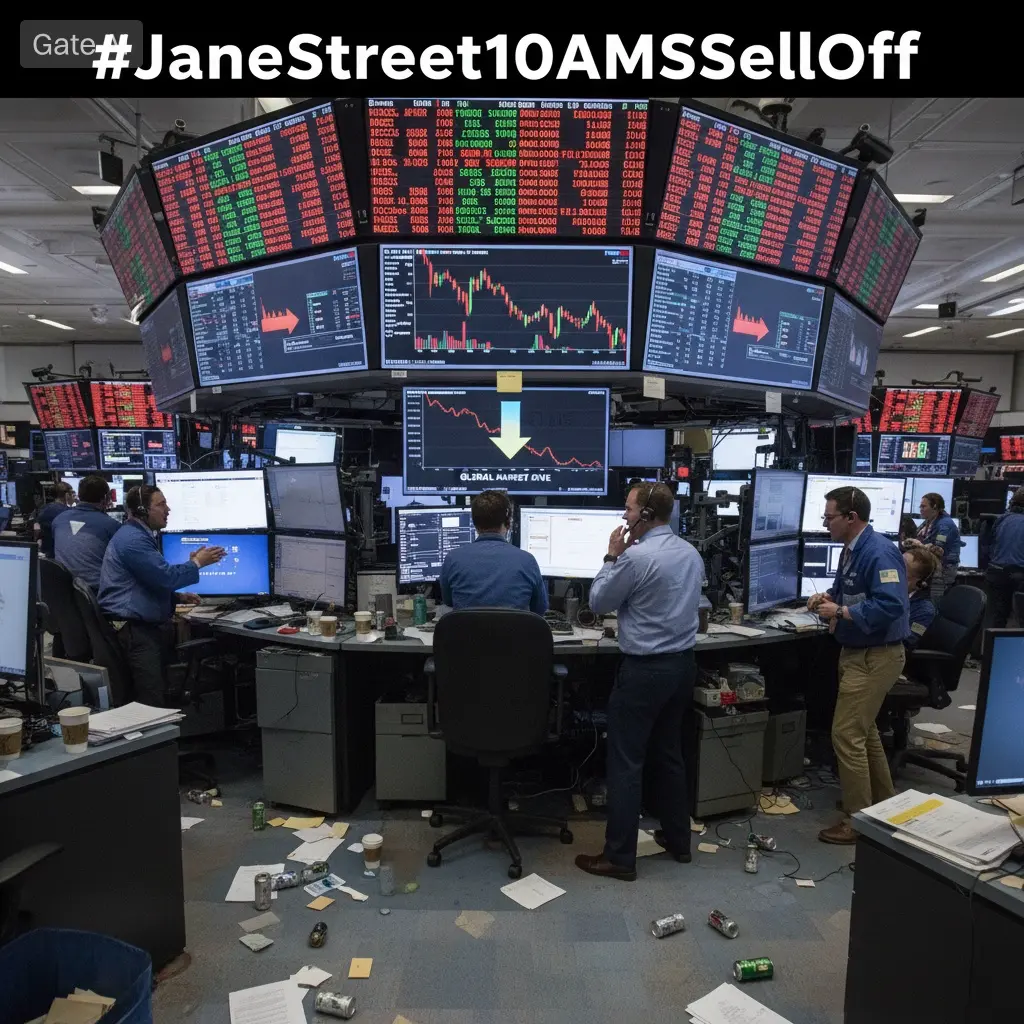
# JaneStreet10AMSellOff

21.68K
Pin
Mainstream cryptocurrencies like Bitcoin surge, rumors of "10 o'clock sell-off" pause after Jane Street lawsuit
On February 25th, the crypto market experienced a strong rebound, with Bitcoin surpassing $70,000, and Ethereum and Solana both rising by over 13%. The market capitalization increased by approximately $170 billion. Analysts believe this is related to the lawsuit against market maker Jane Street, which may have alleviated selling pressure and boosted investor sentiment.
ai-iconThe abstract is generated by AI
BTC-2.04%
ETH-2.61%
SOL-2.48%
View Original
Expand All
  • Reward
  • Comment
  • Repost
  • Share
#JaneStreet10AMSellOff
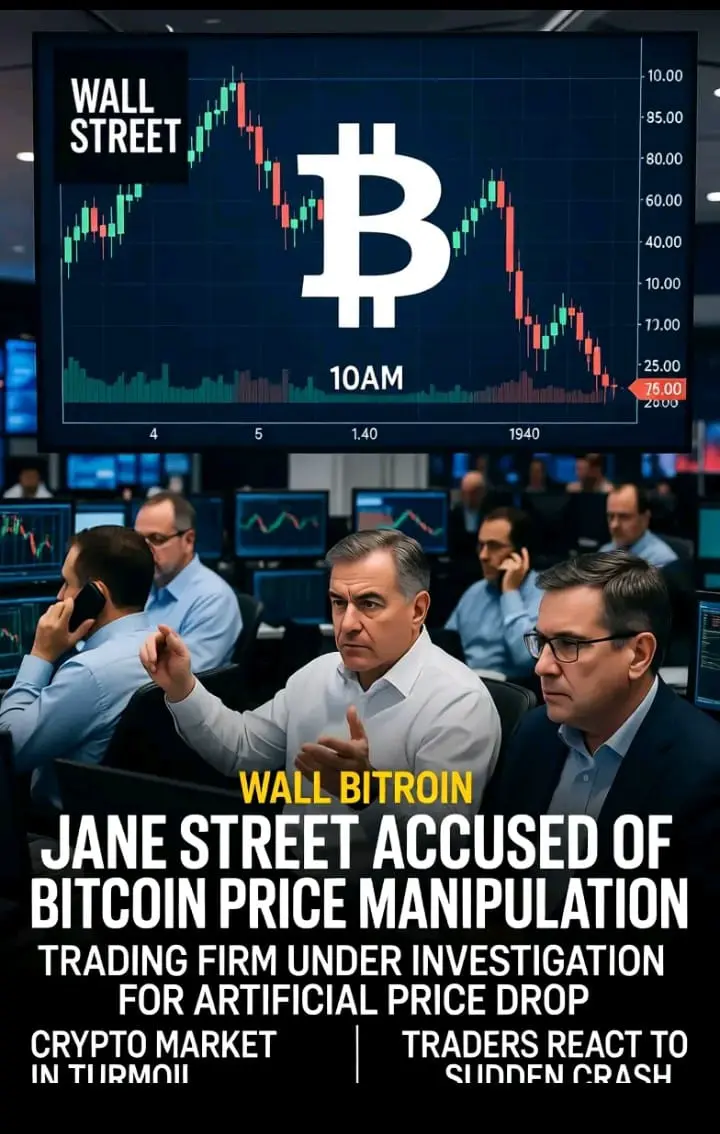
The latest whispers echoing through the corridors of the crypto world have moved beyond mere rumors, manifesting as official court transcripts and aggressive red candles on our screens. The discussions surrounding #JaneStreet10AMSellOff are not just another conspiracy theory; they offer a profound narrative into the dark alleys of market making and the cold wars of algorithmic trading.
​Here is my professional analysis untangling this complex knot:
​The 10:00 AM Barrier: Algorithms or Manipulation?
​For months, we felt an unexplained selling pressure on Bitcoin every si
BTC-2.04%
LUNA-4.88%
post-image
post-image
  • Reward
  • 13
  • Repost
  • Share
Yusfirahvip:
To The Moon 🌕
View More
#JaneStreet10AMSellOff
The Jane Street 10 AM Sell-Off Phenomenon – Microstructure Shift and Bitcoin's Current Price Action
The Intraday Pattern That Defined Crypto Trading for Months
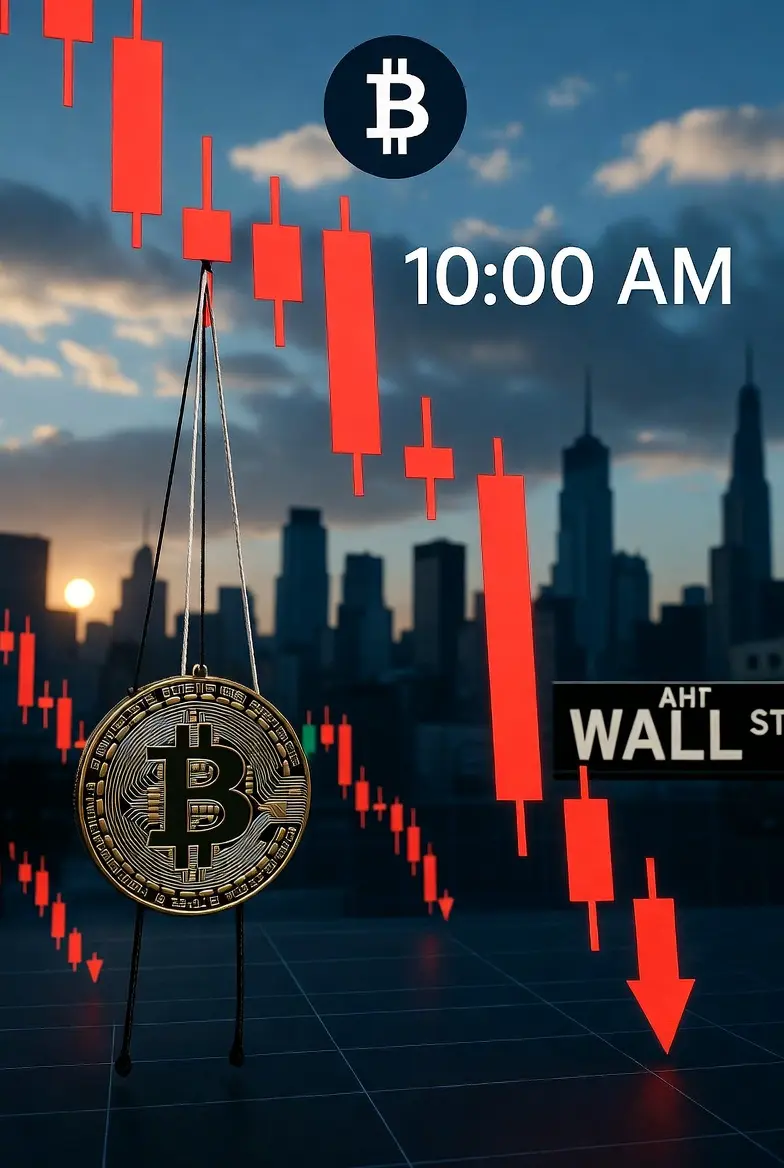
For an extended period, Bitcoin and major altcoins exhibited a remarkably consistent U.S. session behavior: early rallies building momentum in the first 30–60 minutes after the 9:30 AM ET equity open, often peaking before facing sharp, repeatable selling pressure right around 10:00 AM Eastern Time. This became widely known in trading circles as the "Jane Street 10 AM Sell-Off," attributed by many to systematic fl
BTC-2.04%
LUNA-4.88%
HighAmbitionvip
#JaneStreet10AMSellOff
The Jane Street 10 AM Sell-Off Phenomenon – Microstructure Shift and Bitcoin's Current Price Action
The Intraday Pattern That Defined Crypto Trading for Months
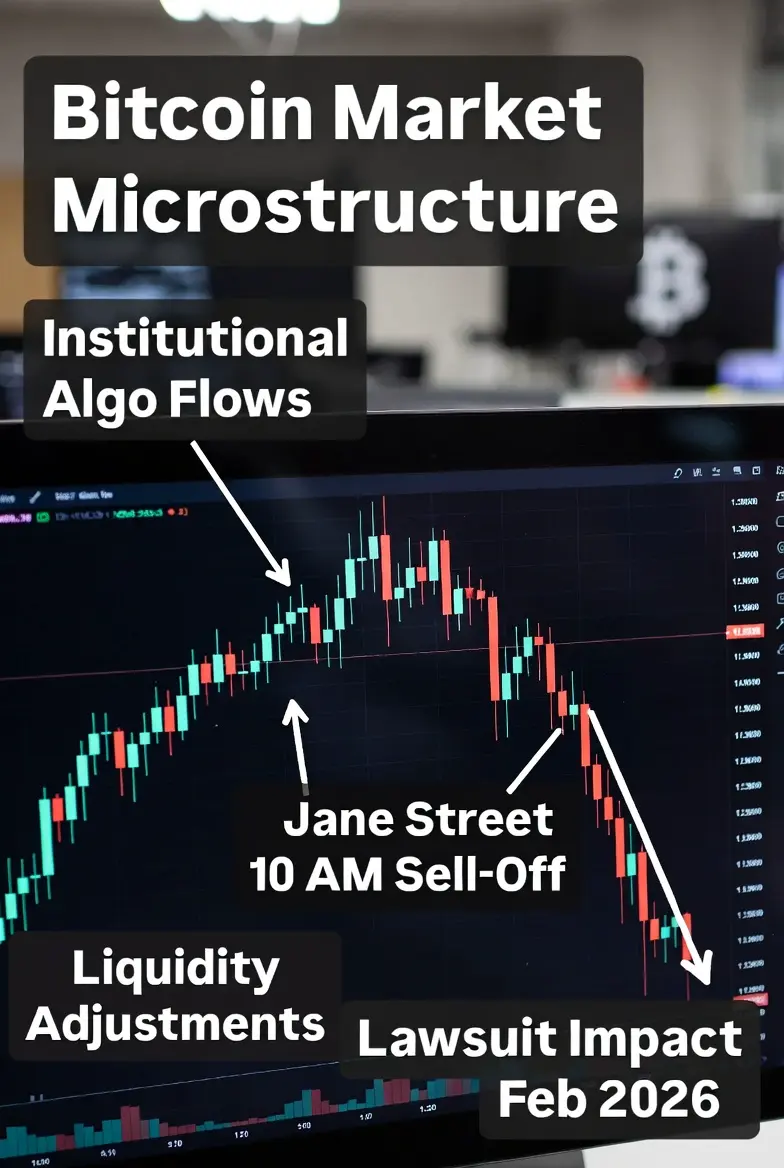
For an extended period, Bitcoin and major altcoins exhibited a remarkably consistent U.S. session behavior: early rallies building momentum in the first 30–60 minutes after the 9:30 AM ET equity open, often peaking before facing sharp, repeatable selling pressure right around 10:00 AM Eastern Time. This became widely known in trading circles as the "Jane Street 10 AM Sell-Off," attributed by many to systematic flows from Jane Street—a massive proprietary trading firm and liquidity provider active in Bitcoin spot ETFs as an authorized participant.
Key Microstructure Drivers Behind the 10 AM Window
Post-9:30 AM range establishment creates initial volatility absorption.
Overnight and global positioning largely unwinds by mid-morning.
Institutional algos, market makers, and ETF creation/redemption flows recalibrate once opening noise fades.
Momentum peaks frequently align here, priming the setup for hedging, profit realization, or book adjustments.
The pattern showed classic signs: local highs tagged early, followed by bid thinning, volume spikes on the offer, and rapid rejection. It became so reliable that strategies evolved around it—fading into the hour, post-dump entries, or precise stop placement. Expectation turned it semi-self-fulfilling, amplifying the move through positioned algos and narrative-driven capital.
Jane Street's Spotlight Role
As a high-frequency prop trader and ETF AP (notably for products like BlackRock's IBIT), Jane Street's scale and limited real-time disclosure invited speculation. Community theories pointed to ETF hedging or systematic selling explaining the dumps—no conclusive flow data ever singled them out definitively, but the observable consistency kept the shorthand alive.
The Disruption: Lawsuit News and Immediate Market Reaction
The Terraform Labs bankruptcy administrator filed an insider trading lawsuit against Jane Street in late February 2026 (around February 23), alleging misuse of non-public info during the 2022 Terra/LUNA events. Almost coincidentally, the long-standing 10 AM pressure evaporated starting February 25–27. Early-session strength persisted through the hour without reversal on multiple days—Bitcoin held or rallied where prior dumps had capped it.
Post-lawsuit, BTC saw notable short-term relief: a sharp rebound of around +10% in sessions immediately following (breaking toward $68k–$69k ranges briefly), with liquidations hitting shorts hard. The correlation fueled intense debate—coincidence, behavioral shift under scrutiny, or algo tweaks?
Bitcoin's Price Right Now – February 28, 2026 Context
As of today (late February 28, 2026), Bitcoin has pulled back significantly in the weekend session. After flirting with $70,000 earlier in the week (briefly touching near that level mid-week), BTC has retreated into the mid-$65,000 zone—trading around $65,500–$65,900 across major exchanges (e.g., ~$65,795 on Yahoo Finance data, ~$65,536–$65,790 reported in real-time updates, with some prints dipping below $65,000 intraday).
This marks a ~3–4% drop in the last 24 hours, erasing much of the post-lawsuit bounce and pushing it back into the broader $60k–$70k consolidation range it's occupied since early February dips. Broader risk-off sentiment (tied to U.S. equities and macro repricing) appears to be the dominant driver now, overriding the earlier microstructure narrative.
The 10 AM window remains a liquidity hotspot structurally—but without the old predictable dump, intraday volatility has shifted: less mechanical selling, more organic flow response. Whether this "frees up" upside (removing a perceived cap) or simply reveals other pressures (like ETF net flows turning neutral/negative) is the live question.
Core Takeaways
Narratives around big players can drive real positioning until external shocks (lawsuits, scrutiny) break them.
Time-specific liquidity and institutional flows are powerful forces in crypto.
Wall Street integration means legal/regulatory ripples hit price action fast.
Correlation isn't causation—the pattern broke, BTC rallied briefly, but macro has taken over for the current pullback.
The regime feels reset: no guaranteed 10 AM floor/ceiling anymore. Traders adapting now focus on broader ranges, ETF flow data, and macro catalysts over single-hour patterns.

repost-content-media
  • Reward
  • Comment
  • Repost
  • Share
#JaneStreet10AMSellOff
The Jane Street 10 AM Sell-Off Phenomenon – Microstructure Shift and Bitcoin's Current Price Action
The Intraday Pattern That Defined Crypto Trading for Months
For an extended period, Bitcoin and major altcoins exhibited a remarkably consistent U.S. session behavior: early rallies building momentum in the first 30–60 minutes after the 9:30 AM ET equity open, often peaking before facing sharp, repeatable selling pressure right around 10:00 AM Eastern Time. This became widely known in trading circles as the "Jane Street 10 AM Sell-Off," attributed by many to systematic fl
BTC-2.04%
LUNA-4.88%
ALGO-2.89%
HighAmbitionvip
#JaneStreet10AMSellOff
The Jane Street 10 AM Sell-Off Phenomenon – Microstructure Shift and Bitcoin's Current Price Action
The Intraday Pattern That Defined Crypto Trading for Months
For an extended period, Bitcoin and major altcoins exhibited a remarkably consistent U.S. session behavior: early rallies building momentum in the first 30–60 minutes after the 9:30 AM ET equity open, often peaking before facing sharp, repeatable selling pressure right around 10:00 AM Eastern Time. This became widely known in trading circles as the "Jane Street 10 AM Sell-Off," attributed by many to systematic flows from Jane Street—a massive proprietary trading firm and liquidity provider active in Bitcoin spot ETFs as an authorized participant.
Key Microstructure Drivers Behind the 10 AM Window
Post-9:30 AM range establishment creates initial volatility absorption.
Overnight and global positioning largely unwinds by mid-morning.
Institutional algos, market makers, and ETF creation/redemption flows recalibrate once opening noise fades.
Momentum peaks frequently align here, priming the setup for hedging, profit realization, or book adjustments.
The pattern showed classic signs: local highs tagged early, followed by bid thinning, volume spikes on the offer, and rapid rejection. It became so reliable that strategies evolved around it—fading into the hour, post-dump entries, or precise stop placement. Expectation turned it semi-self-fulfilling, amplifying the move through positioned algos and narrative-driven capital.
Jane Street's Spotlight Role
As a high-frequency prop trader and ETF AP (notably for products like BlackRock's IBIT), Jane Street's scale and limited real-time disclosure invited speculation. Community theories pointed to ETF hedging or systematic selling explaining the dumps—no conclusive flow data ever singled them out definitively, but the observable consistency kept the shorthand alive.
The Disruption: Lawsuit News and Immediate Market Reaction
The Terraform Labs bankruptcy administrator filed an insider trading lawsuit against Jane Street in late February 2026 (around February 23), alleging misuse of non-public info during the 2022 Terra/LUNA events. Almost coincidentally, the long-standing 10 AM pressure evaporated starting February 25–27. Early-session strength persisted through the hour without reversal on multiple days—Bitcoin held or rallied where prior dumps had capped it.
Post-lawsuit, BTC saw notable short-term relief: a sharp rebound of around +10% in sessions immediately following (breaking toward $68k–$69k ranges briefly), with liquidations hitting shorts hard. The correlation fueled intense debate—coincidence, behavioral shift under scrutiny, or algo tweaks?
Bitcoin's Price Right Now – February 28, 2026 Context
As of today (late February 28, 2026), Bitcoin has pulled back significantly in the weekend session. After flirting with $70,000 earlier in the week (briefly touching near that level mid-week), BTC has retreated into the mid-$65,000 zone—trading around $65,500–$65,900 across major exchanges (e.g., ~$65,795 on Yahoo Finance data, ~$65,536–$65,790 reported in real-time updates, with some prints dipping below $65,000 intraday).
This marks a ~3–4% drop in the last 24 hours, erasing much of the post-lawsuit bounce and pushing it back into the broader $60k–$70k consolidation range it's occupied since early February dips. Broader risk-off sentiment (tied to U.S. equities and macro repricing) appears to be the dominant driver now, overriding the earlier microstructure narrative.
The 10 AM window remains a liquidity hotspot structurally—but without the old predictable dump, intraday volatility has shifted: less mechanical selling, more organic flow response. Whether this "frees up" upside (removing a perceived cap) or simply reveals other pressures (like ETF net flows turning neutral/negative) is the live question.
Core Takeaways
Narratives around big players can drive real positioning until external shocks (lawsuits, scrutiny) break them.
Time-specific liquidity and institutional flows are powerful forces in crypto.
Wall Street integration means legal/regulatory ripples hit price action fast.
Correlation isn't causation—the pattern broke, BTC rallied briefly, but macro has taken over for the current pullback.
The regime feels reset: no guaranteed 10 AM floor/ceiling anymore. Traders adapting now focus on broader ranges, ETF flow data, and macro catalysts over single-hour patterns.

repost-content-media
  • Reward
  • Comment
  • Repost
  • Share
#JaneStreet10AMSellOff
The Jane Street 10 AM Sell-Off Phenomenon – Microstructure Shift and Bitcoin's Current Price Action
The Intraday Pattern That Defined Crypto Trading for Months
For an extended period, Bitcoin and major altcoins exhibited a remarkably consistent U.S. session behavior: early rallies building momentum in the first 30–60 minutes after the 9:30 AM ET equity open, often peaking before facing sharp, repeatable selling pressure right around 10:00 AM Eastern Time. This became widely known in trading circles as the "Jane Street 10 AM Sell-Off," attributed by many to systematic fl
BTC-2.04%
LUNA-4.88%
ALGO-2.89%
post-image
post-image
post-image
  • Reward
  • 18
  • Repost
  • Share
Discoveryvip:
To The Moon 🌕
View More
#JaneStreet10AMSellOff
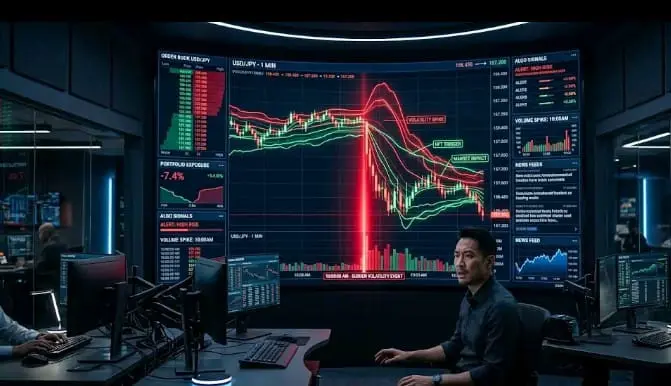
Every market cycle creates its own myth. In 2026, one of the most talked-about intraday narratives is the #JaneStreet10AMSellOff a recurring wave of selling pressure that traders claim strikes around 10:00 a.m. U.S. time. Screens flash red, stop-losses trigger, Twitter explodes, and within minutes the blame game begins. But is this truly a coordinated institutional dump, or are we witnessing something far more structural?
The name most frequently attached to this phenomenon is Jane Street, one of the world’s largest quantitative trading firms. With deep involvement in
post-image
post-image
post-image
  • Reward
  • Comment
  • Repost
  • Share
#JaneStreet10AMSellOff
What’s Happening in the Crypto and Markets Space
The crypto and broader financial markets were rattled today as reports surfaced about the so-called “Jane Street 10 AM Sell-Off”, where Jane Street, a major proprietary trading firm, reportedly executed large-scale asset sales around 10 AM UTC, triggering a wave of volatility across multiple crypto and equity markets.
Traders, analysts, and institutional watchers are trying to unpack what this event means, why it happened, and how it might affect markets going forward.
What Happened?
According to market data and reports
  • Reward
  • Comment
  • Repost
  • Share
🚨 #JaneStreet10AMSellOff – Detailed Breakdown
Early market volatility today has traders pointing toward alleged aggressive selling activity from Jane Street around the 10:00 AM session window — sparking debate across trading desks and crypto Twitter alike.
Here’s a structured breakdown of what’s being discussed:
⏰ What Happened at 10:00 AM?
Around the 10:00 AM mark (NY session), traders observed:
A sudden spike in sell volume
Sharp downside wicks across multiple large-cap assets
Liquidity thinning on order books
Perpetual futures funding flipping more negative
Some market participants specula
post-image
  • Reward
  • 1
  • Repost
  • Share
HighAmbitionvip:
To The Moon 🌕
#JaneStreet10AMSellOff Intraday Microstructure Shift & What It Means for Q2 2026
Over the past several months, traders observed a recurring intraday pattern in Bitcoin — early U.S. session strength followed by consistent selling pressure around 10:00 a.m. Eastern Time. The market began labeling this phenomenon the #JaneStreet10AMSellOff, speculating that a major liquidity provider or institutional participant was offloading size during that window.
There has never been verified proof of systematic timed selling.
However, in markets — perception alone can become structure.
📊 The Power of a Rep
BTC-2.04%
ETH-2.61%
SOL-2.48%
FLOW-3.98%
MrFlower_XingChenvip
#JaneStreet10AMSellOff Intraday Microstructure Shift & What It Means for Q2 2026
Over the past several months, traders observed a recurring intraday pattern in Bitcoin — early U.S. session strength followed by consistent selling pressure around 10:00 a.m. Eastern Time. The market began labeling this phenomenon the #JaneStreet10AMSellOff, speculating that a major liquidity provider or institutional participant was offloading size during that window.
There has never been verified proof of systematic timed selling.
However, in markets — perception alone can become structure.
📊 The Power of a Repeating Pattern
What made this narrative influential wasn’t confirmation — it was repetition.
For months, traders adapted:
Short-term sellers positioned ahead of 10 a.m.
Momentum traders reduced exposure before the window
Dip buyers waited for the predictable flush
Algorithms coded around the pattern
This created reflexivity.
The expectation of selling began causing selling.
Eventually, even if no entity was acting deliberately, the market itself reproduced the behavior.
🔄 The Sudden Disruption (Feb 25–27, 2026)
During the final week of February, that pattern appeared to fade. Instead of fading at 10 a.m., Bitcoin held strength and pushed through key resistance levels.
Key developments during this shift:
BTC briefly reclaimed $70,000
Ethereum surged over 13%
Solana jumped more than 15%
Total crypto market cap expanded sharply
Whether coincidental or structural, the disappearance of expected sell pressure triggered a liquidity vacuum to the upside.
When predictable supply vanishes, momentum accelerates.
🧠 Why This Event Matters
1️⃣ Market Psychology Reset
Crypto markets are narrative-sensitive.
Once traders noticed the 10 a.m. fade wasn’t occurring:
Shorts hesitated
Dip buyers entered earlier
Breakout traders became aggressive
Confidence increased not because fundamentals changed — but because a constraint was removed.
2️⃣ Liquidity Imbalance
Predictable intraday selling creates rhythm.
Remove it — and order books rebalance.
Without that recurring sell wall:
Buy-side flow dominated
Resistance levels thinned out
Stops above $70k were triggered
This resulted in short squeeze conditions.
3️⃣ Algorithmic Recalibration
Many algorithmic systems detect recurring volatility clusters.
When expected sell pressure failed to materialize:
Some short-bias models deactivated
Momentum systems flipped long
Liquidity-provision strategies widened spreads
The result was amplified volatility and upside acceleration.
📈 Structural Implications Going Forward
This event is not necessarily a macro regime shift.
It is an intraday microstructure evolution.
Short-Term Outlook (March 2026)
If Bitcoin stabilizes above $70k:
$75k–$78k becomes reachable
Altcoins may continue outperforming in bursts
Intraday upside continuation becomes more common
If the pattern truly disappears, traders will begin adapting to upside momentum windows instead of fade windows.
Medium-Term Outlook (Q2 2026)
BTC could test $80k if liquidity remains supportive
ETH and SOL may show higher beta performance
Volatility likely remains elevated as strategies recalibrate
Markets take time to adjust when a dominant behavior changes.
🔬 Deeper Lesson: Narrative Drives Liquidity
The most important takeaway from the #JaneStreet10AMSellOff episode:
Crypto is highly reflexive.
Expectations create behavior
Behavior reinforces structure
Structure influences price
Price reshapes expectations
Even unconfirmed narratives can alter positioning across billions in capital.
Understanding microstructure is as critical as analyzing fundamentals.
⚖️ Risk Considerations
While upside momentum may feel strong:
Liquidity vacuums can reverse quickly
Short squeezes exhaust
New patterns eventually form
If the market replaces the 10 a.m. sell-off with a new predictable behavior, traders must adapt again.
Static strategies fail in dynamic environments.
🏁 Final Thought
The apparent disappearance of the 10 a.m. sell pressure is not just a curiosity.
It is a case study in:
Institutional perception
Intraday liquidity mechanics
Algorithmic behavior shifts
Psychological reflexivity
Markets are not only driven by fundamentals —
They are shaped by expectations about who is trading and when.
For disciplined traders, recognizing these shifts early can mean positioning ahead of momentum instead of reacting to it.
And in crypto — timing often defines the edge. 🚀
repost-content-media
  • Reward
  • 7
  • Repost
  • Share
SheenCryptovip:
2026 GOGOGO 👊
View More
#JaneStreet10AMSellOff Intraday Microstructure Shift & What It Means for Q2 2026
Over the past several months, traders observed a recurring intraday pattern in Bitcoin — early U.S. session strength followed by consistent selling pressure around 10:00 a.m. Eastern Time. The market began labeling this phenomenon the #JaneStreet10AMSellOff, speculating that a major liquidity provider or institutional participant was offloading size during that window.
There has never been verified proof of systematic timed selling.
However, in markets — perception alone can become structure.
📊 The Power of a Rep
BTC-2.04%
ETH-2.61%
SOL-2.48%
post-image
  • Reward
  • 22
  • Repost
  • Share
Yusfirahvip:
2026 GOGOGO 👊
View More
Load More
Trade Crypto Anywhere Anytime
qrCode
Scan to download Gate App
Community
English
  • 简体中文
  • English
  • Tiếng Việt
  • 繁體中文
  • Español
  • Русский
  • Français (Afrique)
  • Português (Portugal)
  • Bahasa Indonesia
  • 日本語
  • بالعربية
  • Українська
  • Português (Brasil)