


BlackRiderCryptoLord

vip
Age 0.6 Year
Peak Tier 0
No content yet
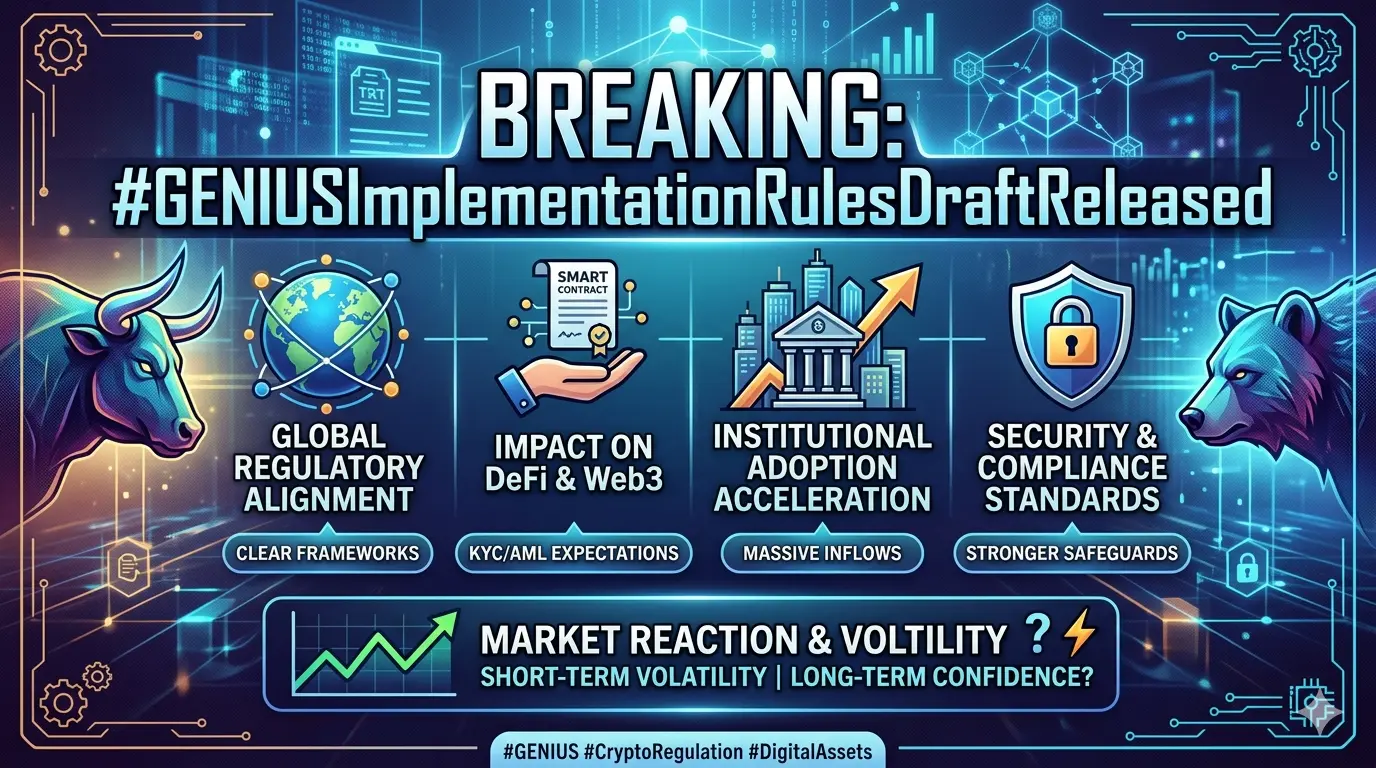
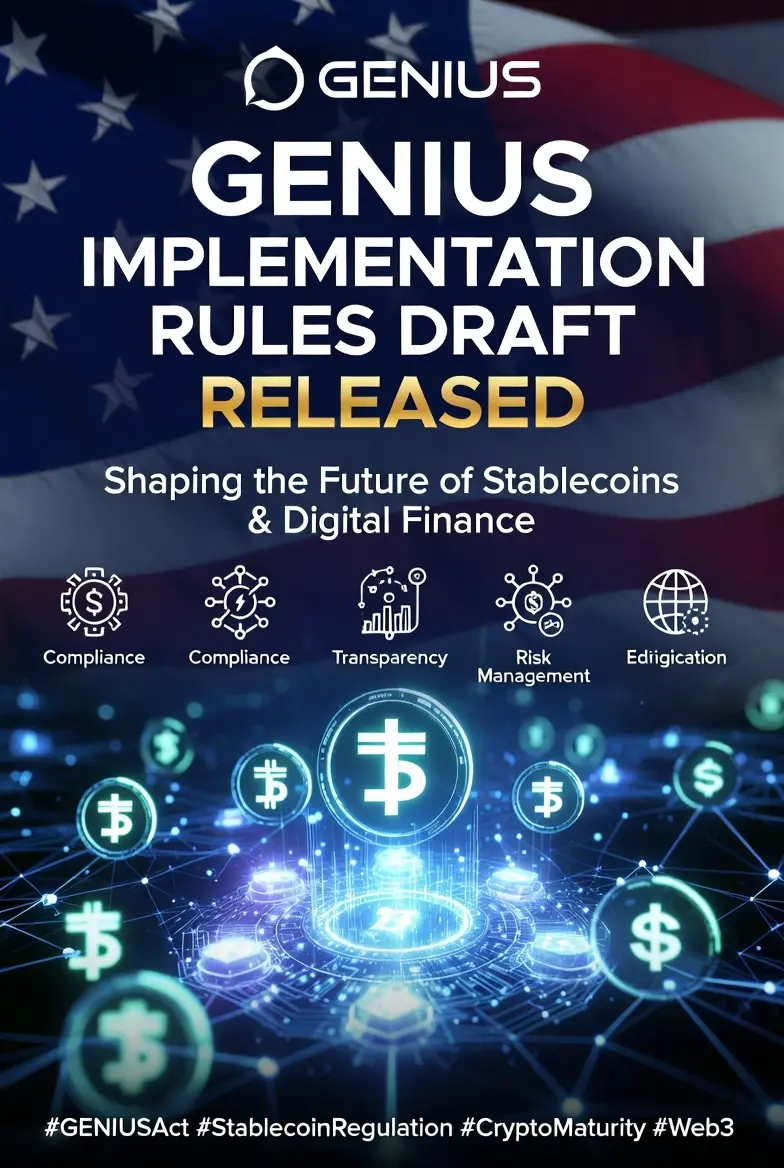
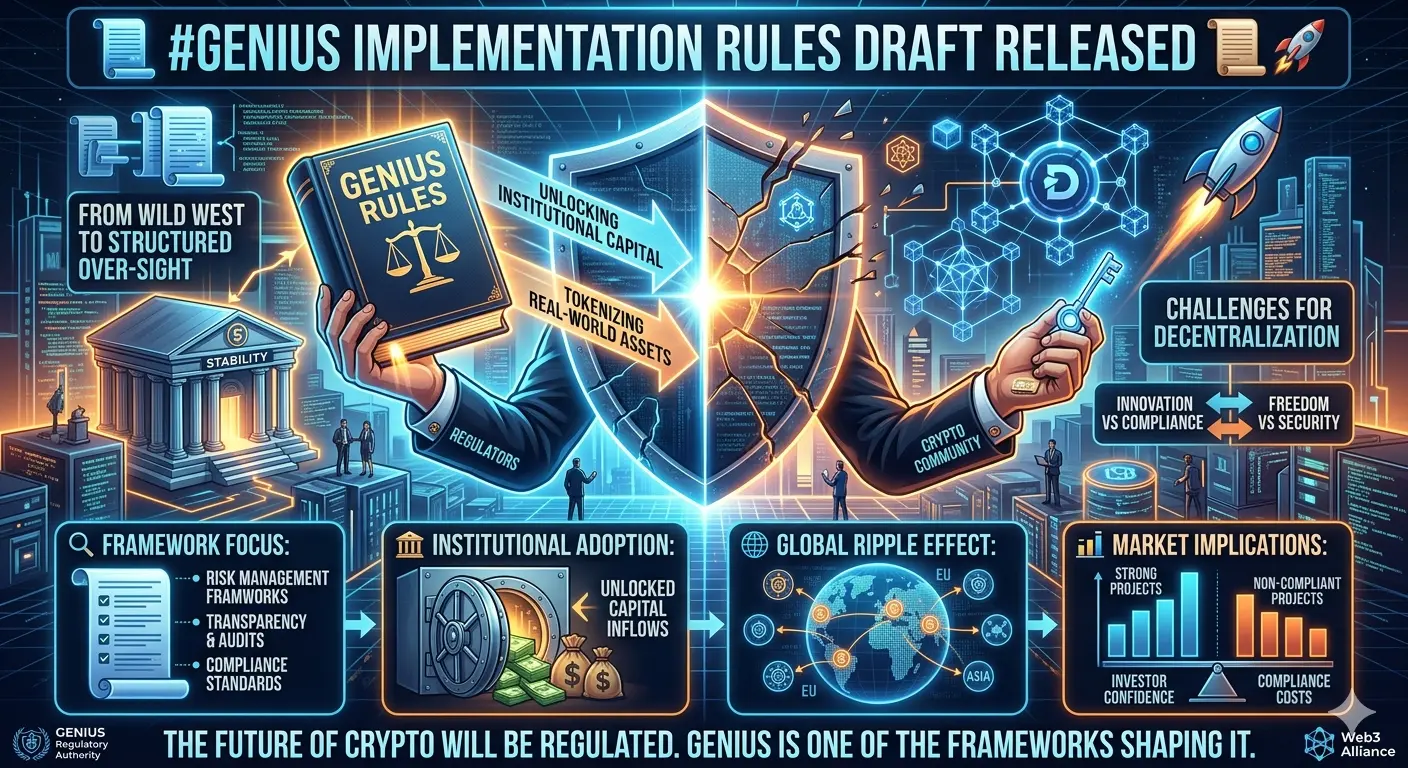
#GENIUSImplementationRulesDraftReleased
The release of the GENIUS Implementation Rules Draft is quickly becoming one of the most talked-about developments in the digital asset space. This isn’t just another policy document—it’s a potential turning point for how crypto, stablecoins, and digital finance will be governed globally.
As regulators step deeper into Web3, the GENIUS framework signals a shift from uncertainty to structured oversight. And for the first time, we’re seeing a coordinated effort to define clear operational rules for blockchain-based financial systems.
🔍 What Is the GENIUS
post-image
post-image
  • Reward
  • 1
  • Repost
  • Share
HighAmbitionvip:
Diamond Hands 💎
#StablecoinDebateHeatsUp
🚨💰
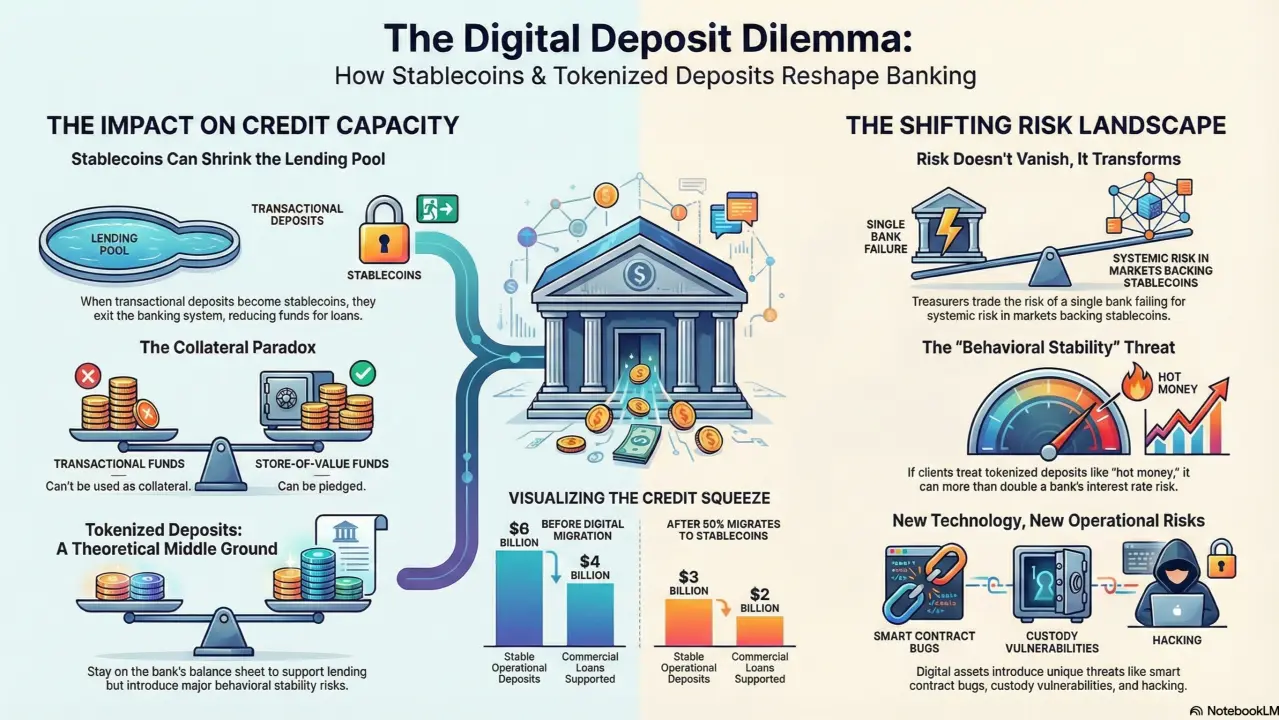
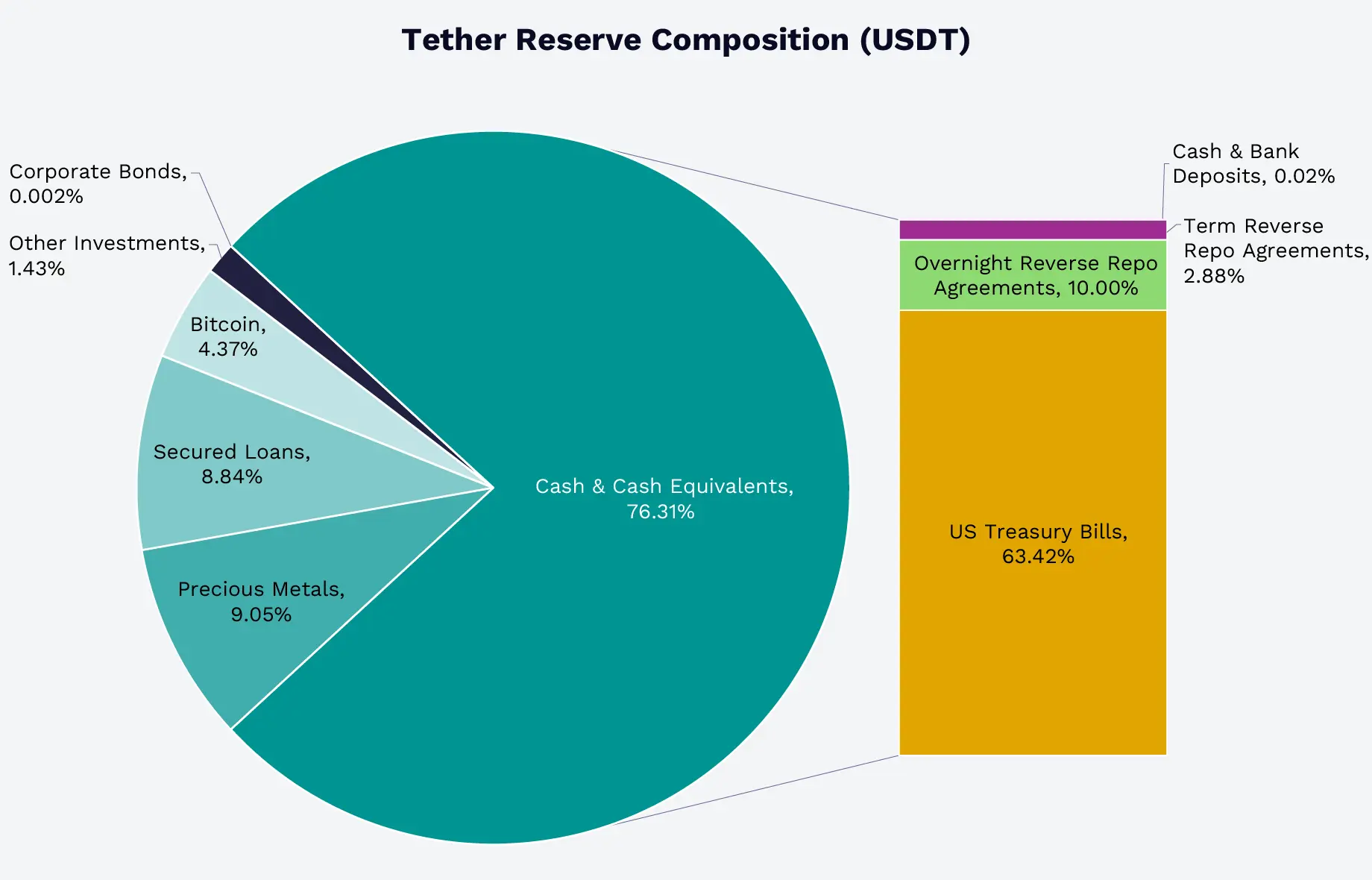
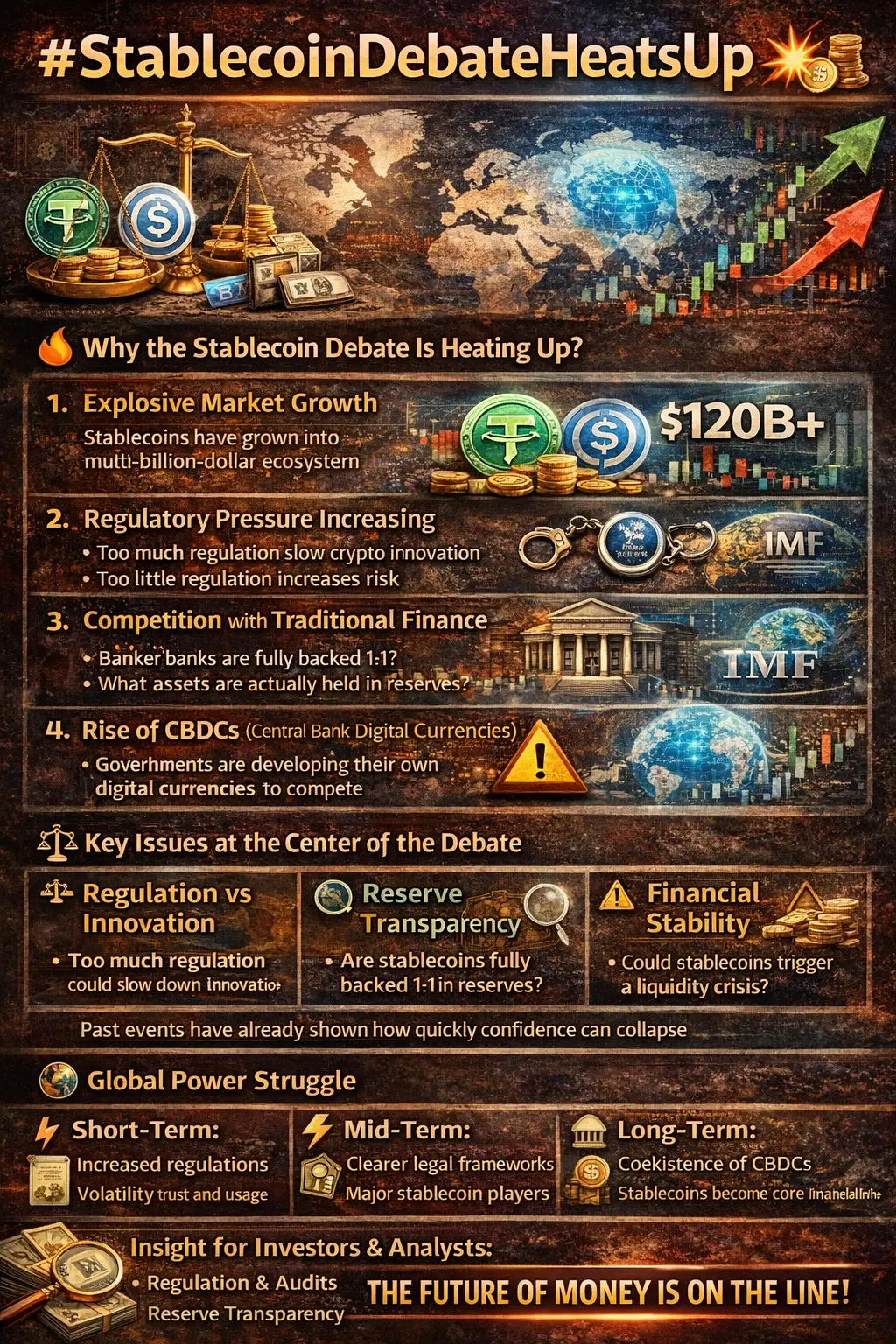
The global crypto landscape is once again heating up—and at the center of it all is the intensifying stablecoin debate. What was once considered the “safe haven” of crypto is now under heavy scrutiny from regulators, institutions, and market participants alike. The question is no longer if stablecoins will be regulated—but how far that regulation will go.
Stablecoins like Tether (USDT) and Circle’s USDC have become the backbone of the crypto economy, facilitating trillions in trading volume annually. From DeFi protocols to centralized exchanges, stablecoins act a
USDC-0.01%
DEFI-0.26%
post-image
post-image
post-image
  • Reward
  • 1
  • Repost
  • Share
HighAmbitionvip:
thnxx for the update
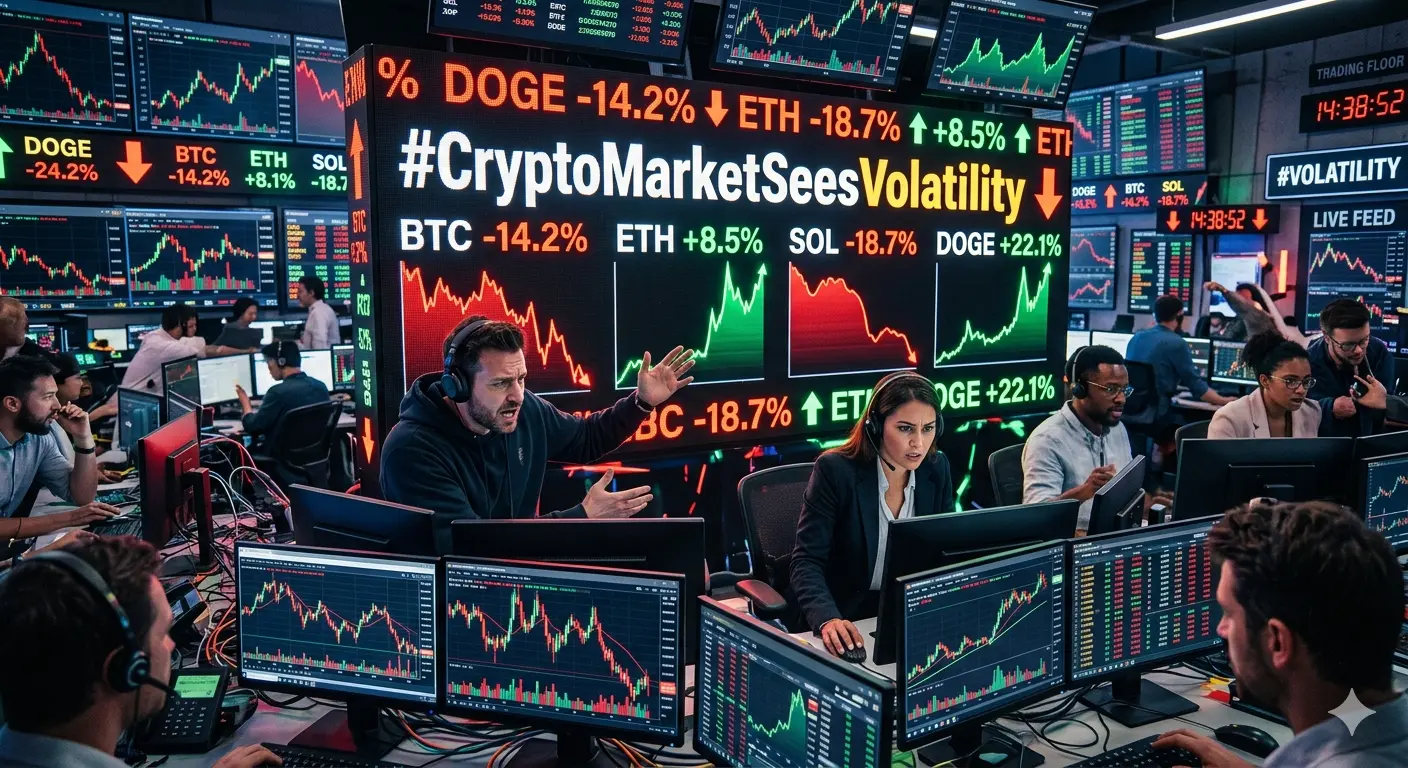
#CryptoMarketSeesVolatility
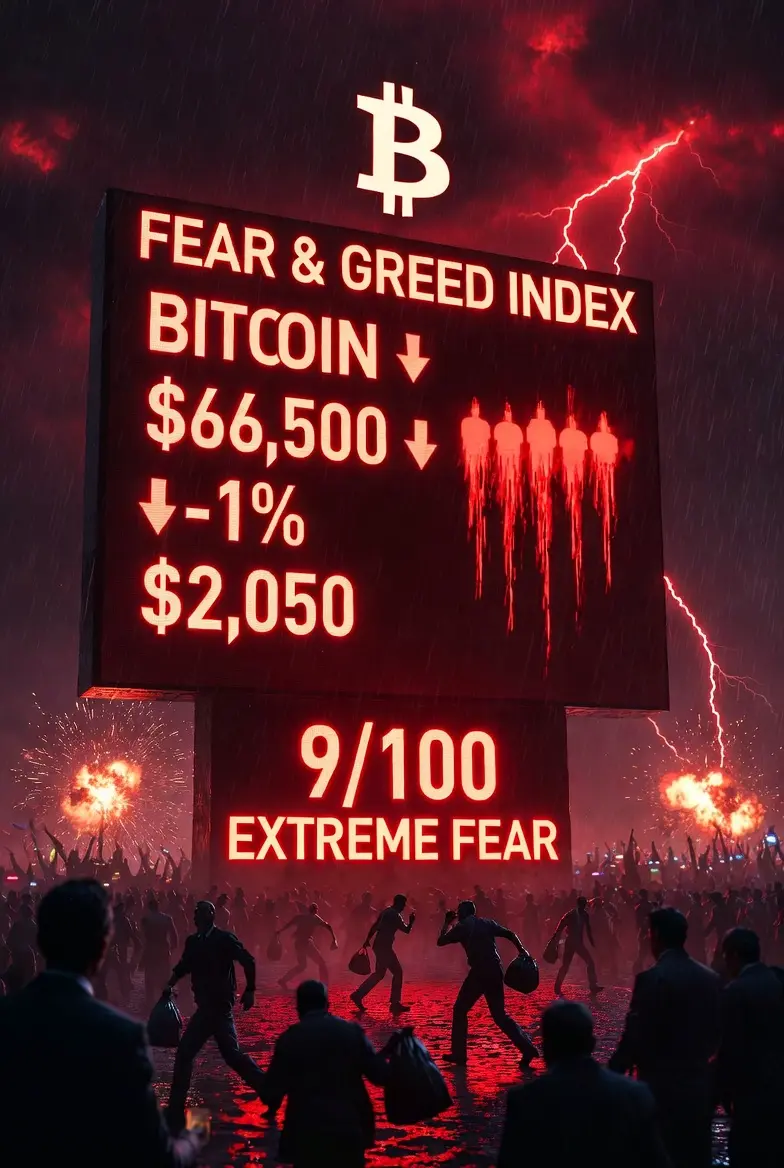
FEAR & GREED INDEX: 9/100 - EXTREME FEAR
The market is not just nervous --- it is in full panic mode. A Fear & Greed Index reading of 9 out of 100 is historically rare, and it signals that the crowd is running for the exits. This level of fear does not appear in normal pullbacks; it typically shows up when confidence completely breaks down, when traders stop thinking long-term and start reacting emotionally to short-term price movements, often selling at losses just to escape uncertainty. At the same time, such extreme fear conditions are known for creating some of
BTC0.68%
ETH0.68%
ZND-47.34%
AIOT117.5%
HighAmbitionvip
#CryptoMarketSeesVolatility
FEAR & GREED INDEX: 9/100 - EXTREME FEAR
The market is not just nervous --- it is in full panic mode. A Fear & Greed Index reading of 9 out of 100 is historically rare, and it signals that the crowd is running for the exits. This level of fear does not appear in normal pullbacks; it typically shows up when confidence completely breaks down, when traders stop thinking long-term and start reacting emotionally to short-term price movements, often selling at losses just to escape uncertainty. At the same time, such extreme fear conditions are known for creating some of the most powerful turning points in the market cycle, because when everyone who wanted to sell has already sold, even a small shift in sentiment can trigger a strong reversal. This is why this zone is dangerous for weak hands but highly attractive for experienced investors who understand market psychology.
BITCOIN (BTC) - $66,539 | -1.09% (24h)
BTC is caught in a brutal tug-of-war right now.
24h range: $65,712 - $67,428
Volume: -$604M traded in the last 24 hours
The current Bitcoin structure reflects a market divided between fear-driven selling and strategic accumulation, where price is moving sideways not because nothing is happening, but because two powerful forces are colliding at the same time. On one side, institutional players continue to step in with confidence, treating these levels as an opportunity to build long-term positions, which signals that the broader belief in Bitcoin’s future remains intact despite short-term volatility. On the other side, retail traders are showing hesitation and weakness, pulling out liquidity from the market and reducing buying pressure, which is why every attempt to push higher lacks strong follow-through. The repeated testing of the $66,000 - $70,000 zone clearly shows that this is a critical decision area, but the absence of aggressive buyers indicates that conviction is still missing.
Bulls: MetaPlanet just became the 3rd largest corporate BTC holder, adding 5,075 BTC in Q1 alone. Strategy is also continuing its aggressive accumulation.
Bears: Retail is selling. Demand is contracting deeply. The $66,000 - $70,000 zone is being tested repeatedly but buyers are not showing up with conviction.
Wild Card: Shorts are extremely overcrowded. A short squeeze before Easter is a real scenario --- do not sleep on it.
Innovation front: Circle launched cirBTC, BlackRock dropped a covered call ETF (BITA), and post-quantum cryptography is now a serious discussion --- Coinbase's CEO already made moves on it.
What makes this situation even more explosive is the buildup of short positions, because when too many traders bet against the market at the same time, it creates a fragile setup where even a small upward move can force liquidations, accelerating price rapidly in a chain reaction. This is why, despite weak sentiment, the market still holds the potential for sudden upside volatility.
Takeaway: Institutions are loading. Retail is dumping. The battle is real.
ETHEREUM (ETH) - $2,048 | -2.35% (24h)
ETH is bleeding harder than BTC right now.
24h range: $2,017 - $2,102
Volume: -$364M in 24h
Ethereum is currently facing a more aggressive wave of selling pressure compared to Bitcoin, and this is reflected not just in its price decline but also in its broader market behavior, where weakness has persisted for an extended period. The fact that ETH has recorded six consecutive red months highlights the intensity of this downtrend, marking one of the most challenging phases since 2018, and showing how deeply sentiment around ETH has been affected.
The bad: ETH just logged six consecutive red months --- the worst streak since 2018. That's a historic pain level.
The ugly: The Drift Protocol hack resulted in $285M worth of assets converted into 129,000 ETH and bridged onto Ethereum --- that is pure sell pressure flooding the chain.
The good: BlackRock deposited 15,103 ETH to Coinbase. BitMine accumulated 71,179 ETH last week. On-chain, ETH still shows nearly 790,000 daily active addresses and 250,000+ new addresses per day. The network is alive.
Macro view: ETF flows, on-chain liquidations, and quantum computing security are the three big themes dominating ETH discussions right now.
What makes Ethereum particularly interesting in this phase is the clear disconnect between price action and fundamentals, because while the price continues to struggle under pressure, the network itself remains highly active and continues to grow. This type of divergence often signals that the weakness may be temporary and driven more by external factors and forced selling rather than a collapse in the underlying ecosystem.
Takeaway: ETH is getting battered in price but built in fundamentals. Classic divergence.
TOP GAINERS (24h)
Coin
Change
ZND
+165.59%
OKZOO (AIOT)
+137.32%
Cartesi (CTSI)
+69.37%
aiPump (AIPUMP)
+50.58%
Arena-Z (A2Z)
+38.9%
Even in a market dominated by fear, the presence of such massive gains in select low-cap assets shows that liquidity is not completely gone, but rather highly selective and concentrated in speculative opportunities. These sharp upward moves are typically driven by short-term catalysts, hype cycles, or low liquidity conditions that allow price to move aggressively with relatively small capital inflows. However, these gains should not be confused with a broader market recovery, because they exist in isolation and often reverse just as quickly as they rise.
Note: These are low-cap, high-risk moves. Huge green candles in an extreme fear market usually mean isolated catalysts, not a broad bull signal. Trade with caution.
TOP LOSERS (24h)
Coin
Change
StakeStone (STO)
-55.88%
Tranchess (CHESS)
-37.59%
AsMatch (ASMATCH)
-30.43%
Solar (SXP)
-25.31%
The downside in the market is far more aggressive and consistent, with several assets experiencing sharp and high-volume declines, which typically indicate deeper structural problems rather than normal corrections. When a coin drops this significantly within a short time while maintaining high trading volume, it often reflects panic selling combined with negative developments or major liquidity events.
STO is the biggest story here --- down nearly 56% with $47M in volume. That is not a slow bleed, that is a collapse. When a coin drops this hard on high volume, it usually means a major unlock, a rug pull, or a very bad piece of news hit.
HOTTEST COINS RIGHT NOW
GT (GateToken), STO, PIPPIN, SIREN, BNB are all generating the most trading activity. PIPPIN is the one outlier here --- up +15.12% while everything else is red. Worth watching.
The surge in activity around these coins shows where attention and liquidity are currently flowing, and in volatile markets, attention itself becomes a powerful driver of price movement. Coins that attract trading interest often experience exaggerated moves in both directions, making them key areas to monitor for short-term opportunities as well as risk.
THE BIG PICTURE
The overall market structure remains fragile, with Bitcoin acting as the anchor but showing instability around key levels, while Ethereum continues to underperform, signaling weakness in the broader altcoin sector. At the same time, macroeconomic pressures such as geopolitical uncertainty, inflation concerns, and shifting global financial conditions are reducing risk appetite, which directly impacts crypto as a high-risk asset class.
The whole market is red. BTC is the anchor and it is wobbling around $66.5K.
ETH is underperforming BTC significantly --- the flippening talk is dead for now.
Macro pressure (geopolitics, inflation fears, tariff uncertainty) is suppressing risk appetite across the board.
Institutions are buying the dip quietly while retail panic-sells.
The setup: If shorts get squeezed and macro fear eases even slightly, a fast recovery move is possible. But until then, the path of least resistance is still down.
This creates a classic environment where smart money operates quietly in the background, accumulating during fear, while emotional participants exit the market under pressure, often at the worst possible time.
repost-content-media
  • Reward
  • 2
  • Repost
  • Share
HighAmbitionvip:
To The Moon 🌕
View More
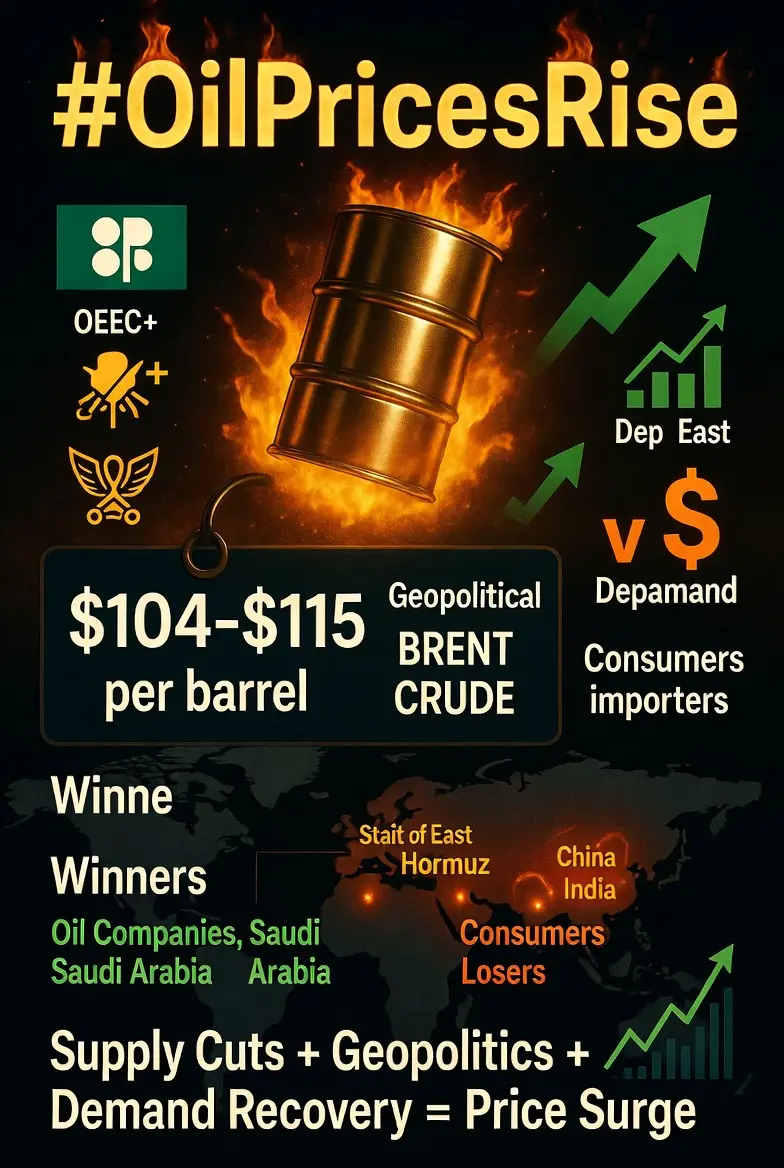
#OilPricesRise
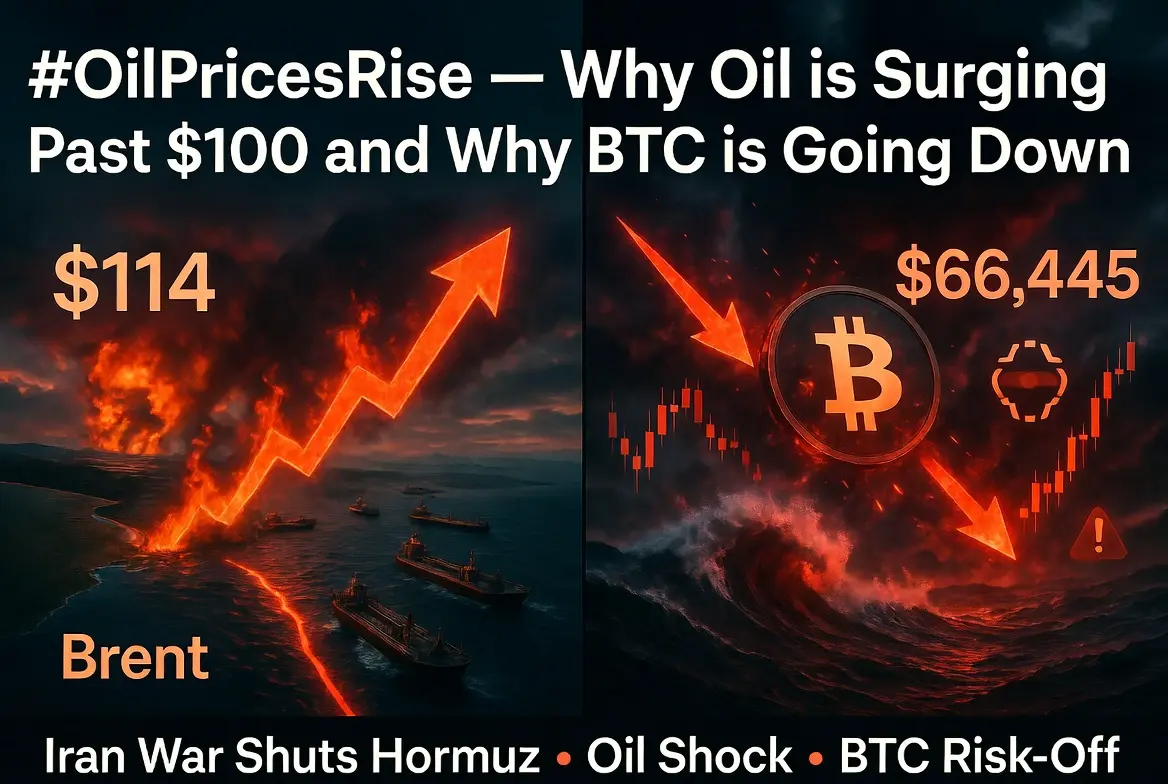
#OilPricesRise — Why Oil is Surging Past $100 and Why BTC is Going Down
PART 1 — WHY OIL PRICES ARE RISING
Step 1: The Iran War and the Strait of Hormuz Blockade — The Root Cause
This is the single biggest driver of everything happening right now.
The US-Israel military conflict with Iran has triggered what experts are already calling the largest supply disruption in the history of the global oil market. Iran has effectively closed the Strait of Hormuz — a narrow waterway through which nearly one-fifth (20%) of the entire world's oil supply passes every single day.
When that ch
HighAmbitionvip
#OilPricesRise
#OilPricesRise — Why Oil is Surging Past $100 and Why BTC is Going Down
PART 1 — WHY OIL PRICES ARE RISING
Step 1: The Iran War and the Strait of Hormuz Blockade — The Root Cause
This is the single biggest driver of everything happening right now.
The US-Israel military conflict with Iran has triggered what experts are already calling the largest supply disruption in the history of the global oil market. Iran has effectively closed the Strait of Hormuz — a narrow waterway through which nearly one-fifth (20%) of the entire world's oil supply passes every single day.
When that chokepoint gets sealed, the math is brutal: less oil available globally, same (or growing) demand, prices shoot up. That's exactly what's happening.
Goldman Sachs noted that Iran's Hormuz blockade has had an impact 17 times larger than the peak disruption caused by the Russia-Ukraine war in April 2022, which already pushed oil to around $139/barrel at the time. Right now, Brent crude is hovering around $114/barrel, and the New York Times confirmed gas prices in the US have climbed above $4 per gallon as of late March/early April 2026.

What makes this situation exceptionally critical is not just the supply shock itself, but the speed and scale at which it has unfolded, forcing global markets to react instantly without the usual adjustment period. Energy markets operate on tight balances, and when such a large portion of supply is suddenly disrupted, pricing mechanisms react aggressively, pushing oil higher in a way that reflects fear, scarcity, and uncertainty all at once. This is not a slow-burning issue; it is a high-impact shock that is rippling across every financial and economic system simultaneously.
Step 2: OPEC Has No Magic Bullet — Surge Capacity Is Limited
When supply gets disrupted, the world usually turns to OPEC's surplus production capacity as a buffer. But that buffer has limits. The missing oil volume from the Hormuz blockade is so large that even strategic petroleum reserves (from the US, OECD nations, and China) cannot fully compensate.
As Forbes pointed out, the primary economic effect of an oil crisis works through two channels:
First-order effects: Inflation rises, consumer purchasing power falls, fuel prices jump
Second-order effects: Higher energy costs ripple through every supply chain — food, shipping, manufacturing, aviation — making everything more expensive
The deeper issue here is that the global energy system does not have enough flexibility to absorb shocks of this magnitude without consequences. Even when emergency reserves are deployed, they only provide temporary relief and cannot replace sustained daily supply flows. This creates a prolonged imbalance where elevated prices become the new normal, and those higher costs begin embedding themselves into the global economy, affecting everything from basic consumer goods to large-scale industrial operations.
Step 3: Inflation Is Being Reignited
This is where it starts to hit everyone directly. Former IMF Chief Economist Gita Gopinath warned that if oil averages $85/barrel through 2026, global inflation could jump by 60 basis points and global economic growth could be trimmed by 0.3 to 0.4 percentage points.
We're already seeing oil well above $85 at current levels. That means:
Household energy bills rising sharply
Fuel prices climbing for every driver
Central banks that were hoping to cut interest rates may now be forced to raise rates again — or at minimum, keep them elevated longer than planned
The risk of a global recession climbs materially. Economists at the Washington Times estimate WTI oil hitting $138/barrel would push recession risk to 50%
Developing and poorer nations are getting hit hardest — they literally get outbid for oil by wealthier economies, leading to fuel rationing and energy subsidies straining government budgets.
This stage represents the transition from an energy problem to a full-scale economic problem, where rising oil prices begin to squeeze both consumers and governments at the same time, reducing spending power, increasing financial stress, and forcing policymakers into difficult decisions that can slow down economic growth even further.
Step 4: This Is Being Called "The Oil Market's COVID Moment"
Axios described the current situation as the oil market's COVID moment — a structural shock, not just a temporary price spike. Just as COVID-19 forced demand destruction by getting "cars off roads, ships off seas, planes out of skies," the current supply shock is so severe that prices have to rise high enough to forcibly reduce global oil consumption.
The feedback loop is dangerous:
War disrupts supply
Prices spike
Inflation surges
Central banks tighten or hold rates
Consumer spending falls
Business confidence crumbles
Risk of recession rises
Markets sell off — including crypto
This feedback loop highlights how interconnected modern markets have become, where a single geopolitical event can cascade through multiple layers of the global economy, eventually impacting assets like crypto that are not directly tied to oil but are heavily influenced by liquidity and investor sentiment.
PART 2 — HOW THIS IS DRAGGING BTC AND CRYPTO DOWN
Step 5: The "Risk-Off" Tsunami — Investors Are Running Away From Everything Risky
When oil spikes and recession fears mount, global investors execute what Wall Street calls a "risk-off" rotation — they sell high-risk assets (equities, crypto) and move into safe havens (gold, US treasuries, cash, stable bonds).
Bitcoin is perceived as a risk-on asset by institutional investors. When macro fear rises, BTC gets sold. The data confirms this brutally:
BTC price right now: -$66,445
24h change: -1.02%
30-day change: -6.26%
90-day change: -27.41%
Down roughly 18-20% since the start of 2026
Still sitting approximately 41-44% below its all-time high near $126,000 reached in October 2025
ETH is in even worse shape on the longer timeframe:
ETH price right now: -$2,045
90-day change: -34.95%
This movement reflects a broader shift in investor psychology, where preserving capital becomes more important than seeking returns, leading to aggressive selling in volatile assets regardless of their long-term potential.
Step 6: Bitcoin Just Matched Its Worst Streak in History
CoinDesk reported that Bitcoin is on the verge of matching a joint record of six consecutive monthly losses — a streak only seen once before, between August 2018 and January 2019, during the worst crypto bear market of that era.
The first 50 days of 2026 marked the worst-ever start to a year for BTC on record. That's not just bad luck — it reflects genuine macro pressure.
This kind of prolonged weakness is rarely driven by technical factors alone; it usually indicates a deeper macro environment where liquidity is drying up and confidence is consistently being eroded over time.
Step 7: Institutional Money Is Pulling Out
This cycle is different from 2018 because institutions are now deeply involved. And when macro conditions deteriorate, institutions are the first to pull out systematically.
Bitcoin ETFs — which were the rocket fuel behind the 2024 bull run — saw nearly $4 billion in net outflows in just the first five weeks of 2026. Companies that built Bitcoin treasuries are also unwinding positions:
MARA Holdings sold 15,133 BTC for -$1.1 billion in March 2026
Genius Group liquidated its entire BTC treasury to pay off debt
Cango Inc. sold 4,451 BTC
GD Culture Group authorized sale of a portion of its 7,500 BTC treasury
The "Bitcoin treasury boom" that characterized 2024-2025 is actively unwinding. Only Michael Saylor's Strategy continues buying — but one buyer cannot absorb all that selling pressure.
This reflects a structural shift where capital that once supported the market is now being withdrawn, creating sustained downward pressure that cannot be easily reversed without a significant improvement in macro conditions.
Step 8: Quantum Computing Fear Added Fuel to the Fire
As if macro pressure wasn't enough, this week Elon Musk and Google's quantum computing developments added fresh fear. Project Eleven, a quantum risk research group, estimated that approximately 7 million BTC worth -$470 billion could be vulnerable to quantum computing attacks in the future.
Google dramatically brought forward its quantum computing timeline, triggering fresh concerns. Musk publicly warned: "You have until 2029." BlackRock also issued a separate $1 trillion crypto market warning in the same week.
This type of technological uncertainty does not immediately impact price fundamentals, but it significantly affects investor confidence, especially in already fragile conditions.
Step 9: The Oil-Crypto Connection Is Real and Direct
Here's why oil prices and crypto prices are not separate stories — they are the same story:
Inflation surges, forcing central banks to keep interest rates high, which reduces liquidity flowing into risk assets. Growth fears rise, pushing investors to sell Bitcoin and reduce exposure to volatility. Recession risks increase, leading companies to liquidate crypto holdings to maintain financial stability. Consumer confidence declines, weakening retail participation in the market. At the same time, rising energy costs directly impact Bitcoin mining, making operations more expensive and forcing miners to sell BTC to cover costs, which adds continuous selling pressure into the market.
PART 3 — WHAT COULD TURN THIS AROUND
Step 10: The Potential Reversal Catalysts
Despite all of the above, there are reasons to watch carefully rather than panic-sell at the bottom:
For Oil:
Any diplomatic breakthrough that reopens the Strait of Hormuz would trigger an immediate oil price drop
Iran already signaled "cooperation on key shipping routes" briefly on April 2nd, causing Bitcoin to trim losses and stocks to erase a 2% decline in a single session — showing how quickly things can reverse
For Bitcoin:
Historical data shows 8 out of 13 Aprils since 2013 have closed in the green for BTC, with an average April gain of 13%
BTC remains above its critical 200-week moving average at $59,268 and its realized price (average on-chain cost basis) at $54,177 — both are historically strong support levels
Some analysts believe Bitcoin is in a "time pain trap" — needing a few more months of boring, sideways or slightly down price action before finding a true floor and recovering
These factors highlight that while the current environment is heavily bearish, it is not without potential turning points, especially if macro conditions begin to stabilize.
SUMMARY — THE BIG PICTURE
Oil is rising because: A geopolitical war disrupted the world's most critical oil shipping route, causing a supply shock that is reigniting inflation, threatening global growth, and forcing a recession risk conversation that nobody wanted to have in 2026.
Crypto is falling because: Rising oil = rising inflation = higher interest rates for longer = risk-off investor behavior = institutional selling + miner selling + ETF outflows + fear compounding on top of quantum computing concerns.
The key number to watch: If Brent crude drops back below $85/barrel due to diplomatic resolution, expect a rapid reversal in both stock markets and crypto. If oil climbs toward $138/barrel, brace for deeper market pain across all asset classes.
The macro environment and geopolitics are driving everything right now, and this is one of those rare periods where external forces matter more than technical analysis. Staying informed, managing risk carefully, and understanding the bigger picture is essential for navigating this phase of the market.
repost-content-media
  • Reward
  • Comment
  • Repost
  • Share
#PreciousMetalsPullBackUnderPressure
Precious Metals Pullback Under Pressure
Current Prices (as of -April 1-3, 2026)
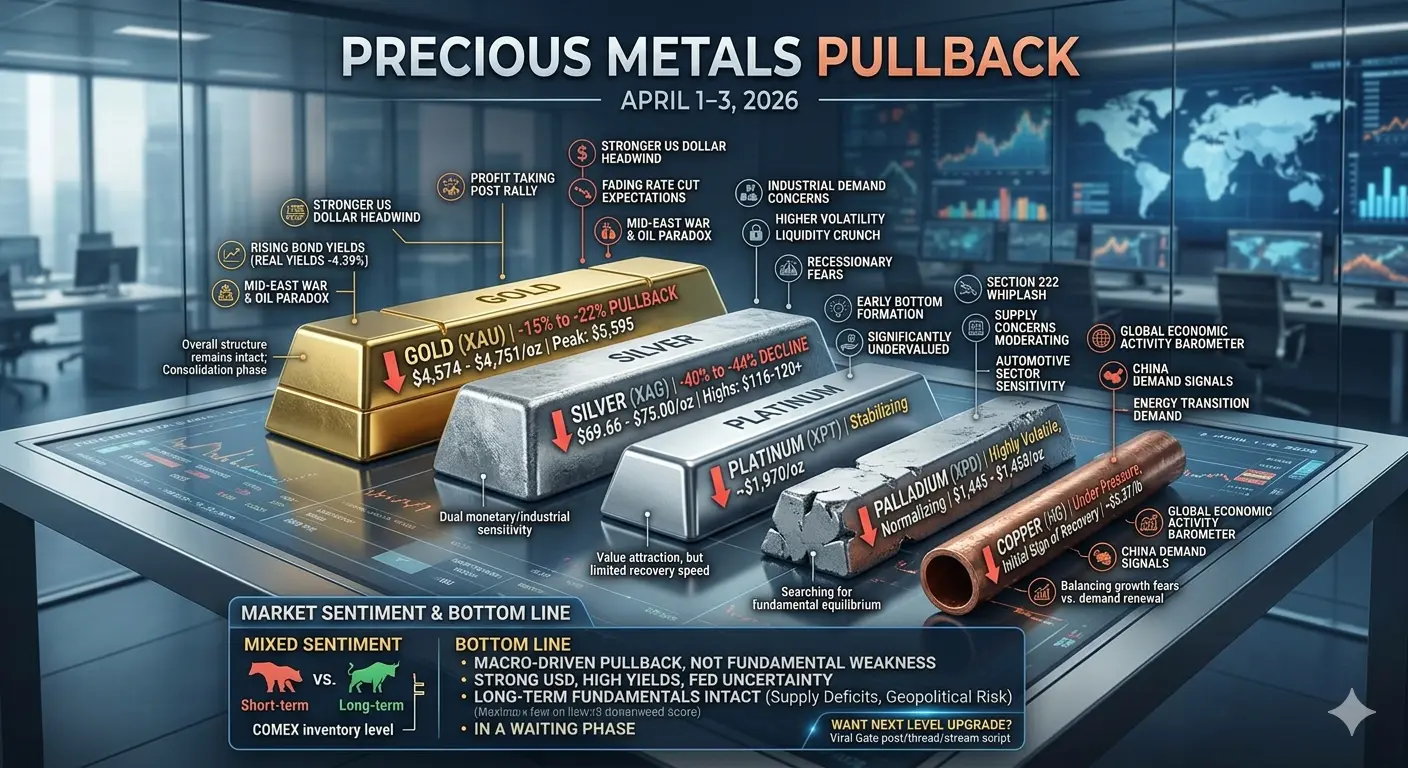
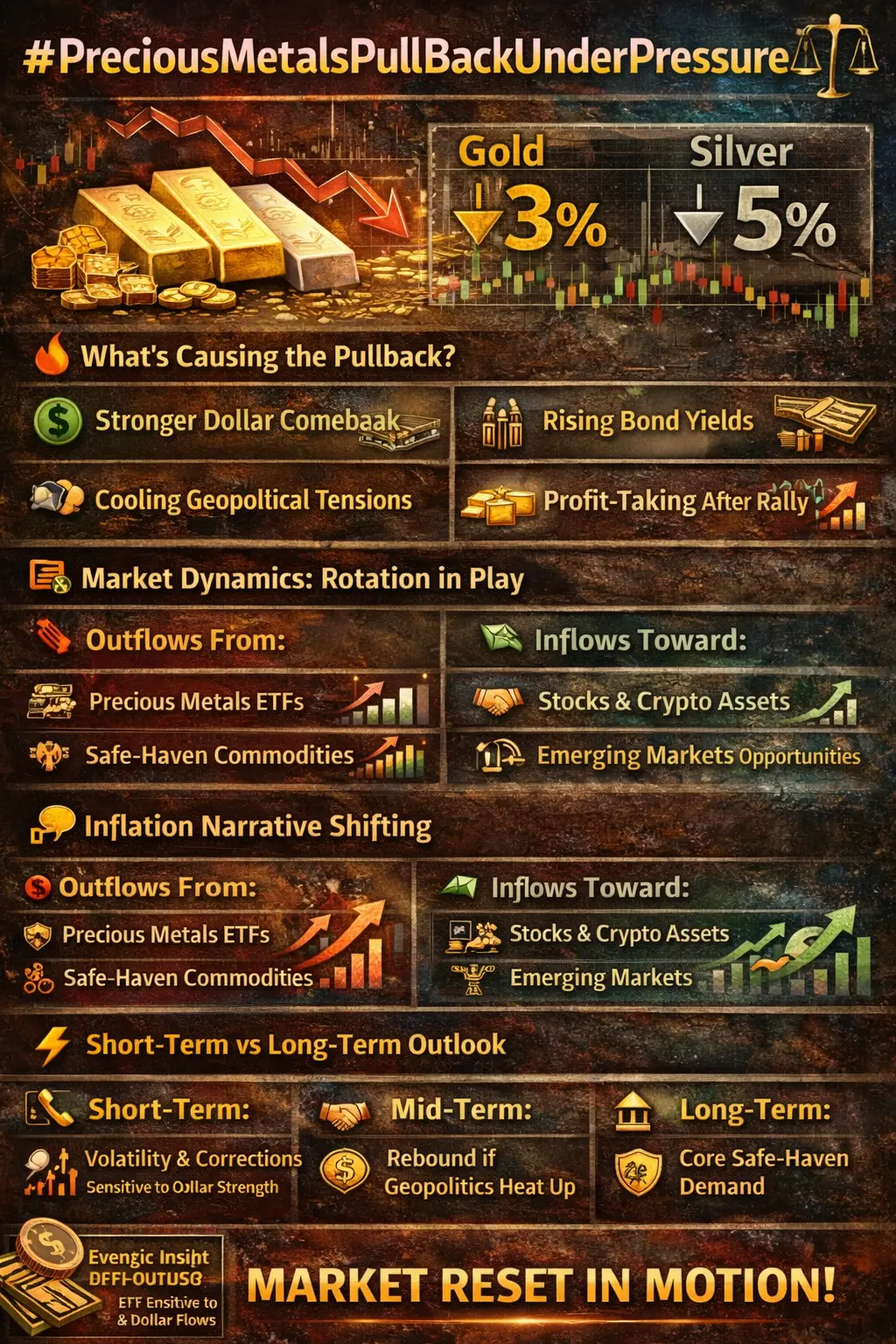
As of April 1–3, 2026, the precious metals complex is undergoing a broad and synchronized correction, with all major metals trading under visible pressure. Gold is currently fluctuating between -$4,574 and $4,751 per ounce, representing a -15% to -22% decline from its January peak near $5,595, signaling a meaningful but controlled retracement after an extended rally. Silver, however, has experienced a far more aggressive downside move, now trading between -$69.66 and $75 per ou
HighAmbitionvip
#PreciousMetalsPullBackUnderPressure
Precious Metals Pullback Under Pressure
Current Prices (as of -April 1-3, 2026)
As of April 1–3, 2026, the precious metals complex is undergoing a broad and synchronized correction, with all major metals trading under visible pressure. Gold is currently fluctuating between -$4,574 and $4,751 per ounce, representing a -15% to -22% decline from its January peak near $5,595, signaling a meaningful but controlled retracement after an extended rally. Silver, however, has experienced a far more aggressive downside move, now trading between -$69.66 and $75 per ounce, marking a sharp -40% to -44% drop from its highs above $116–120, highlighting its higher volatility and sensitivity to both monetary and industrial conditions. Platinum is attempting to stabilize in the -$1,970 to $1,971 per ounce range after a heavy sell-off phase, indicating early signs of bottom formation. Palladium remains highly volatile, trading between -$1,445 and $1,458 per ounce, down approximately -1.3%, as it continues to normalize following earlier policy-driven spikes. Meanwhile, copper is currently priced at -$5.37 per pound, still under pressure but showing initial signs of recovery on a week-on-week basis as demand expectations begin to improve.
Why Is This Pullback Happening? — Core Reasons
1. Stronger US Dollar
The strength of the US Dollar is currently one of the most dominant macro forces impacting the metals market. Because precious metals are priced globally in USD, a stronger dollar effectively increases the cost for international buyers, leading to reduced demand and downward price pressure. This effect is clearly visible in gold, which despite holding in the -$4,574 – $4,751/oz range, is struggling to regain upward momentum. Similarly, silver, trading around -$69.66 – $75/oz, is facing intensified selling pressure as global liquidity tightens. The dollar’s strength is not just cyclical — it is actively absorbing capital flows, making it a major headwind for commodities.
2. Rising Bond Yields / Real Yields (-4.39%)
Elevated bond yields, particularly real yields at -4.39%, are significantly reducing the attractiveness of non-yielding assets like gold and silver. Investors are increasingly shifting capital toward fixed-income instruments that now offer competitive, low-risk returns. This shift is structural in the short term, not temporary. As capital flows out of metals and into bonds, liquidity in the metals market decreases, putting sustained pressure on prices. Gold in the $4,500 range and silver near the $70 zone are both reflecting this capital rotation dynamic.
3. Fading Fed Rate-Cut Expectations
At the beginning of 2026, markets were strongly positioned for aggressive Federal Reserve rate cuts, which would have supported metals through increased liquidity. However, persistent inflation — driven in part by elevated oil prices in the $98–112/bbl range — has forced a reassessment. The Federal Reserve is now expected to maintain higher interest rates for longer, which tightens financial conditions. This shift is directly impacting metals such as gold ($4,500 range) and platinum (-$1,970 zone), as reduced liquidity and higher borrowing costs limit speculative inflows and weaken bullish momentum.
4. Profit-Taking After Massive 2024-2025 Rallies
The correction we are witnessing is also a natural consequence of the extraordinary gains recorded during 2024 and 2025. Gold surged to $5,595 before pulling back to -$4,574 – $4,751, while silver dropped from $116–120 highs to $69–75, reflecting a large-scale profit-taking phase. Institutional investors who accumulated positions during earlier stages of the rally are now systematically locking in profits. This is not panic selling, but rather a controlled redistribution of capital, which creates sustained downward pressure even in the absence of negative news.
5. Middle East War & Oil Price Paradox
Geopolitical tensions, particularly in the Middle East, would typically support gold through safe-haven demand. However, in the current environment, this effect is being offset by the inflationary impact of rising oil prices. With oil trading between $98 and $112 per barrel, inflation concerns remain elevated, forcing central banks to maintain tighter monetary policies. As a result, gold in the $4,500 range is not benefiting as strongly from geopolitical risk as expected. This creates a paradox where conflict exists, but its financial consequences are indirectly bearish for metals due to stronger yields and a stronger dollar.
6. Liquidity Crunch & Risk-Off in Equities
During periods of equity market stress, liquidity becomes the primary concern for investors. When markets turn risk-off, leveraged participants often liquidate profitable positions to meet margin requirements. Precious metals, being highly liquid, are frequently sold in these scenarios. Silver, already trading in the -$69–75 range, tends to experience sharper declines due to its higher volatility. Copper, currently at -$5.37/lb, has also been affected, as it is closely tied to global economic sentiment and reacts quickly to shifts in growth expectations.
Metal-by-Metal Discussion
Gold — The King Under Pressure
Gold reached a peak of $5,595 in January 2026 and has since corrected to the -$4,574 – $4,751/oz range, representing a 15–22% pullback. Despite this decline, the overall structure of the market remains intact. The correction is being driven primarily by external macroeconomic factors such as dollar strength and elevated yields, rather than a breakdown in fundamentals. Central bank demand, geopolitical uncertainty, and long-term store-of-value characteristics continue to support gold. Institutional projections remain bullish, indicating that this pullback is likely a consolidation phase within a broader uptrend rather than the beginning of a bearish cycle.
Silver — The Hardest Hit
Silver has undergone a significant correction, falling from $116–120 highs to -$69.66 – $75/oz, representing a 40–44% decline. This sharp move reflects silver’s dual nature as both a monetary and industrial metal. On one hand, it is affected by the same macro pressures impacting gold; on the other, it is highly sensitive to industrial demand expectations. Concerns about global growth have added additional pressure. However, the long-term outlook remains strong due to persistent supply deficits and increasing demand from sectors such as renewable energy, electronics, and advanced technologies. This combination creates the potential for a strong recovery once macro conditions stabilize.
Platinum — Recovering From a Beating
Platinum is currently stabilizing around -$1,970 – $1,971/oz after experiencing a broad sell-off. Compared to gold, platinum remains significantly undervalued, making it attractive as a long-term investment. Demand from jewelry markets and industrial applications provides a solid foundation for recovery. The recent stabilization suggests that selling pressure is easing and that value-driven investors may be beginning to re-enter the market.
Palladium — Section 232 Whiplash
Palladium, now trading between -$1,445 and $1,458/oz, has been heavily influenced by earlier concerns related to Section 232 tariffs. The previous spike was driven by fears of supply disruption, but as those concerns have moderated, prices are normalizing. However, palladium remains highly sensitive to developments in the automotive sector, where it is primarily used. Combined with existing inventories, this creates a more uncertain outlook compared to other metals.
Copper — War-Driven Decline, China-Demand Recovery
Copper is currently trading at -$5.37/lb, reflecting its role as a key indicator of global economic activity. The recent decline was driven by geopolitical uncertainty and concerns about economic slowdown, particularly in China. However, early signs of recovery are emerging as demand signals improve. Copper remains in a transitional phase, balancing between macroeconomic pressure and the potential for renewed industrial demand.
X Community Sentiment — What Traders Are Saying
Market sentiment remains mixed, reflecting the uncertainty of the current environment. Some traders are cautiously accumulating positions, viewing current levels — particularly silver near -$71.80 and gold around $4,500 — as potential entry zones. Long-term investors remain confident, focusing on structural fundamentals such as supply deficits and central bank demand. At the same time, short-term bearish views persist, with some expecting further downside before a stable base is formed. Key catalysts being monitored include COMEX inventory levels and policy developments affecting industrial demand.
Bottom Line
The current pullback in precious metals is macro-driven, liquidity-influenced, and structurally healthy, rather than a sign of fundamental weakness. Gold in the $4,500 range, silver near the $70 zone, platinum around $1,970, palladium near $1,450, and copper at $5.37 are all reflecting a broader market reset.
The combination of a strong dollar, elevated yields, reduced rate-cut expectations, and post-rally profit-taking is driving short-term weakness. However, long-term fundamentals — including supply constraints, geopolitical risk, and institutional demand — remain firmly intact.
For now, the market is in a waiting phase, with the next major move likely to be determined by Federal Reserve policy signals, oil price direction, geopolitical developments, and overall liquidity conditions.
repost-content-media
  • Reward
  • Comment
  • Repost
  • Share
#IranLandmarkBridgeBombed
Event Overview — What Happened?
On April 3, 2026, the B1 Bridge in Karaj — Iran's tallest and most iconic bridge located in the Alborz province connecting Tehran to Karaj — was destroyed in a confirmed US-Israeli airstrike. This incident occurred on Day 34 of the ongoing US-Israel military campaign, known as "Operation Epic Fury". The strike resulted in 8 confirmed deaths and 95 wounded, as reported by Iran’s state media and international outlets like Haaretz.
The bridge was more than infrastructure; it was a symbol of national pride, which explains the immediate vir
BTC0.68%
ETH0.68%
HighAmbitionvip
#IranLandmarkBridgeBombed
Event Overview — What Happened?
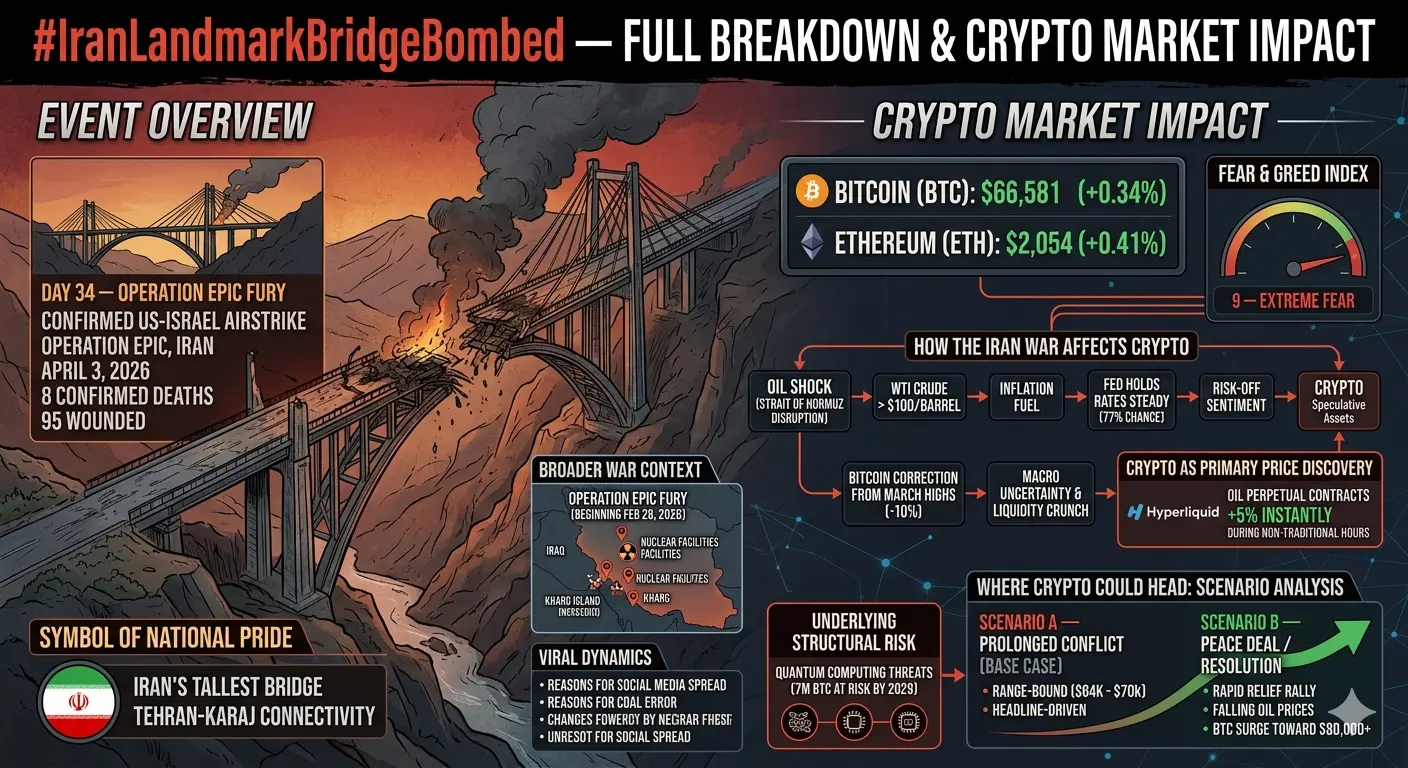
On April 3, 2026, the B1 Bridge in Karaj — Iran's tallest and most iconic bridge located in the Alborz province connecting Tehran to Karaj — was destroyed in a confirmed US-Israeli airstrike. This incident occurred on Day 34 of the ongoing US-Israel military campaign, known as "Operation Epic Fury". The strike resulted in 8 confirmed deaths and 95 wounded, as reported by Iran’s state media and international outlets like Haaretz.
The bridge was more than infrastructure; it was a symbol of national pride, which explains the immediate virality of the hashtag #IranLandmarkBridgeBombed across X/Twitter and other social media platforms. Real-time footage of the collapse spread globally, amplifying the shock and creating a highly visual, headline-driven event.
Broader War Context
This bombing is not an isolated event but part of a 34+ day active military conflict in Iran:
Operation Epic Fury began on February 28, 2026, targeting Iran’s nuclear facilities, missile storage, and steel plants.
Former President Trump has threatened extreme military measures, including bombing Tehran “back to the Stone Age” and seizing Kharg Island, which handles over 90% of Iran’s oil exports.
Multiple strikes have hit Isfahan, suspected to house nuclear infrastructure, using bunker-buster ordnance.
Intelligence assessments (CNN) indicate that Iran still retains roughly half of its missile launcher capabilities despite five weeks of sustained strikes.
In retaliation, Iran has threatened to target bridges across the Middle East and has ramped up cyber warfare, reviving the Pay2Key ransomware campaign aimed at US infrastructure.
The B1 bridge bombing is therefore both tactical and symbolic, sending a message while triggering a global risk-off reaction in multiple markets, including crypto.
Why It Went Viral — Social Media Dynamics
The B1 bridge was unique in its virality for several reasons:
Symbolic Value: As Iran’s tallest bridge and a national landmark, its destruction struck an emotional chord.
Civilian Infrastructure Target: Unlike previous military strikes, this hit a civilian landmark, shifting the narrative from purely strategic to emotionally resonant.
Real-Time Visuals: Video footage captured the collapse live; reportedly, Trump himself amplified the reach by sharing the clip.
Cinematic Shock: The event combined dramatic visuals, geopolitics, and national symbolism, making it impossible for audiences to scroll past.
This combination of real-time coverage, emotional resonance, and geopolitical stakes caused #IranLandmarkBridgeBombed to trend globally.
Crypto Market Snapshot (April 3, 2026)
Despite broader macro and geopolitical chaos, the crypto markets remain highly active, reflecting both resilience and sensitivity to headline shocks:
Bitcoin (BTC) is trading at $66,581, up +0.34% on the day.
Ethereum (ETH) is at $2,054, up +0.41%.
Fear & Greed Index stands at 9 — EXTREME FEAR, signaling almost the lowest possible investor confidence.
Liquidity remains tight, volatility is high, and volume spikes occur in response to each new development in the conflict, reflecting crypto’s continuous, 24/7 market structure.
How the Iran War Is Affecting Crypto — Detailed Analysis
A. Oil Shock = Macro Risk-Off
The Strait of Hormuz, a critical oil transit route, has been disrupted. Global oil supply has fallen by 4.5–5 million barrels per day, roughly 5% of total world supply. WTI crude is trading above $100/barrel, and Brent briefly surpassed WTI for the first time in four years.
High oil prices directly fuel inflation, which keeps the Federal Reserve in a higher-for-longer rate environment, deterring risk-taking and triggering widespread risk-off sentiment. Crypto, as a highly speculative asset, bears the brunt of this reaction.
B. Collapse of Fed Rate-Cut Expectations
Markets previously expected aggressive rate cuts in 2026, but probabilities now indicate a 77% chance that the Fed holds rates steady for the remainder of the year. Without rate cuts, there is no additional liquidity to fuel risk assets, leaving crypto without its typical macro tailwinds.
C. Bitcoin Correction From March Highs
BTC has retraced roughly -10% from its March peak, reflecting both risk-off behavior and investor caution. This decline is not a systemic collapse but a reaction to macro uncertainty, liquidity crunches, and geopolitical headlines.
D. Crypto as Primary Price Discovery During Strikes
When strikes began on Saturday, February 28, 2026, traditional financial markets were closed. Crypto markets, operating 24/7, became the only functioning mechanism to price oil-related and risk-on assets. For example, Hyperliquid’s OIL perpetual contracts jumped 5%+ instantly, highlighting crypto’s role as real-time global financial infrastructure.
E. Iran’s Domestic Crypto Explosion
With sanctions, currency instability, and the collapse of conventional banking trust, Iran’s domestic crypto market is now worth $7.8 billion and expanding rapidly. Crypto serves as a survival mechanism for citizens, rather than a speculative instrument.
Where Crypto Could Head — Scenario Analysis
Two primary scenarios define the market outlook:
Scenario A — Prolonged Conflict (Base Case)
BTC remains range-bound between $64,000 and $70,000.
Extreme Fear persists at elevated levels.
Institutional accumulation quietly continues (e.g., MetaPlanet purchased 5,075 BTC in Q1).
Short sellers are heavily crowded; any positive peace signals could trigger a short squeeze.
Market remains “headline-driven,” with prices reacting sharply to each new Iran update.
Scenario B — Peace Deal / Conflict Resolution
Peace talks or negotiated ceasefire could trigger a rapid relief rally in BTC.
Falling oil prices and renewed Fed rate-cut speculation would increase risk appetite.
BTC could surge toward $80,000+, as the market reacts faster than any traditional financial instrument.
Underlying Structural Risk — Quantum Computing
Elon Musk and Google have highlighted potential threats from quantum computing to crypto wallets.
~7 million BTC ($470B) could be at risk by 2029 if quantum-proof measures are not implemented.
This adds a long-term pressure layer beneath immediate geopolitical volatility.
Summary — One-Paragraph View
The B1 bridge bombing is a catalyst within an ongoing, 34-day US-Israel military campaign against Iran, producing a macro shockwave across global markets. Crypto is in Extreme Fear, BTC is down from March highs, and the Fed has effectively frozen any rate-cut plans due to oil-driven inflation. However, institutional accumulation continues quietly, short sellers are crowded, and any credible peace signal could rapidly trigger a crypto rally.
Crypto has proven to be the fastest market to price geopolitical shocks, as evidenced by the immediate moves following the February 28 strikes. The Strait of Hormuz remains the ultimate “on/off switch” for global macro risk, oil pricing, and subsequent risk-on behavior in crypto and broader financial markets.
repost-content-media
  • Reward
  • Comment
  • Repost
  • Share
#DriftProtocolHacked
Drift Protocol, built on the Solana blockchain, is a decentralized platform for perpetual futures and derivatives trading. It allowed users to trade with leverage, lend, borrow, and earn yield without centralized control. Before the hack, it had around $550 million in total value locked (TVL), showing strong liquidity and user confidence.
When It Happened:
The attack occurred on April 1, 2026. Initially, some thought it might be an April Fools’ joke, but it was a serious and well-coordinated exploit confirmed by Drift Protocol within hours.
How Much Was Stolen:
The total
DRIFT-7.73%
SOL2.28%
USDC-0.01%
WBTC0.79%
HighAmbitionvip
#DriftProtocolHacked
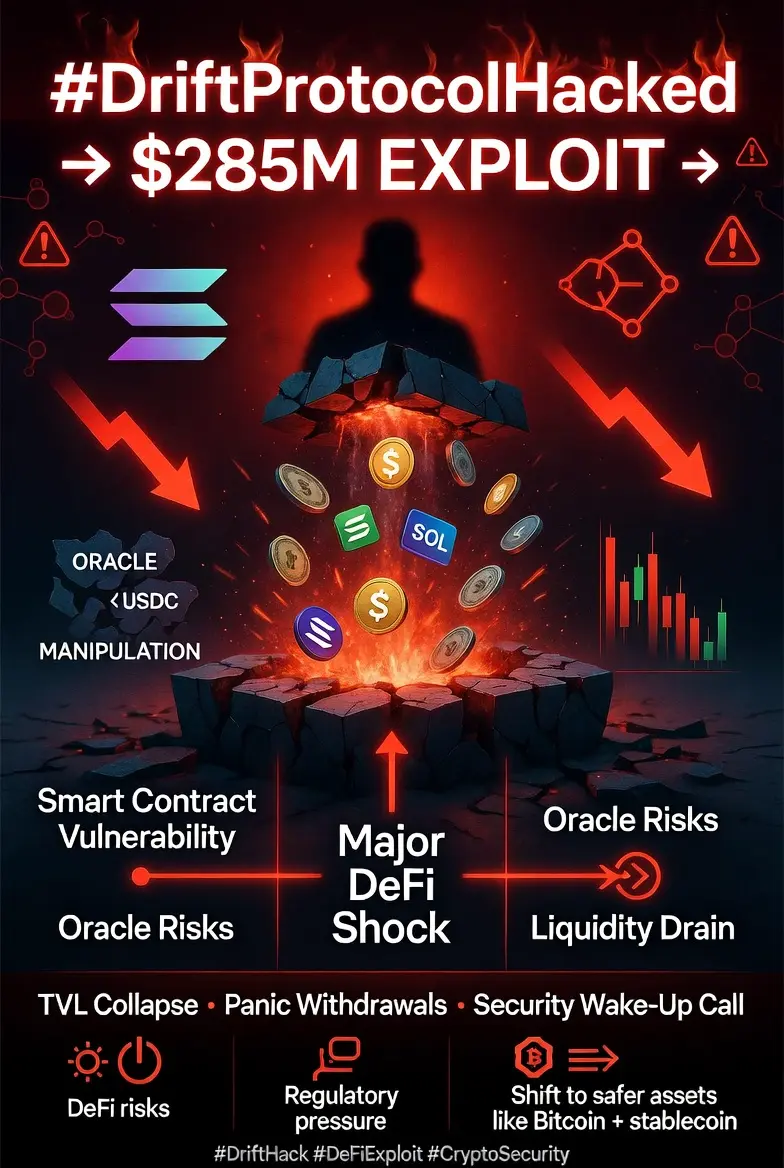
Drift Protocol, built on the Solana blockchain, is a decentralized platform for perpetual futures and derivatives trading. It allowed users to trade with leverage, lend, borrow, and earn yield without centralized control. Before the hack, it had around $550 million in total value locked (TVL), showing strong liquidity and user confidence.
When It Happened:
The attack occurred on April 1, 2026. Initially, some thought it might be an April Fools’ joke, but it was a serious and well-coordinated exploit confirmed by Drift Protocol within hours.
How Much Was Stolen:
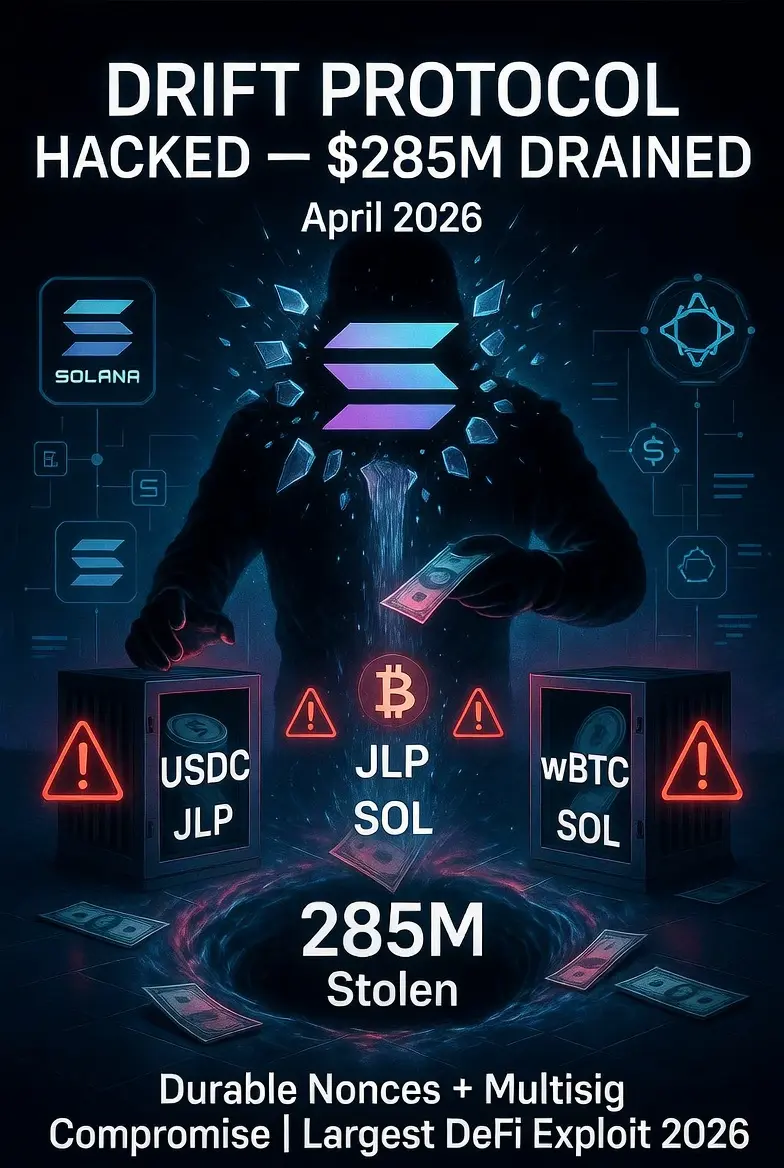
The total loss was estimated between $280 million and $285 million, making this the largest crypto hack of 2026 so far and the second-largest in Solana’s history.
How the Hack Happened:
The attack was highly sophisticated and targeted the governance system rather than a simple code flaw.
Durable Nonces Exploit: Attackers misused Solana’s durable nonce feature to pre-sign transactions and trigger them at the right moment.
Partial Multisig Compromise: Drift’s 5-of-5 multisig security system was partially bypassed after attackers obtained authorization from 2 signers, likely through social engineering.
Preparation Over 8 Days: The attacker planned for more than a week, creating accounts and adjusting to changes in Drift’s security setup.
Execution: On April 1, the exploit was executed in minutes, draining vaults, listing fake collateral, removing withdrawal limits, and taking major assets including USDC, wrapped Bitcoin (wBTC), SOL, and other tokens.
What Was Drained:
Funds came from shared vaults, lending and borrowing deposits, trading collateral, and yield positions. Some assets, like the insurance fund and non-deposited tokens, were untouched.
Where the Funds Went:
The stolen funds were moved through multiple wallets and partially bridged to other blockchains to obscure their trail.
Drift Protocol Response:
Drift acted quickly by freezing operations, replacing compromised wallets, issuing public alerts, and starting a full investigation.
Market Impact:
The $DRIFT token lost over 40% of its value, dropping to $0.040, while TVL fell sharply from $550 million to $24 million, reflecting a major loss of user confidence.
Advice for Users:
Avoid depositing funds.
Check that wallet approvals are revoked.
Follow only official Drift communication for updates.
Why This Matters:
The hack shows that even strong security systems like multisig can fail if partial control is compromised. It also highlights that legitimate blockchain features can be misused, and human factors remain a weak point in decentralized finance security.
Conclusion:
The Drift Protocol hack is one of the most sophisticated DeFi attacks in recent history. It targeted governance, not just code, combining technical skill with careful planning. This incident is a critical reminder that trust, risk, and security in DeFi require constant vigilance.
repost-content-media
  • Reward
  • Comment
  • Repost
  • Share
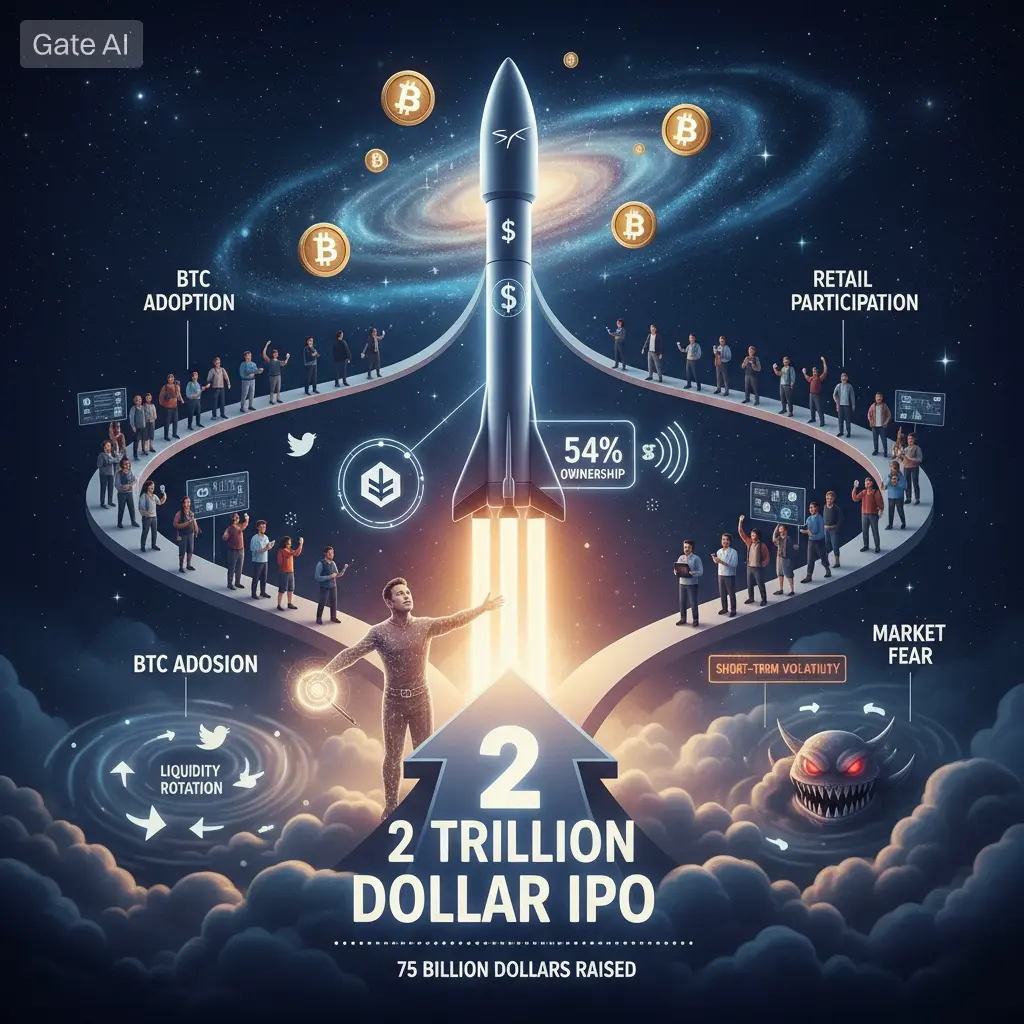
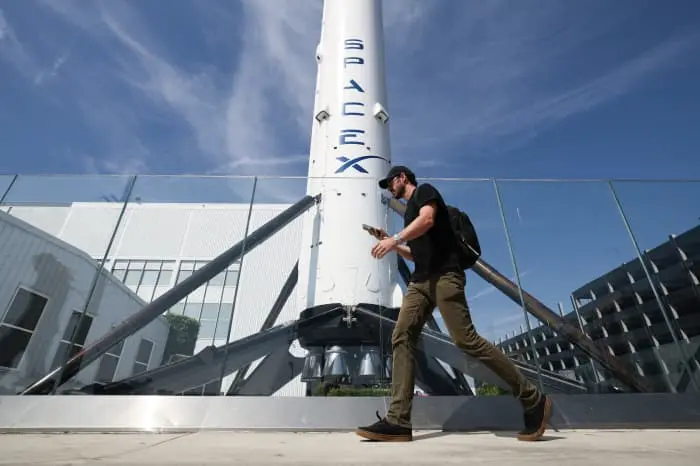
#SpaceXIPOTargets$2TValuation :
SpaceX IPO Targets $2 Trillion
As of April 2, 2026, SpaceX has officially boosted its IPO target valuation to above $2 trillion, aiming for a June 2026 market debut on a U.S. exchange. Bloomberg and Reuters confirm that SpaceX has submitted confidential IPO paperwork to the U.S. Securities and Exchange Commission (SEC) and is meeting with potential investors in private “testing-the-waters” briefings. The company is targeting a raise of up to $75 billion, which would surpass Alibaba’s 2014 record of $22 billion and set a new all-time high for public fundraising.
BTC0.68%
XAI1.51%
HighAmbitionvip
#SpaceXIPOTargets$2TValuation :
SpaceX IPO Targets $2 Trillion
As of April 2, 2026, SpaceX has officially boosted its IPO target valuation to above $2 trillion, aiming for a June 2026 market debut on a U.S. exchange. Bloomberg and Reuters confirm that SpaceX has submitted confidential IPO paperwork to the U.S. Securities and Exchange Commission (SEC) and is meeting with potential investors in private “testing-the-waters” briefings. The company is targeting a raise of up to $75 billion, which would surpass Alibaba’s 2014 record of $22 billion and set a new all-time high for public fundraising. Elon Musk personally owns roughly 54% of SpaceX, valuing his stake above $1 trillion post-IPO, emphasizing the enormous personal wealth concentration in the founder’s hands.
The IPO is historic not just for its size, but also for its valuation. A $2 trillion valuation would make SpaceX one of the largest companies ever listed in the U.S., immediately joining mega-cap peers like Apple, Microsoft, and Nvidia. The implied price-to-revenue multiple ranges from 125x to 133x 2025 revenue, signaling that the company is being valued primarily on future growth expectations, rather than current operational earnings. SpaceX reported approximately $16 billion in revenue in 2025, with $8 billion in profit, giving investors confidence that growth can sustain its sky-high valuation.
What SpaceX Actually Includes
SpaceX today is more than a rocket company. It has evolved into a multi-vertical tech and infrastructure platform, combining space exploration, satellite internet, AI, and next-generation computing.
Starlink: Global satellite internet service with over 10 million active subscribers, acting as the main revenue engine and giving SpaceX a stable recurring revenue stream.
Falcon 9, Falcon Heavy, Starship: Launch services for both government and commercial clients, including NASA, DoD, and private companies.
xAI: Artificial intelligence research and infrastructure, merged in February 2026, creating a synergy between space technology and AI innovation.
Space-Based Data Centers: Planned orbital AI compute infrastructure, positioning SpaceX at the frontier of high-performance computing.
Starbase, Texas: The central hub for launch operations, research, and corporate headquarters.
Investors are being pitched a space + AI + internet infrastructure platform, positioning SpaceX not just as a launch provider, but as a technology ecosystem capable of spanning multiple industries.
Why the $75 Billion Raise Matters
The proposed $75 billion capital raise is unprecedented. The funds are expected to be allocated toward:
Accelerating Starship development for Moon and Mars missions, including human-rated flights and cargo missions.
Expanding the Starlink constellation, adding thousands of additional satellites, improving bandwidth, reducing latency, and expanding global coverage.
xAI infrastructure, including AI compute nodes in orbit and ground-based data centers to support advanced machine learning workloads.
General corporate operations and potential strategic acquisitions in space technology, satellite services, and AI research.
The capital raise is not merely operational — it is transformational, aiming to reshape SpaceX into a fully integrated technology and innovation powerhouse.
Retail Investor Participation
Reports suggest that approximately 30% of IPO shares may be allocated to retail investors, which is unusually high for a deal of this size. This approach directly targets Elon Musk’s large fanbase, creating hype-driven demand, social media attention, and an engaged retail investor base. For many investors, this represents an opportunity to be part of a historic offering, adding excitement and liquidity to the market.
Risks and Market Uncertainty
Despite its historic nature, the IPO faces several risk factors:
Geopolitical tensions and macroeconomic uncertainty, including tariffs and global market volatility.
High valuation multiples that may deter institutional investors or cause hesitation during pricing.
xAI merger complexity, which adds accounting, governance, and integration considerations for investors.
A market currently in “Extreme Fear” territory, with the crypto Fear & Greed Index at 9 out of 100, reflecting investor caution.
These risks could affect both pricing and immediate post-IPO performance, making careful timing and messaging critical for success.
Step-by-Step Crypto Market Impact
The crypto market currently trades at BTC $66,758, ETH $2,061, with sentiment cautiously bullish but macro risk extremely high. The SpaceX IPO introduces both bullish catalysts and bearish pressures for crypto.
Bullish Signals for Crypto:
Bitcoin Treasury Holdings: SpaceX currently holds approximately $565 million in Bitcoin. Public disclosure through IPO filings would reinforce corporate adoption of BTC, validating its role as a reserve asset for institutional investors. This creates a strong structural bullish narrative.
Elon Musk Influence: Positive Musk-related developments historically spike BTC and DOGE prices. Headlines, tweets, and public statements during the IPO could drive short-term retail inflows into crypto.
Risk-On Sentiment: A successful $2 trillion IPO signals confidence in growth tech and high-risk assets, indirectly benefiting crypto, which is the highest-beta risk market.
Innovation Narrative: The SpaceX + xAI combination reinforces the mental model of next-generation tech, encouraging investment into unconventional assets, including crypto, sustaining speculative interest.
Retail Crossover: With 30% of IPO shares allocated to retail investors, millions of new investors will enter the market, many of whom may explore crypto for the first time or expand existing positions.
Bearish Risks for Crypto:
Liquidity Drain: Institutions may reduce crypto holdings to fund SpaceX IPO allocations, creating a temporary capital vacuum in crypto markets.
Media Attention Shift: During the IPO roadshow (likely May–June 2026), crypto news may be overshadowed, reducing retail inflows and trading interest.
Valuation Risk: The 133x revenue multiple is aggressive. Any IPO underperformance could trigger risk-off sentiment, negatively impacting crypto alongside equities.
Fragile Macro Environment: Extreme Fear index readings, geopolitical risk, and macro uncertainty could amplify short-term crypto volatility.
Net Takeaway
Pre-IPO: Slightly bullish for BTC due to Musk’s influence and treasury holdings narrative.
1–2 Months Pre-IPO: Mixed to bearish as institutional capital rotates from crypto to SpaceX allocations.
IPO Week: Highly volatile; market reaction depends on pricing success.
Post-IPO (Success Case): Medium-term bullish, with risk-on sentiment, retail crossover, and BTC adoption signaling structural support.
Post-IPO (Failure Case): Bearish, with risk-off sentiment potentially cascading across crypto and tech sectors.
Key coin to watch: BTC — both for SpaceX’s treasury holdings and Musk-driven market attention.
Bottom Line:
The SpaceX IPO at a $2 trillion valuation is one of the largest and most ambitious public listings ever attempted. While the short-term impact on crypto may involve volatility and liquidity rotation, the medium-term outlook is bullish if the IPO succeeds, reinforcing corporate Bitcoin adoption, increasing retail exposure, and sustaining the risk-on narrative. The next few months will be crucial for both equities and crypto as global investors respond to this historic event.
repost-content-media
  • Reward
  • 1
  • Repost
  • Share
Vortex_Kingvip:
LFG 🔥
#BitcoinMiningIndustryUpdates
Bitcoin Mining Industry Updates 2025–2026:
The Bitcoin mining industry is undergoing one of its most transformative periods ever. Following the April 2024 halving, rising energy costs, collapsing hash revenue, and a major shift toward AI data centers have reshaped the landscape for BTC miners. Bitcoin currently trades at approximately $66,594, down -27% over 90 days, and mining is both a driver of and reaction to this market pressure. Each development now has measurable effects on BTC price, network health, and long-term market structure.
The April 2024 halving
BTC0.68%
HighAmbitionvip
#BitcoinMiningIndustryUpdates
Bitcoin Mining Industry Updates 2025–2026:
The Bitcoin mining industry is undergoing one of its most transformative periods ever. Following the April 2024 halving, rising energy costs, collapsing hash revenue, and a major shift toward AI data centers have reshaped the landscape for BTC miners. Bitcoin currently trades at approximately $66,594, down -27% over 90 days, and mining is both a driver of and reaction to this market pressure. Each development now has measurable effects on BTC price, network health, and long-term market structure.
The April 2024 halving reduced block rewards from 6.25 BTC to 3.125 BTC per block. While anticipated, its compounding impact in 2025–2026 has been severe. Revenue per block fell sharply, forcing smaller, inefficient miners out of the market. Historical patterns show that halving-driven shakeouts eventually favor BTC, as supply issuance drops and weaker hands exit, creating structural bullish conditions over the medium term.
Hash revenue has collapsed by 52% per terahash, with daily earnings per TH falling to record lows — BitFuFu reported a decline from $157.5M in 2024 to $63.1M in 2025. Mining difficulty reached a record 156 trillion in late 2025 but dropped nearly 8% in early 2026 after miners exited. This temporarily improves profitability for remaining miners and signals a more efficient, sustainable network.
A major structural change is the pivot of miners toward AI data centers. Companies like Core Scientific, Cipher Mining, Soluna Holdings, and Hut 8 are reallocating hash power and energy to AI computing, which offers higher and more stable margins. This shift forced some miners to liquidate BTC — public miners sold over 15,000 BTC between October 2025 and early 2026 — creating short-term selling pressure. However, as these miners exit BTC, future selling pressure diminishes, supporting price stability.
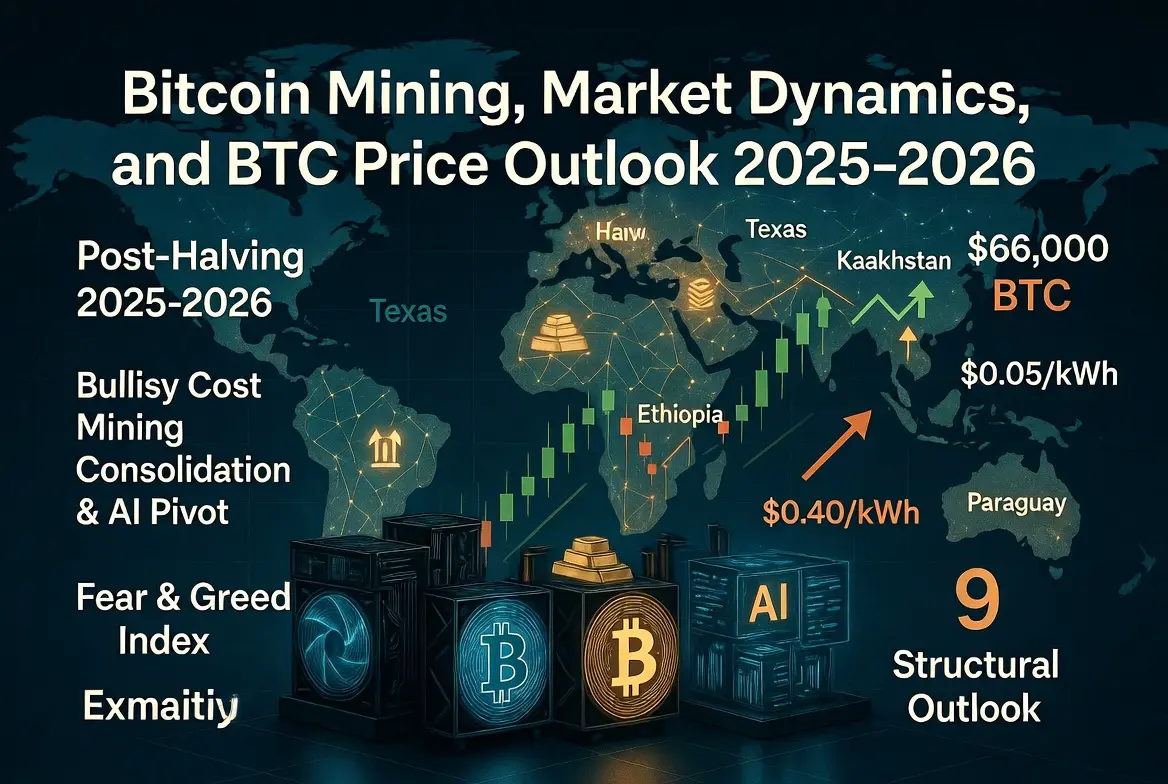
Energy costs remain the most critical factor in miner profitability. Miners paying $0.05 per kWh remain viable; $0.09 per kWh reduces margins; $0.20 per kWh pushes nearly all miners into losses; and residential rates above $0.40 per kWh make home mining financially irrational. This has accelerated the shift toward renewable energy, stranded energy deals, and low-cost regions like Kazakhstan, Ethiopia, Paraguay, and Texas. Miners with cheap energy survive and consolidate, while others sell BTC or shut down, reshaping the industry for long-term efficiency.
New-generation ASICs, including the Bitmain Antminer S23 series, increase mining efficiency but require high capital investment, further squeezing smaller operators. At the same time, corporate BTC accumulation by firms like Twenty One Capital, Metaplanet, and Strategy absorbs market supply and establishes a structural price floor. Cloud mining is growing as self-mining declines, broadening participation while stabilizing network hashrate.
The combined effect of these factors on BTC price is multi-layered. Halving initially exerts neutral-to-bearish pressure due to miner sell-offs but is historically bullish medium-term. Hash revenue collapse is short-term bearish but reduces supply as weaker miners leave.
Difficulty drops improve margins and provide mild bullish signals. AI pivot is temporarily bearish due to BTC sales but lowers future sell pressure. Rising energy costs push inefficient miners out, consolidating the network long-term. ASIC upgrades and cloud mining improve network efficiency, while corporate accumulation adds a strong bullish foundation.
Overall, Bitcoin mining is undergoing a painful but necessary restructuring. Miners are consolidating, energy efficiency is rising, and corporate treasuries are absorbing supply.
Short-term turbulence and selling pressure exist, but historically, such post-halving and structural adjustments precede BTC bull cycles. The sector’s evolution — from struggling miners to AI pivots, energy optimization, and professional treasury management — sets the stage for a more resilient network and stronger medium-term outlook for Bitcoin.
BTC remains at $66,594, with the market in extreme fear (Fear & Greed Index: 9). Miner sell pressure is finite, and as consolidation and AI pivoting stabilize, the market may see significant upward momentum. Structural fundamentals remain intact, making medium-term prospects constructive despite short-term volatility.
repost-content-media
  • Reward
  • Comment
  • Repost
  • Share
#GateSquareAprilPostingChallenge
Bitcoin Mining, Market Dynamics, and BTC Price Outlook 2025–2026: An Ultra-Extended Analysis
The Bitcoin network and its associated mining ecosystem are undergoing a period of unprecedented structural transformation. Following the April 2024 halving, which reduced block rewards from 6.25 BTC to 3.125 BTC, miners, traders, and institutional investors alike are grappling with a complex web of economic, technical, and geopolitical pressures. At the same time, BTC currently trades at $66,594, reflecting a -27% decline over the past 90 days, while the Fear & Greed
HighAmbitionvip
#GateSquareAprilPostingChallenge
Bitcoin Mining, Market Dynamics, and BTC Price Outlook 2025–2026: An Ultra-Extended Analysis
The Bitcoin network and its associated mining ecosystem are undergoing a period of unprecedented structural transformation. Following the April 2024 halving, which reduced block rewards from 6.25 BTC to 3.125 BTC, miners, traders, and institutional investors alike are grappling with a complex web of economic, technical, and geopolitical pressures. At the same time, BTC currently trades at $66,594, reflecting a -27% decline over the past 90 days, while the Fear & Greed Index sits at a historic low of 9, indicating extreme market anxiety. Yet, beneath this short-term pessimism, structural forces are quietly shaping a more resilient and potentially bullish framework for Bitcoin’s medium- to long-term trajectory.
1. Mining Economics and BTC Price Mechanics
The halving’s effect on miner revenue cannot be overstated. Daily hash revenue per terahash has fallen by 52%, dropping from $157.5M in 2024 to $63.1M in 2025. Concurrently, network difficulty peaked at 156 trillion before a softening of approximately 8% in early 2026 as smaller, inefficient miners exited the market. These exits have a dual effect: they reduce short-term selling pressure once weaker miners leave the ecosystem and simultaneously increase the concentration of mining power among efficient operators. This dynamic has profound implications for BTC price stability. While halving initially exerts bearish pressure via forced liquidations, the resulting supply contraction and improved network efficiency lay the foundation for a structural bullish scenario over the medium term.
Miner behavior is particularly crucial. Public miners alone liquidated over 15,000 BTC between October 2025 and early 2026, temporarily exerting downward pressure on prices. However, these actions also signify a finite cap on future sell pressure, as the miners who remain are those with low-cost energy, advanced ASIC infrastructure, and strategic capital allocations. The ongoing exit of weaker players therefore compresses future supply and may set the stage for significant price resilience once consolidation completes.
2. Energy Costs and Operational Viability
Energy economics remain the single most critical factor determining mining viability and, by extension, BTC supply. Miners paying $0.05 per kWh continue to operate profitably, while those at $0.09 per kWh face increasingly narrow margins. By $0.20 per kWh, a majority of miners operate at losses, and rates above $0.40 per kWh render residential mining entirely uneconomical. This energy-driven attrition accelerates structural consolidation and forces the network toward regions offering cheap or stranded power, such as Kazakhstan, Ethiopia, Paraguay, and Texas.
The strategic migration of miners to low-cost energy regions not only stabilizes operations but also aligns mining with broader ESG and sustainability trends, attracting institutional interest. Over time, energy-efficient mining creates a network that is both economically resilient and environmentally optimized, further reducing the risk of destabilizing sell-offs during periods of macroeconomic uncertainty.
3. AI Pivot and Revenue Diversification
One of the most transformative developments in 2025–2026 is the pivot of miners toward AI and high-performance computing workloads. Companies such as Core Scientific, Cipher Mining, Soluna Holdings, and Hut 8 are reallocating hash power and capital toward AI operations, yielding more predictable and higher-margin revenue streams. In the short term, this has required some BTC liquidation, creating temporary downward pressure on price. However, the long-term effect is markedly bullish: reduced dependency on BTC price for profitability, lower future sell pressure, and a diversified operational model that blends crypto mining with AI-driven computation.
This pivot represents a fundamental shift in the mining industry’s operational paradigm, where efficiency, technological adaptability, and capital allocation increasingly dictate survival. Miners who can integrate AI workloads alongside traditional BTC mining are better positioned to thrive in a high-cost, high-competition environment, further compressing BTC supply and reinforcing medium-term price stability.
4. Trader Psychology and Market Behavior
BTC’s current market sentiment reflects extreme fear, creating a highly volatile trading environment. Short-term traders exploit this volatility through scalping strategies, focusing on support and resistance levels in the $65k–$68k range. Swing traders, conversely, are analyzing consolidation patterns to identify entry points for potential post-halving rallies, leveraging the historical precedent that supply compression post-halving often precedes bullish cycles.
Institutional traders and corporate treasury operations have begun to absorb available BTC, adding structural support to the market. The interplay of miner sell-offs, institutional accumulation, and macro-geopolitical uncertainty requires traders to integrate multiple layers of analysis rather than relying solely on technical patterns. Understanding miner liquidity, energy economics, and geopolitical exposure is increasingly essential to anticipate both short-term volatility and medium-term directional trends.
5. Geopolitical and Macro Drivers
Bitcoin’s price is inseparable from global macroeconomic and geopolitical dynamics. Escalation in the Middle East, particularly involving Iran, Israel, or Saudi Arabia, directly affects oil prices, risk-on/risk-off sentiment, and safe-haven flows into BTC. Similarly, US interest rates and monetary policy influence capital allocation and risk appetite, often dictating BTC’s correlation with USD strength.
China’s ongoing mining regulations and ASIC export controls continue to influence global hash distribution, directly affecting network difficulty and potential BTC supply. Finally, the acceleration of AI and cloud computing capital allocation creates temporary liquidity dynamics in BTC markets. These macro and geopolitical drivers layer additional complexity on top of mining economics, requiring holistic analysis to accurately interpret market movements.
6. Bullish Scenario
Key Drivers of a Bullish Outcome:
Miner consolidation completes; inefficient operators exit permanently.
AI pivot stabilizes, reducing future BTC sell pressure.
Institutional accumulation continues, providing structural support.
Energy costs in low-cost regions stabilize, maintaining profitable mining.
Geopolitical tensions ease or generate safe-haven flows.
Macro indicators favor risk-on capital allocation.
Potential Outcomes:
BTC may recover to $72k–$80k in the medium term.
Network efficiency and hashrate stability increase, reducing systemic risk.
Volatility gradually declines as miner sell pressure abates and institutional support strengthens.
7. Bearish Scenario
Key Drivers of a Bearish Outcome:
Prolonged high energy costs force ongoing miner BTC liquidation.
Geopolitical escalation triggers systemic risk and investor flight.
AI pivot requires extended BTC sales for capital reallocation.
Regulatory crackdowns reduce liquidity or mining capacity.
Institutional accumulation slows or pauses amid macro risk.
Potential Outcomes:
BTC may fall below $60k, testing historical support levels.
Short-term volatility spikes, creating challenging conditions for traders.
Weak miners exit faster, but network efficiency may temporarily degrade before eventual stabilization.
8. Integrated Market Outlook
BTC’s current market structure is defined by the interaction of miner economics, institutional activity, energy costs, and global macro factors. Supply-side compression, network efficiency improvements, and strategic corporate accumulation create structural support for medium-term bullish scenarios, while short-term volatility remains elevated due to macro-geopolitical shocks and miner liquidity cycles. Traders and investors must navigate a multi-dimensional landscape, integrating technical, fundamental, and geopolitical insights into actionable strategies.
Conclusion
The post-halving Bitcoin landscape in 2025–2026 is one of simultaneous challenge and opportunity. Mining consolidation, AI pivots, low-cost energy adoption, and institutional accumulation are shaping a more resilient and structurally bullish network. Short-term volatility and geopolitical risks remain critical, but the medium-term outlook favors BTC resilience and potential price recovery. With BTC at $66,594 and fear at extreme levels, market participants must carefully balance risk management with strategic positioning, recognizing that the interplay between miners, institutions, energy economics, and macro factors will dictate future price trajectories.
repost-content-media
  • Reward
  • 1
  • Repost
  • Share
Vortex_Kingvip:
LFG 🔥
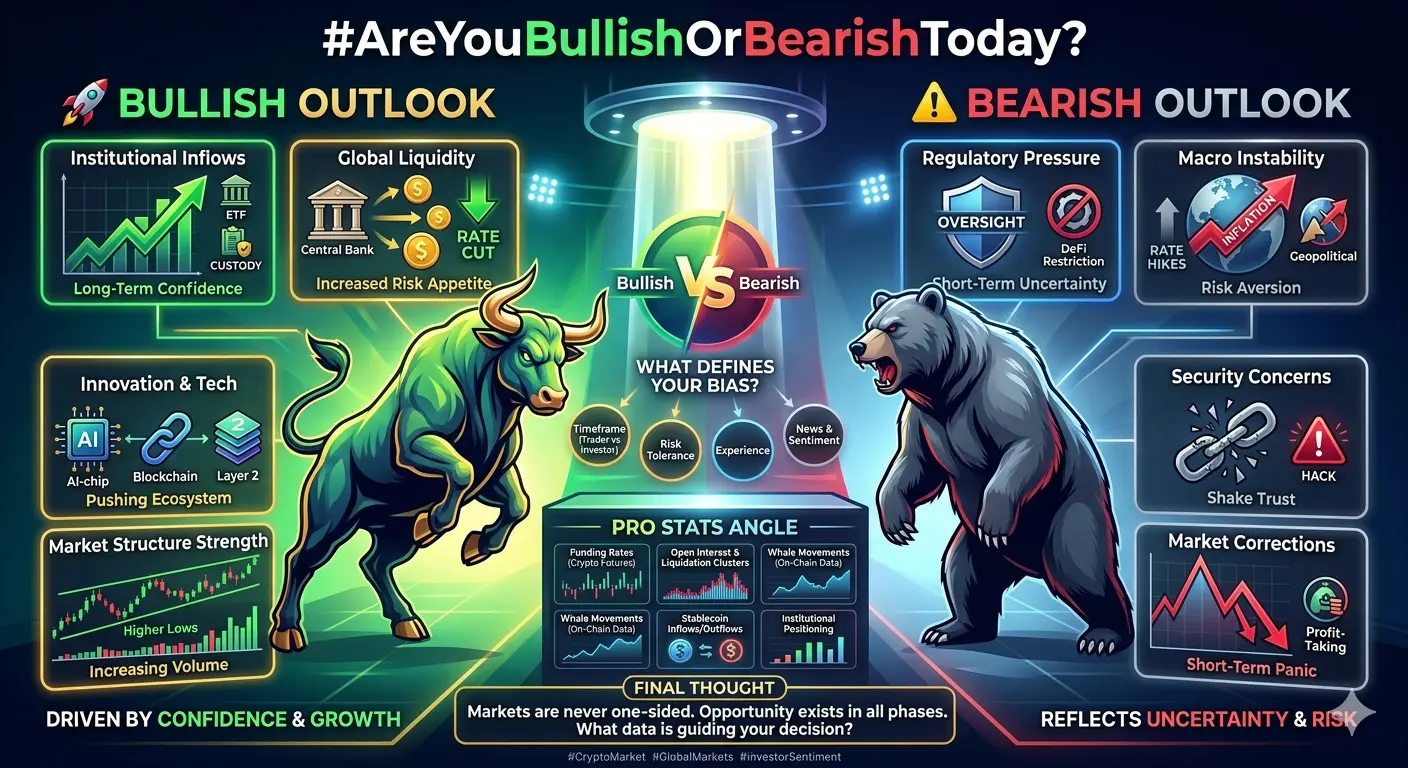
#AreYouBullishOrBearishToday?
📊 Market Sentiment Check Across Crypto & Global Markets
The question isn’t just a trend—it reflects the constant battle between optimism and caution that drives financial markets. Whether you’re trading crypto, stocks, or commodities, your stance today can shape your strategy, risk exposure, and potential outcomes.
🚀 Bullish Outlook — What’s Driving Optimism?
A bullish market is fueled by confidence, liquidity, and growth expectations. Right now, several key narratives are supporting a positive outlook:
📈 1. Institutional Inflows & Adoption
Large institutions
DEFI-0.26%
post-image
post-image
  • Reward
  • 1
  • Repost
  • Share
ybaservip:
2026 GOGOGO 👊
#GENIUSImplementationRulesDraftReleased
🚨 A Major Shift in the Digital & Crypto Landscape
The release of the GENIUS Implementation Rules Draft marks a powerful moment that could reshape how emerging technologies, especially in the financial and digital asset sectors, are governed and scaled globally. This isn’t just another policy update—it’s a signal of how regulation is evolving to match innovation at speed.
🔍 What Makes This Draft So Important?
The draft is expected to introduce clear frameworks, compliance structures, and accountability mechanisms across several critical areas:
Digital
post-image
post-image
  • Reward
  • 2
  • Repost
  • Share
dragon_fly2vip:
To The Moon 🌕
View More
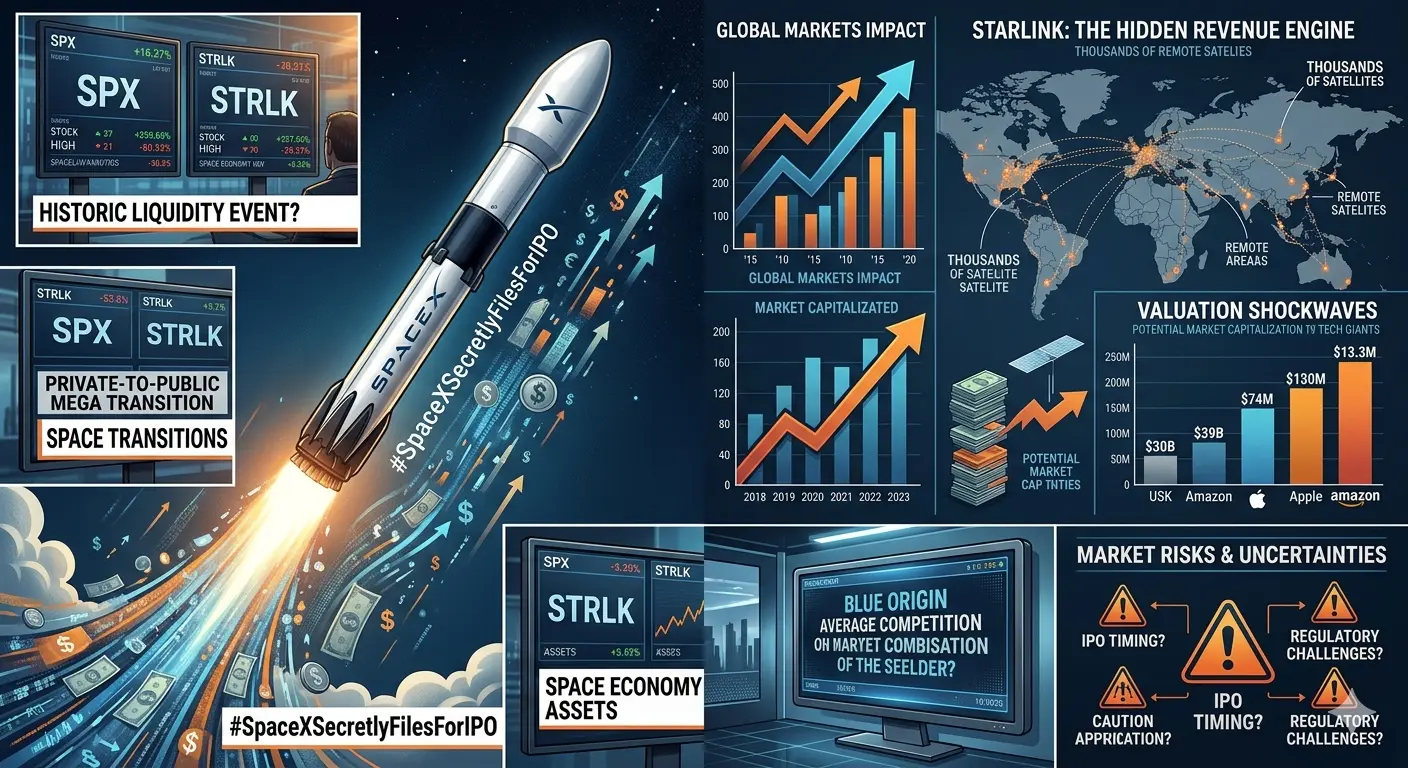
#SpaceXSecretlyFilesForIPO
🚀 A Game-Changing Moment for the Future of Space & Markets
The global financial and tech ecosystem is buzzing with speculation around the possibility of SpaceX preparing for an Initial Public Offering (IPO). While no official confirmation has been publicly declared, even the rumor of such a move is enough to shake markets, reshape investment strategies, and ignite conversations across Wall Street, Silicon Valley, and beyond.
🌍 Why This Matters for Global Markets
If SpaceX were to go public, it could instantly become one of the most valuable companies ever listed,
post-image
post-image
  • Reward
  • 4
  • Repost
  • Share
ybaservip:
To The Moon 🌕
View More
#StablecoinDebateHeatsUp
💥💰
The global financial landscape is witnessing a major shift as the debate around stablecoins intensifies. Once considered a simple bridge between crypto and fiat, stablecoins are now at the center of regulatory battles, monetary policy discussions, and the future of digital finance. Governments, institutions, and crypto innovators are all racing to define what comes next.
🔥 Why the Stablecoin Debate Is Heating Up?
1. Explosive Market Growth
Stablecoins have grown into a multi-billion-dollar ecosystem, with giants like Tether and USD Coin dominating global liquidi
DEFI-0.26%
post-image
post-image
  • Reward
  • 1
  • Repost
  • Share
HighAmbitionvip:
2026 GOGOGO 👊
#PreciousMetalsPullBackUnderPressure
📉⚖️
After a strong rally driven by geopolitical uncertainty and inflation fears, precious metals are now facing a noticeable pullback. Gold, silver, and other safe-haven assets are showing signs of weakness as macroeconomic forces shift and investor sentiment evolves. This correction phase is not just technical — it reflects deeper changes in global liquidity, interest rate expectations, and risk appetite.
🔥 What’s Causing the Pullback?
1. Stronger Dollar Comeback
A rebound in the US Dollar is putting pressure on precious metals. Since gold and silver ar
BTC0.68%
post-image
post-image
  • Reward
  • 1
  • Repost
  • Share
HighAmbitionvip:
2026 GOGOGO 👊
#DriftProtocolHacked
🚨⚠️
The decentralized finance (DeFi) ecosystem has once again been shaken as reports of a major exploit involving Drift Protocol surface. This incident highlights a persistent reality in Web3 — innovation is accelerating, but so are security risks. As funds, trust, and market sentiment hang in the balance, this event is rapidly becoming a defining moment for DeFi security in 2026.
🔥 What Happened?
Early signals suggest that Drift Protocol may have suffered a sophisticated exploit targeting vulnerabilities within its smart contract infrastructure or liquidity mechanisms.
BTC0.68%
post-image
post-image
  • Reward
  • Comment
  • Repost
  • Share
#CeasefireExpectationsRise
Global geopolitical dynamics are entering a critical phase as ceasefire expectations begin to rise across multiple conflict zones. Markets, governments, and investors are closely monitoring signals that could indicate a shift from confrontation to diplomacy. This trend is not just about peace — it carries deep implications for global stability, economic recovery, and financial markets.
🔥 Why Ceasefire Expectations Are Rising?
1. Diplomatic Pressure Intensifying
Major global powers and organizations like the United Nations are actively pushing for de-escalation. Bac
post-image
post-image
  • Reward
  • Comment
  • Repost
  • Share
#OilPricesRise
Global energy markets are once again under intense spotlight as oil prices surge, sending ripples across economies, financial markets, and geopolitical strategies. This upward momentum is not just a short-term fluctuation — it reflects deeper structural shifts in supply chains, demand cycles, and macroeconomic tensions.
🔥 What’s Driving the Surge?
The recent spike in oil prices is being fueled by a combination of high-impact factors:
1. Supply Constraints & Strategic Cuts
Major producers, particularly OPEC and its allies (OPEC+), continue to enforce production cuts aimed at st
post-image
post-image
  • Reward
  • Comment
  • Repost
  • Share
#CryptoMarketSeesVolatility
The crypto market is once again entering a phase of intense volatility — but this isn’t chaos, it’s a recalibration of power, liquidity, and narrative. For experienced participants, volatility is not fear — it’s signal.
🚨 What’s Driving the Current Volatility?
This wave is not random. It’s being shaped by multiple high-impact forces converging at once:
🔹 Macro Pressure Global economic uncertainty, interest rate expectations, and liquidity tightening are forcing risk assets — including crypto — into sharp, reactive moves. Crypto no longer lives in isolation; it mi
DEFI-0.26%
post-image
post-image
  • Reward
  • 6
  • 1
  • Share
Jackhaalvip:
2026 GOGOGO 👊
View More
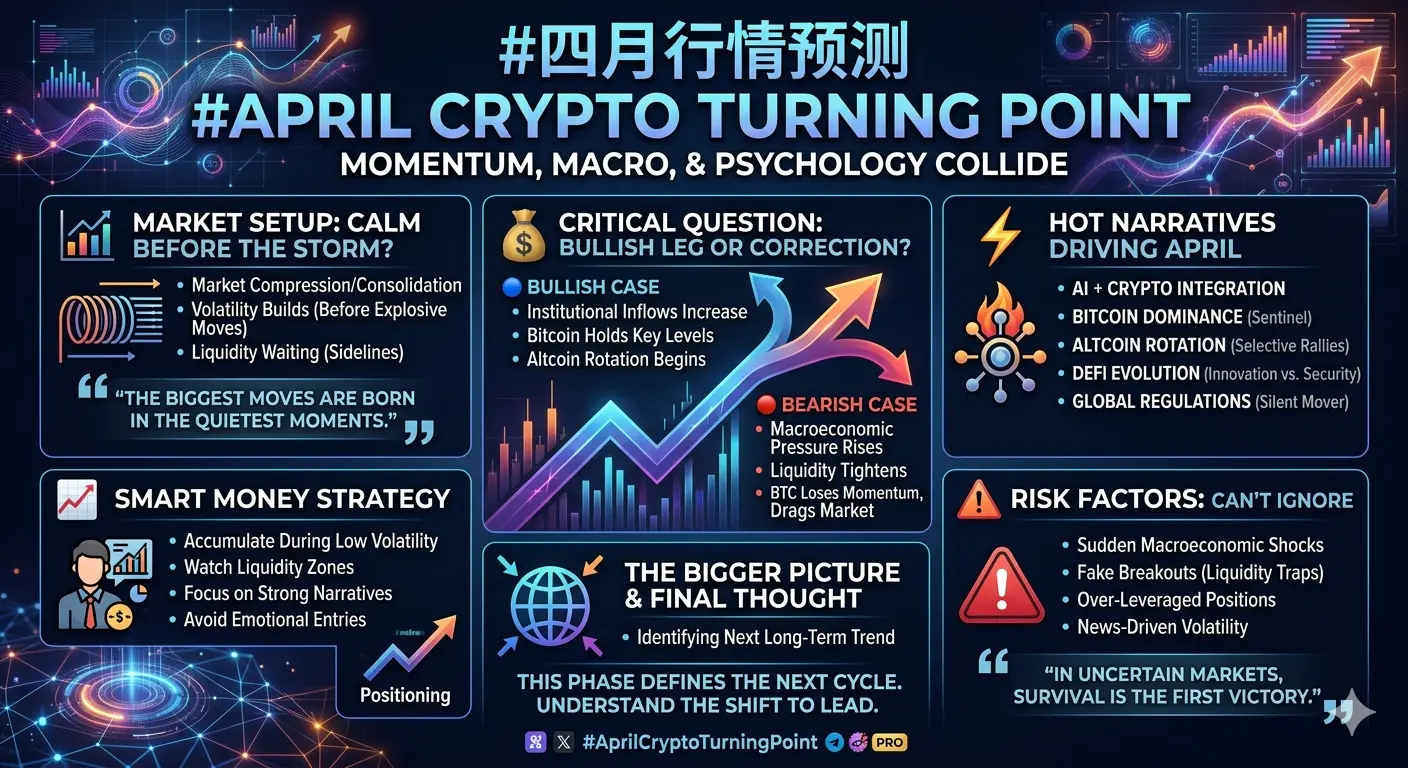
#GateSquareAprilPostingChallenge
April is not just another month in the crypto calendar — it’s a battlefield of narratives, momentum shifts, and emerging opportunities. The #GateSquareAprilPostingChallenge is your chance to step into the spotlight, amplify your voice, and turn insights into influence.
💡 Why This Challenge Matters Crypto is no longer just about trading — it’s about storytelling, timing, and perspective. The users who win attention are the ones who shape market sentiment. This challenge is designed to reward not just activity, but quality thinking, originality, and strategic c
DEFI-0.26%
RWA-3.01%
post-image
post-image
  • Reward
  • 1
  • Repost
  • Share
CryptoSpectovip:
To The Moon 🌕
  • Pin