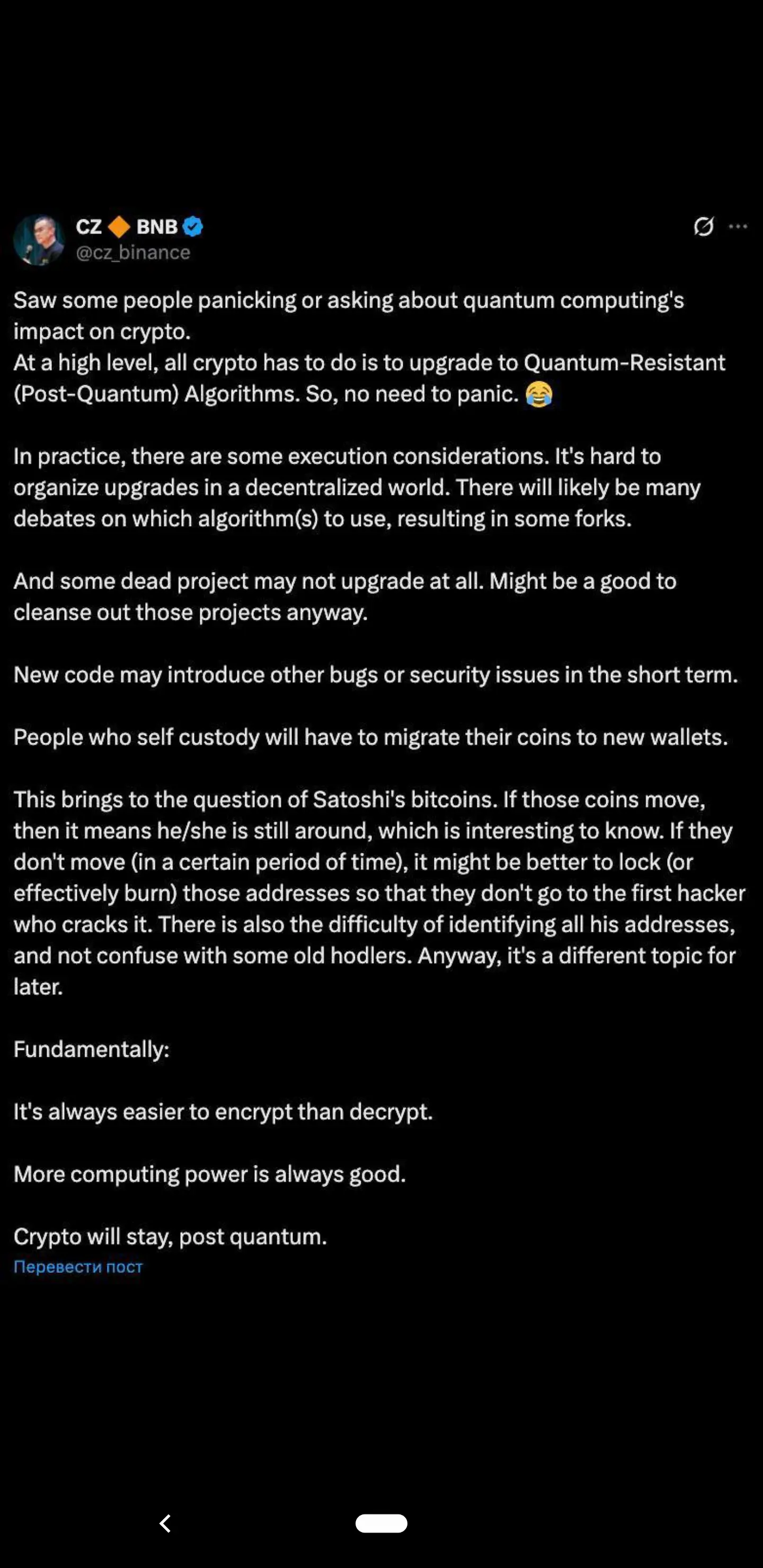
CZ: There's no need to panic about the threat of quantum computing.
I've noticed that some people are worried or questioning the impact of quantum technologies on cryptocurrencies. Overall, the crypto industry can quite easily transition to quantum-resistant algorithms. So, there's no need to panic.
However, in practice, there are challenges. In a decentralized environment, it's difficult to implement such updates. Likely, we'll face a lengthy discussion process about which algorithm to choose, which could lead to forks. Some inactive projects might not update at all, but that could clean up the ecosystem.
In the short term, new code may cause bugs or vulnerabilities. Users who store their assets themselves will need to transfer funds to new wallets.
This brings us to the question of Bitcoin's Satoshi Nakamoto. If his coins start moving, it would mean he's still alive, which is intriguing in itself. If they remain stationary for a long time, it might be wise to lock or effectively burn these assets so they don't fall into the hands of the first hacker who manages to hack the wallets. However, identifying all his addresses and not confusing them with old holders will be challenging. But that's a separate topic.
In summary:
• Encryption is always easier than decryption.
• More computing power is always a good thing.
• Cryptocurrency will remain relevant even in the post-quantum era.
() $BTC
I've noticed that some people are worried or questioning the impact of quantum technologies on cryptocurrencies. Overall, the crypto industry can quite easily transition to quantum-resistant algorithms. So, there's no need to panic.
However, in practice, there are challenges. In a decentralized environment, it's difficult to implement such updates. Likely, we'll face a lengthy discussion process about which algorithm to choose, which could lead to forks. Some inactive projects might not update at all, but that could clean up the ecosystem.
In the short term, new code may cause bugs or vulnerabilities. Users who store their assets themselves will need to transfer funds to new wallets.
This brings us to the question of Bitcoin's Satoshi Nakamoto. If his coins start moving, it would mean he's still alive, which is intriguing in itself. If they remain stationary for a long time, it might be wise to lock or effectively burn these assets so they don't fall into the hands of the first hacker who manages to hack the wallets. However, identifying all his addresses and not confusing them with old holders will be challenging. But that's a separate topic.
In summary:
• Encryption is always easier than decryption.
• More computing power is always a good thing.
• Cryptocurrency will remain relevant even in the post-quantum era.
() $BTC