MasterChuTheOldDemonMasterChu

vip
Age 0.5 Year
Peak Tier 6
On-Chain Evangelist | Liquidity Builder | Diamond Hands
#Gate广场五月交易分享 Next Monday's Gold Market Trend Analysis:
Gold Technical Analysis: This week, gold surged then pulled back, stabilizing at low levels. Overnight US market data fell short of expectations, the dollar retreated, and gold rebounded strongly from around 4510, breaking above the 4600 level. The short-term pattern has shifted from weak to strong, but indicators are overbought, and liquidity is relatively weak during the May Day holiday, so the market is likely to remain in a range-bound oscillation.
From the daily chart, gold prices failed to stay above the short-term moving averages,
View Original
Ryakpanda
#Gate广场五月交易分享 Next Monday's Gold Market Trend Analysis:
Gold Technical Analysis: This week, gold surged then pulled back, stabilizing at low levels. Overnight U.S. market data fell short of expectations, the dollar retreated, and gold rebounded strongly from around 4510, breaking above the 4600 level. The short-term pattern has shifted from weak to strong, but indicators are overbought, and liquidity is relatively weak during the May Day holiday, so the market is likely to remain in a range-bound oscillation.
From the daily chart, gold prices failed to stay above the short-term moving averages, with the 5-day, 10-day, and 20-day moving averages forming resistance. The moving average system is in a bearish arrangement, indicating a short-term downward trend.
The MACD indicator is operating below the zero line. Although the green momentum bars have narrowed, the bullish momentum is still insufficient, and the bearish force continues to dominate the market. Recently, gold has been under continuous pressure from moving average resistance, with multiple failed rebounds, indicating heavy selling pressure above.
The 4-hour chart shows that after touching a low of $4,560, the price rebounded to some extent and is now above the short-term moving averages. The Bollinger Bands are beginning to contract, and the price is trading above the middle band, showing signs of a bullish trend. The MACD red momentum bars are expanding, indicating sufficient bullish momentum. The RSI is above the 50 midline, approaching overbought but not yet turning down, suggesting upward strength remains. However, on the 4-hour level, gold still faces resistance around $4,660-$4,670. If it cannot break through effectively, the rebound may quickly fail, and the risk of a decline should be watched carefully.
The 1-hour chart shows that gold is consolidating in a sideways pattern, with the 5-day and 10-day moving averages converging, indicating a balanced short-term bullish and bearish force. The Bollinger Bands are narrowing, and the price fluctuates between the upper and lower bands, reflecting a market in adjustment, awaiting a directional breakout. The MACD repeatedly crosses near the zero line, with frequent shifts between bullish and bearish momentum, further increasing short-term uncertainty.
In terms of operation, before gold breaks out of the consolidation zone, it is recommended to stay on the sidelines and avoid blindly chasing gains or losses. Resistance above is at $4,660-$4,670, and support below is at $4,560-$4,580. Overall, for next Monday, Jingshengfu suggests mainly buying on dips for short-term trading, with a secondary focus on selling the rebounds. The key resistance to watch is $4,660-$4,670, and the key support is $4,560-$4,580.
Next Monday's Gold Trading Strategy Reference:
Short Position Strategy:
Strategy 1: Short in batches near the rebound zone of $4,660-$4,670 (buy the dip), with 2/10 position size, stop loss at $4,690, target around $4,620-$4,600, and look for a break below to $4,580.
Long Position Strategy:
Strategy 2: Buy in batches near the pullback zone of $4,570-$4,580, with 2/10 position size, stop loss at $4,550, target around $4,630-$4,650, and look for a break above to $4,670.
Risk Reminder: All operations should strictly control position sizes and set stop losses to prevent extreme market conditions caused by unexpected events.
This article is for sharing purposes only and does not constitute any investment advice!!
repost-content-media
  • Reward
  • 32
  • Repost
  • Share
AYATTAC:
2026 GOGOGO 👊
View More
#Gate广场五月交易分享 Negotiation failure—be cautious with gold and crude oil on Monday
—— The US-Iran dispute has lasted 60 days, and the crisis is spreading
Over the weekend, new developments in the US-Iran conflict surfaced again. Negotiations broke down once more, and after Trump’s 60-day ceasefire, he is preparing to restart airstrike operations against Iran—making the Monday market tense again throughout the weekend.
There is a possibility that the US will restart airstrikes on Iran.
Trump posted on social media, saying he will soon review Iran’s latest submitted proposal, but he “canno
View Original
Ryakpanda
#Gate广场五月交易分享 Negotiation failure, be cautious of gold and crude oil on Monday
——The US-Iran dispute has lasted 60 days, and the crisis is spreading
Over the weekend, new developments in the US-Iran conflict emerged again, negotiations broke down once more, and after Trump’s 60-day ceasefire, he is preparing to restart airstrikes on Iran, causing market tension again on Monday.
There is a possibility that the US will restart airstrikes on Iran.
Trump posted on social media that he will soon review Iran’s latest submitted plan, but he “cannot imagine” that the plan is “acceptable,” and threatened that Iran “has not paid enough of a price.” Iran has submitted a plan containing 14 items through Pakistan in response to the US’s previous 9 proposals.
——What will happen to gold and crude oil on Monday?
The US-Iran conflict has now lasted 60 days, marking the 60th day of a world energy crisis. Since the Strait was blocked, countries around the world, especially Eurasian nations, have been releasing their energy reserves, which are now nearly exhausted. If the Strait remains closed before June, a real crisis will quickly emerge before everyone.
Gold: Every time negotiations break down, gold almost always gaps down at the open, and tomorrow is likely to see a similar gap down. Although good news was received during Friday’s talks, causing gold to rise quickly to near the 4660 resistance level, tomorrow’s opening may give back the gains made on Friday. The 4660 level will continue to act as resistance, and the market remains temporarily bearish. If it gaps up and moves higher, then the upside space will open, with the key resistance at 4800.
Crude Oil: Recent Market
The frenzy of crude oil price increases needs no further explanation. As long as the Strait remains blocked for even one day, the crude oil market will not return to pre-war prices. Although Friday saw a short-term pullback due to Trump’s TACO deal, the long-term trend remains slow upward. Just remember one principle now: don’t chase highs, maintain low buy-in levels, and take profits at high points to enjoy substantial gains.
Bitcoin: Since the end of the Federal Reserve meeting, there seems to be a possibility of attacking 80k, but based on the four-year cycle, we still need to follow the rules. Now it’s May, and the next four months are critical. September-October, which is the end of the year, is the bottom of the four-year cycle, usually accompanied by sluggish oscillations that shake everyone’s confidence. However, that is precisely when the bottom forms, so the timing for buying will soon arrive. We just need to wait patiently.
Disclaimer: All data is backtested historical data and does not constitute real-time data or investment advice.
repost-content-media
  • Reward
  • 34
  • Repost
  • Share
AYATTAC:
To The Moon 🌕
View More
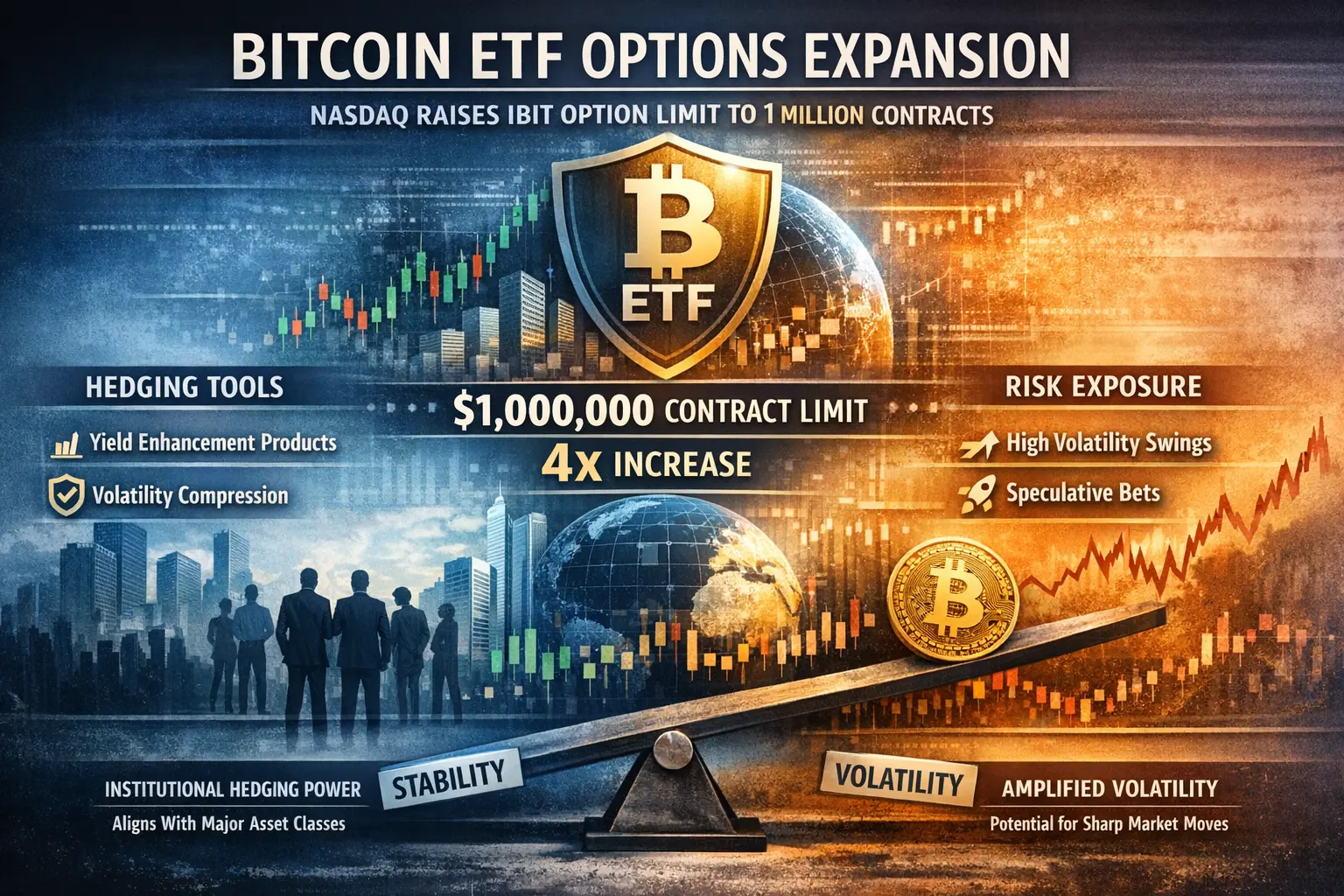
#BitcoinETFOptionLimitQuadruples
IBIT Options Position Limit Doubles, Bitcoin Enters the Wall Street Alliance
Since the launch of Bitcoin ETFs, the game for institutional capital has changed. Now it’s derivatives’ turn. The Nasdaq International Securities Exchange has filed an application with the SEC to raise the options position limit for BlackRock’s iShares Bitcoin Trust (IBIT) from 250,000 shares to 1,000,000 shares. This is a fourfold increase.
1. What exactly has changed?
The position limit is the maximum number of options contracts a single investor can hold in the same direction.
BTC0.28%
ETH0.8%
View Original
discovery
#BitcoinETFOptionLimitQuadruples
IBIT Option Limits Quadruple, Bitcoin Enters the Wall Street League
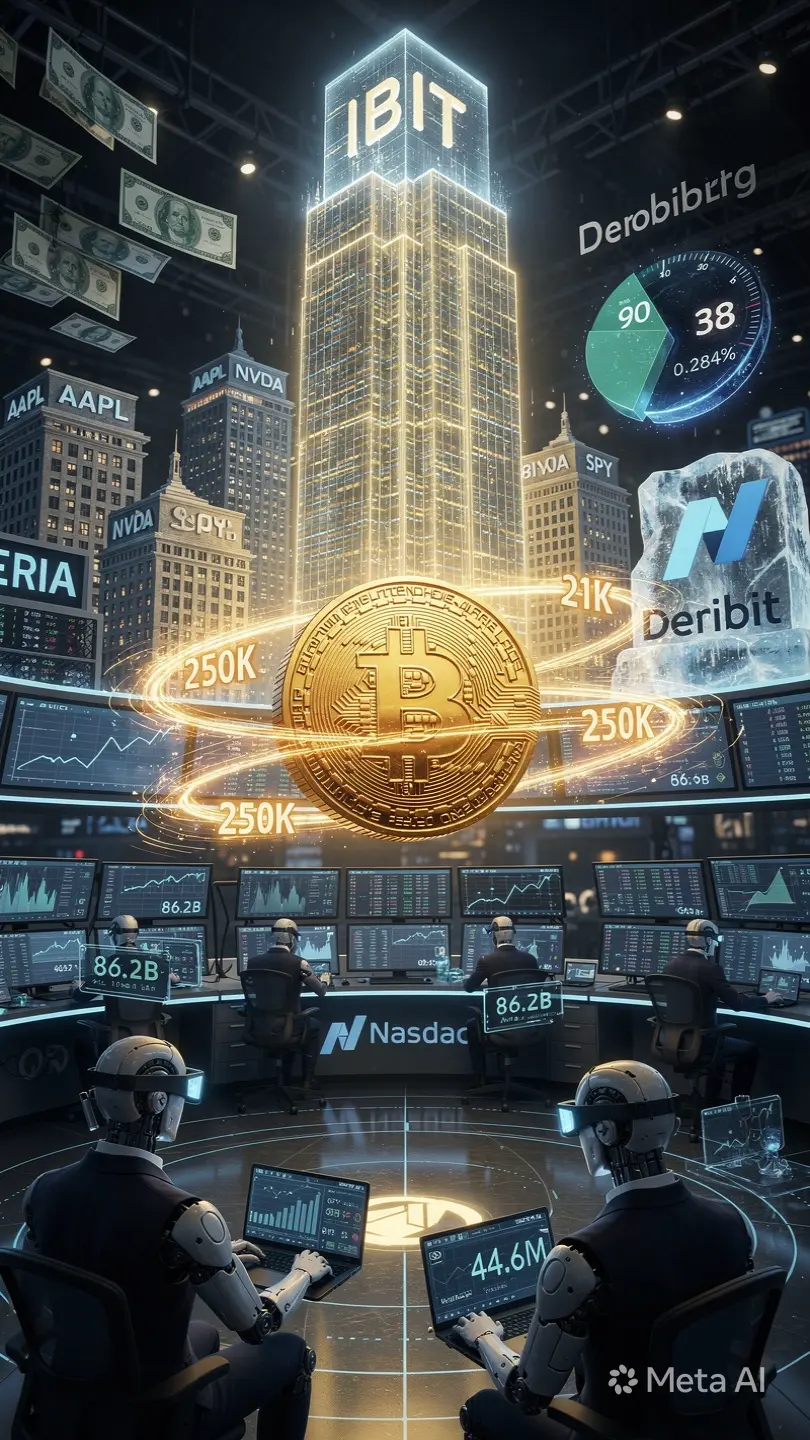
Since Bitcoin ETFs hit the stage, the institutional money game has changed. Now it’s derivatives’ turn. Nasdaq International Securities Exchange has filed with the SEC to raise the options position limit for BlackRock’s iShares Bitcoin Trust, IBIT, from 250,000 contracts to 1,000,000 contracts. That’s a 4x increase in one go.
1. What’s Changing?
The position limit is the maximum number of options contracts a single investor can hold on the same side. Limits exist to reduce manipulation risk. For IBIT, this limit was raised from 25,000 to 250,000 in January 2026. Now the target is 1 million.
In its filing, Nasdaq puts IBIT in the same category as giant ETFs like iShares MSCI Emerging Markets, iShares China Large-Cap, and iShares MSCI EAFE. The message is clear: The Bitcoin ETF is now treated as a mega-cap on par with AAPL, NVDA, and SPY.
2. Why Was It Needed? Demand Exploded
IBIT is one of the most active ETFs with an $86.2 billion market cap and average daily volume of 44.6 million shares. On the options side, open interest surpassed $50 billion in October and caught up to Deribit. 98% of all Bitcoin ETF options volume and 96% of open interest are in IBIT.
The current 250,000-contract limit was constraining market makers and institutional desks from hedging and yield strategies. If the limit increases, large funds can fully hedge their positions, bringing deeper liquidity and tighter spreads.
3. Impact in Numbers: How Much Risk?
Nasdaq ISE ran a risk analysis: A 1 million contract limit equals 7.39% of IBIT shares. But because IBIT has a creation-redemption mechanism, the real comparison should be with all of Bitcoin. In that case, exercisable risk is only 0.284% of all BTC in circulation. The exchange says, “even if every contract were exercised at once, the impact on the Bitcoin market would be barely noticeable.”
4. Impact on Volatility: From Wild West to Wall Street
With the limit increase, institutional-scale covered call strategies will become widespread. This strategy sells upside potential for premium income and naturally smooths price moves. NYDIG research says “the limit increase paves the way for more aggressive and continuous options activity.”
Bitcoin volatility has already dropped from 90 to 38 in 4 years. Once options limits are lifted, the liquidity boost could create a feedback loop that lowers volatility even further.
5. Not Just IBIT: All Crypto ETFs
In January, Nasdaq filed to lift the general 25,000-contract limit not only for IBIT, but also for BlackRock ETHA, Fidelity, Grayscale, Bitwise, ARK/21Shares, and VanEck Bitcoin and Ethereum ETFs. The SEC waived the 30-day waiting period and the rule took effect immediately. Crypto ETF options now receive the same treatment as commodity ETFs.
6. What Does It Mean for Traders?
1. Bigger Hedges: Funds can fully protect spot ETF positions. This eases market entry. 2. Deeper Liquidity: Large orders execute with less slippage. Spreads tighten. 3. New Strategies: Unlimited trading in FLEX options is on the agenda. Big funds will prefer regulated exchanges over OTC. 4. Price Discovery: According to Kronos Research CIO Vincent Liu, this step shows Bitcoin markets are “taking off the training wheels.”
Conclusion: The ETF Phase Is Over, The Derivatives Phase Has Begun
IBIT options have now surpassed Deribit in volume and entered the top 10 U.S. options assets. With the limit quadrupling, Bitcoin’s price discovery will now be shaped not just by spot, but also by a massive derivatives market. This is the next step in institutional adoption.
For those trading on Gate Square: A deeper options market means more efficient hedging and arbitrage. As volatility drops, strategy diversity will increase. Stay tuned.
Always do your own research (DYOR).
#GateSquareMayTradingShare
#Gate广场五月交易分享
#BitcoinETFOptionLimitQuadruples
repost-content-media
  • Reward
  • 30
  • Repost
  • Share
AYATTAC:
2026 GOGOGO 👊
View More
#FedHoldsRateButDividesDeepen
Interest rates remain stable, but divisions within the Federal Reserve are widening
The U.S. Federal Reserve keeps the policy rate at 3.50%-3.75%. But this decision was the most divided since 1992: 8 to 4 votes. The split between doves and hawks is now clearly evident, and the reason is one word: oil prices.
1. 8-4: The most divided Federal Reserve since 1992
At the Federal Open Market Committee (FOMC) meeting, four members dissented. Three regional Fed presidents — Cleveland Fed President Loretta Mester, Minneapolis Fed President Neel Kashkari, and Dallas Fed
BTC0.28%
View Original
discovery
#FedHoldsRateButDividesDeepen
Rate Held Steady, but the Crack Inside the Fed Is Widening
The US Federal Reserve held its policy rate steady at 3.50%-3.75%. But the decision came with the most divided vote since 1992: 8 to 4. The dove-hawk split is now clearly on the table, and the reason is one word: Oil.
1. 8-4: Most Divided Fed Since 1992
At the FOMC meeting, 4 members dissented. Three regional presidents — Cleveland Fed President Beth Hammack, Minneapolis Fed President Neel Kashkari, and Dallas Fed President Lorie Logan — supported holding rates steady but objected to the “easing bias” language in the decision text. Their reasoning is clear: The oil shock from the Iran war is increasing inflation risk, and in this environment, implying the next step will be a cut is not right.
The fourth dissent was in the opposite direction: Governor Stephen Miran wanted a quarter-point cut.
Result: The Fed kept the “next step is likely a cut” signal in the text, but Chair Jerome Powell acknowledged this is an increasingly shrinking majority view.
2. The Oil Shock Changed the Equation
Brent crude hit $120 and has doubled since the start of the year. The Fed’s dilemma is clear: Raise rates to curb inflation, or cut to support growth damaged by war?
Hammack said, “Inflation pressures are broad-based and rising oil prices create additional pressure. An easing bias is no longer appropriate.” Kashkari was even clearer: If the Strait of Hormuz stays closed for long, “potentially a series of rate hikes” may be needed.
Logan argued that “the next rate change could be a hike or a cut,” and that no guidance should be given.
3. Signal from Powell: “We’re Moving to Neutral”
Powell said the center of the committee has “shifted to a more neutral place.” Neutral means a level where the economy is neither heating nor cooling, and rates could go either way. In other words, the “rate-cut cycle” rhetoric that has lasted 18 months is ending. Powell’s description: “We first move to a neutral bias, then if we want to raise rates, we move to a hiking bias.”
4. Market Pricing: Cuts Pushed to 2027
According to CME FedWatch, expectations for the next cut have shifted to the end of 2027. That’s 4 quarters later than the mid-2026 expectation at the start of the year. Morgan Stanley, Goldman Sachs, and J.P. Morgan shelved their 2026 cut forecasts. Reason: Inflation remains above the 2% target, the labor market is strong, and oil risk is on the table.
5. Political Shadow: The Warsh Era Begins
This was Powell’s last meeting as chair. His term expires May 15 and Trump’s nominee Kevin Warsh is expected to be the new chair. But analysts note Warsh will also inherit a divided committee. While Trump wants aggressive cuts down to 1%, voices advocating hikes are rising inside the committee.
6. What It Means for Markets
1. Volatility Increases: Disagreement among central banks means uncertainty in policy communication. According to Reuters, this means “blurrier messaging and volatility” for investors. 2. Energy = Inflation: For the first time, the Fed text included “Developments in the Middle East add high uncertainty to the economic outlook.” Oil is the new variable in the rate path. 3. The Rate-Cut Bet Is Closing: Dallas Fed’s Logan: “Forward guidance implying cuts should no longer be given.”
Note to Gate Square Investors
For crypto markets, the Fed’s shift to neutral cuts both ways. While expectations for a liquidity tap are fading, oil-driven inflation could support Bitcoin’s “digital gold” thesis. But the possibility of rates rising instead of falling creates pressure on risk assets. This week’s 8-4 split shows the Fed will stay in wait-and-see mode through the second half of 2026.
After the decision, the S&P 500 and bonds fell. The message is clear: The Fed is no longer promising cuts. The next move is data-dependent, and that data is currently passing through the Strait of Hormuz.
Always do your own research (DYOR).
#GateSquareMayTradingShare
#Gate广场五月交易分享
#FedHoldsRateButDividesDeepen
repost-content-media
  • Reward
  • 28
  • Repost
  • Share
AYATTAC:
To The Moon 🌕
View More
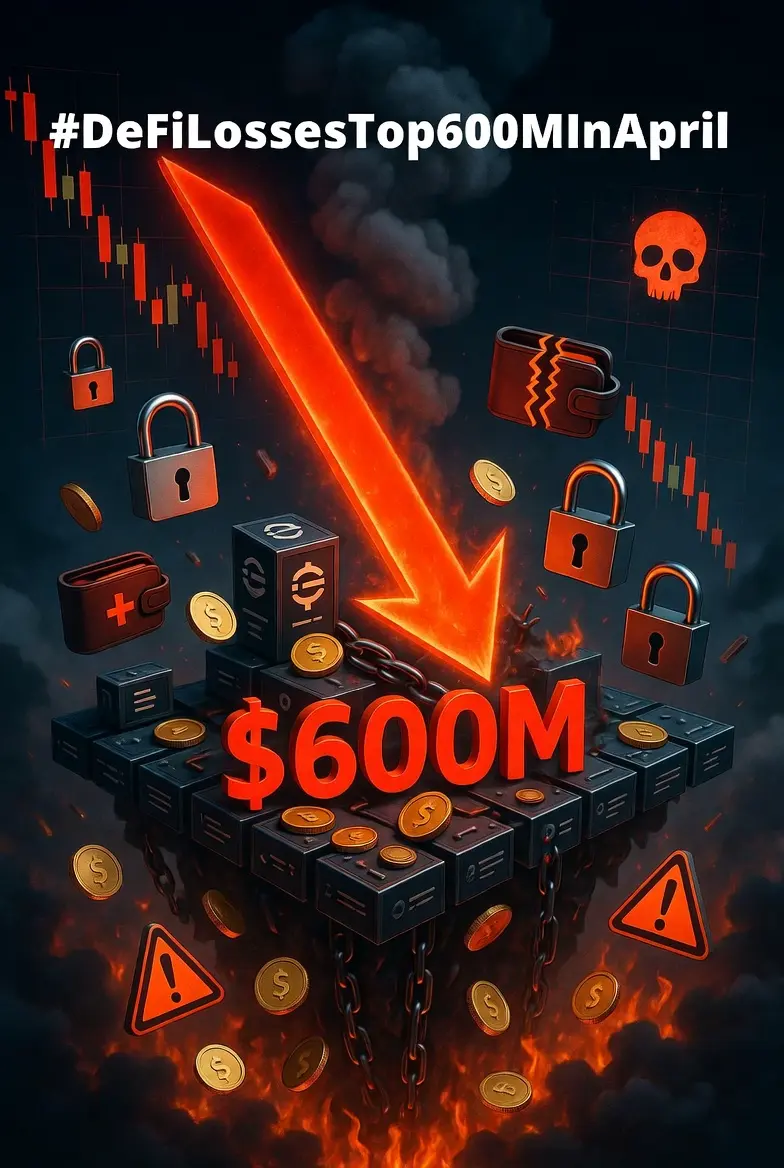
#DeFiLossesTop600MInApril
🚀 Decentralized Finance Turmoil: Over $78k,000 in Losses in April
April 2026 became one of the most damaging months in DeFi history, with total losses exceeding $600 million, caused by hacks, exploits, liquidation cascades, and protocol vulnerabilities. This series of incidents not only shook investor confidence but also triggered large-scale capital outflows from multiple blockchain ecosystems.
Meanwhile, the broader crypto market remains highly sensitive, with Bitcoin trading around $78,260, Ethereum near $2,250–$2.3k, and Solana fluctuating between $83–$84, refle
BTC0.28%
ETH0.8%
AAVE-0.33%
UNI-0.3%
View Original
HighAmbition
#DeFiLossesTop600MInApril
🚀 DeFi in Turmoil: Over $600M Lost in April
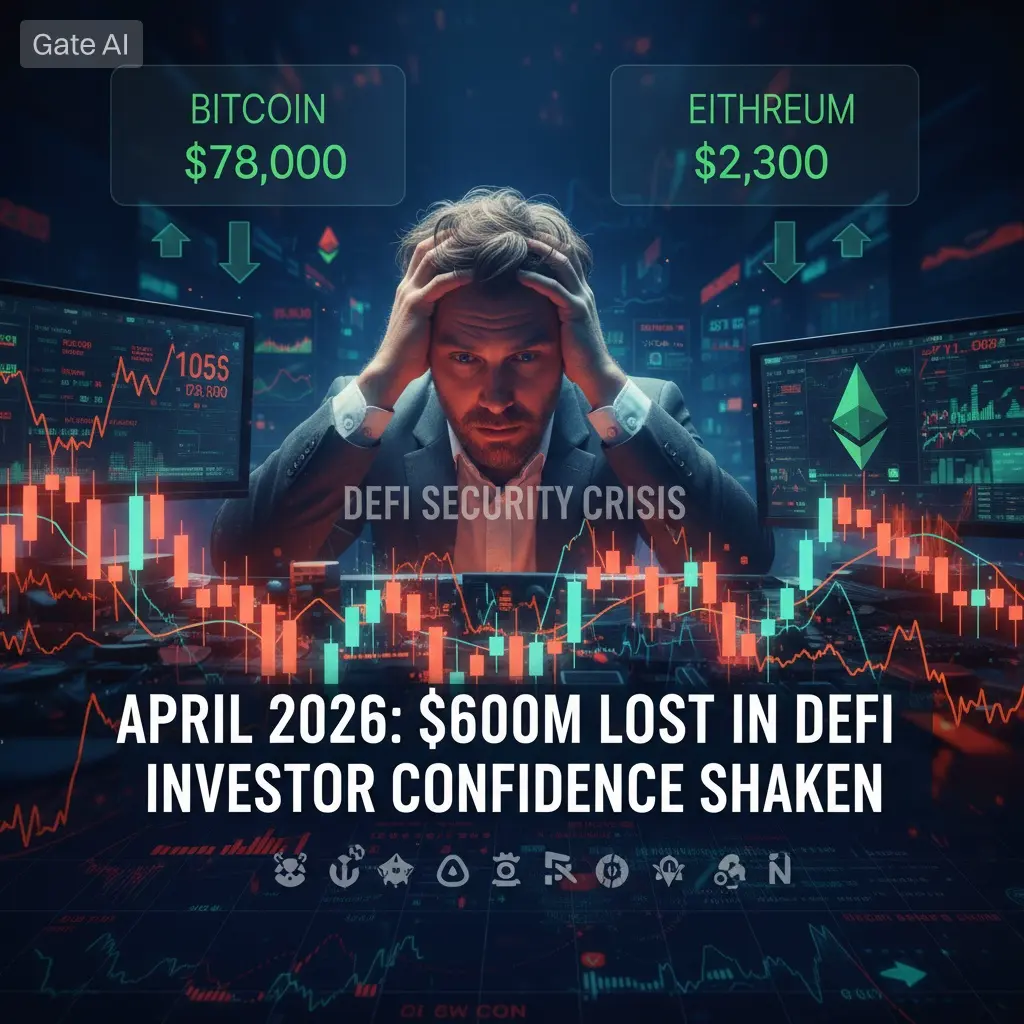
April 2026 has emerged as one of the most damaging months in the history of Decentralized Finance (DeFi), with total losses exceeding $600 million due to hacks, exploits, liquidation cascades, and protocol vulnerabilities. This sharp wave of incidents has not only shaken investor confidence but also triggered significant capital outflows across multiple blockchain ecosystems.
At the same time, the broader crypto market remains highly sensitive, with Bitcoin trading around $78,260, Ethereum near $2,250–$2,300, and Solana fluctuating close to $83–$84, reflecting a cautious environment where risk appetite is temporarily reduced but long-term structural interest remains intact.
🌍 1. WHAT IS DEFI AND WHY IT MATTERS IN GLOBAL FINANCE
DeFi (Decentralized Finance) represents a blockchain-based financial system that eliminates traditional intermediaries like banks. Instead, it relies on smart contracts deployed on networks such as Ethereum, Solana, and other Layer-1 ecosystems.
Users can:
Lend and borrow assets
Earn yield through liquidity provision
Trade without centralized exchanges
Access global financial services 24/7
The appeal of DeFi lies in its: 👉 open access
👉 transparency
👉 high yield opportunities
However, this freedom comes with a critical trade-off:
security responsibility is fully decentralized, meaning there is no central authority to reverse transactions or protect funds once exploited.
This structural design makes DeFi both innovative and extremely vulnerable at the same time.
📉 2. APRIL 2026: THE $600M+ DEFI LOSS EVENT
April’s losses surpassed $606 million, marking one of the most severe monthly drawdowns in recent DeFi history.
Two major incidents dominated the losses:
Drift Protocol exploit on Solana: approximately $285 million drained
Kelp DAO attack: nearly $293 million lost
Together, these two events accounted for more than 90% of total monthly damage, highlighting how a small number of systemic failures can create massive ecosystem-wide shockwaves.
⚙️ 3. HOW THE ATTACKS HAPPENED (STRUCTURAL BREAKDOWN)
🔹 Smart Contract & Bridge Exploits
A major portion of losses came from vulnerabilities in cross-chain bridges and smart contracts. Attackers exploited logic flaws to mint or extract unbacked assets, bypassing protocol safeguards.
🔹 Social Engineering Attacks
In some cases, attackers used long-term manipulation strategies targeting teams and operational access points. This shows that DeFi risk is not only technical — it is also human and organizational.
🔹 Liquidity & Liquidation Cascades
As panic spread:
liquidity pools became unstable
borrowing ratios surged
forced liquidations triggered further selling pressure
This created a chain reaction effect across protocols, amplifying losses beyond the original exploits.
📊 4. MARKET IMPACT: PRICE & LIQUIDITY REACTION
The financial consequences extended far beyond stolen funds.
🔻 DeFi Sector Impact:
Total Value Locked (TVL) dropped by over $13 billion in days
Aave saw outflows of approximately $8.4 billion
Lending yields compressed sharply across major protocols
🔻 Token Performance:
AAVE dropped around 15%–21%, trading near $90–$91
Solana ecosystem tokens experienced volatility-driven pressure due to Drift-related fears
UNI, LINK, and other DeFi assets saw moderate declines of 3%–10% depending on exposure
🔹 Bitcoin & Ethereum Stability:
Bitcoin remained relatively stable near $77,000–$78,000 range
Ethereum held near $2,250–$2,300, showing resilience compared to DeFi tokens
This confirms an important market structure: 👉 DeFi assets carry significantly higher beta risk than major crypto assets like BTC and ETH
🧠 5. MARKET PSYCHOLOGY SHIFT: FEAR TO REALIGNMENT
The April crash created a clear psychological shift:
Before:
👉 High yield expectations
👉 aggressive liquidity farming
👉 strong retail participation
After:
👉 risk awareness increased
👉 capital moved toward safer assets
👉 institutions became more selective
This type of event usually triggers a “reset phase” in market behavior, where participants reassess risk vs reward dynamics in DeFi ecosystems.
⚠️ 6. KEY LESSONS FROM THE CRISIS
This event reinforces several structural truths:
✔️ Security is the foundation of DeFi
No matter how innovative a protocol is, weak security can erase billions in value instantly.
✔️ Bridges remain the weakest point
Cross-chain infrastructure continues to be a major vulnerability in the ecosystem.
✔️ Human risk is equal to technical risk
Social engineering and operational failures are just as dangerous as smart contract bugs.
✔️ Liquidity is fragile in crisis conditions
DeFi pools can collapse quickly under panic-driven withdrawals.
📈 7. FUTURE MARKET IMPACT SCENARIOS
🔹 Short-Term (Risk-Off Phase)
Lower liquidity in DeFi protocols
Higher borrowing costs
Reduced leveraged activity
Capital rotation into BTC and stable assets
🔹 Medium-Term (Rebuilding Phase)
Stronger protocols gain dominance
Security upgrades accelerate
Insurance mechanisms expand
🔹 Long-Term (Structural Growth Phase)
If lessons are properly implemented:
DeFi becomes more secure
Institutional participation increases
Total value locked stabilizes at higher base levels
🔗 8. ETH & SOL LONG-TERM EFFECT
Ethereum:
Core DeFi infrastructure remains strong
Long-term price range still supported by ecosystem growth
Potential recovery toward $2,800–$3,500+ if sentiment improves
Solana:
Short-term hit from ecosystem exploits
But high-speed architecture still attracts developers
Potential recovery range: $100–$150+ in stronger cycles
💡 FINAL OUTLOOK
April 2026’s $600M+ DeFi loss event is not just a financial setback — it is a systemic stress test for decentralized finance. While it exposed vulnerabilities in smart contracts, bridges, and operational security, it also highlighted the market’s ability to absorb shocks and continue functioning.
At Bitcoin ~$78K, Ethereum ~$2.3K, and Solana ~$83, the broader crypto market remains structurally intact, but sentiment has shifted toward caution.
🔥 FINAL INSIGHT
DeFi is entering a maturity phase where: 👉 high risk is being replaced by higher standards
👉 explosive growth is being replaced by controlled scaling
👉 innovation is being balanced with security
The key question now is not whether DeFi will survive — but whether it will evolve into a safer, institution-ready financial system or remain a high-risk experimental frontier.
💬 Final Thought:
Crises like this do not end DeFi — they reshape it. And in crypto, every major reset often becomes the foundation of the next growth cycle.
repost-content-media
  • Reward
  • 40
  • Repost
  • Share
CryptoSelf:
Ape In 🚀
View More
#Gate广场五月交易分享 Recommendations for High-Quality Altcoins in 2026 (by Sector, with Logic + Risks) Combining current market hotspots, institutional holdings, and ecosystem implementation, screening for high certainty + high potential altcoins, recommended across four core sectors, balancing stability and explosive growth
(1) High-Performance Public Chain Sector (Stable First Choice, Institutions Heavily Invested) 1. Solana (SOL)
Recommendation Logic: The strongest alternative public chain to Ethereum, high throughput, low Gas fees, thriving DeFi/NFT/GameFi ecosystems, with 5 million daily active
SOL-0.04%
SUI-0.3%
FET2.5%
TAO5.19%
View Original
Ryakpanda
#Gate广场五月交易分享 Recommendations for high-quality altcoins in 2026 (by sector, with logic + risks) based on current market hotspots, institutional holdings, and ecosystem implementation, selecting high certainty + high potential altcoins, recommended across four core sectors, balancing stability and explosive growth
(1) High-performance public chain sector (preferably stable, institutions heavily invested)
1. Solana (SOL)
Recommended logic: The strongest alternative public chain to Ethereum, high throughput, low Gas fees, thriving DeFi/NFT/GameFi ecosystems, daily active addresses reach 5 million; injected with a $1.65 billion ecosystem fund from Abu Dhabi, strong institutional ETF expectations, conservative target price of $200-500 in 2026.
Risks: Network stability fluctuations, ecosystem diversion to other public chains.
2. Sui (SUI)
Recommended logic: Innovative Move language, suitable for Web3 games and social applications, capital support, early ecosystem explosion, a high-growth emerging public chain, suitable for investors with higher risk appetite.
(2) AI + blockchain sector (the strongest mainline in 2026)
1. FET
Recommended logic: Leader in AI + decentralized automation, merged with top global AI projects into the super AI alliance, tokens convert 1:1 to ASI, focusing on on-chain intelligent agents and supply chain optimization, aligned with AI development trends, high risk and high reward.
2. Bittensor (TAO)
Recommended logic: Decentralized AI computing network, on-chain AI data demand, small market cap with large growth potential, one of the most explosive tokens in the AI sector.
(3) Compliance + RWA sector (core for institutional deployment)
1. Ripple (XRP)
Recommended logic: Leader in compliant cross-border payments, deep cooperation with traditional financial institutions, institutional attention surges after regulatory victory, target price of $3.8-4 in 2026, ETF approval as a key catalyst.
2. Chainlink (LINK)
Recommended logic: Leader in decentralized oracles, essential infrastructure for RWA and DeFi ecosystems, CCIP protocol becoming industry standard, resilient in bear markets, flexible in bull markets, annualized fee income exceeding $200 million.
(4) Niche potential sectors (privacy/storage, hidden dark horses)
1. Monero (XMR): Leading privacy coin, privacy demand surges amid regulatory battles, long-term scarcity.
2. Filecoin (FIL): Leader in decentralized storage, explosive demand for AI data storage, ecosystem implementation accelerates, long-term value clear.
Information sharing, not investment advice 📢📢📢
repost-content-media
  • Reward
  • 38
  • Repost
  • Share
CryptoSelf:
Ape In 🚀
View More
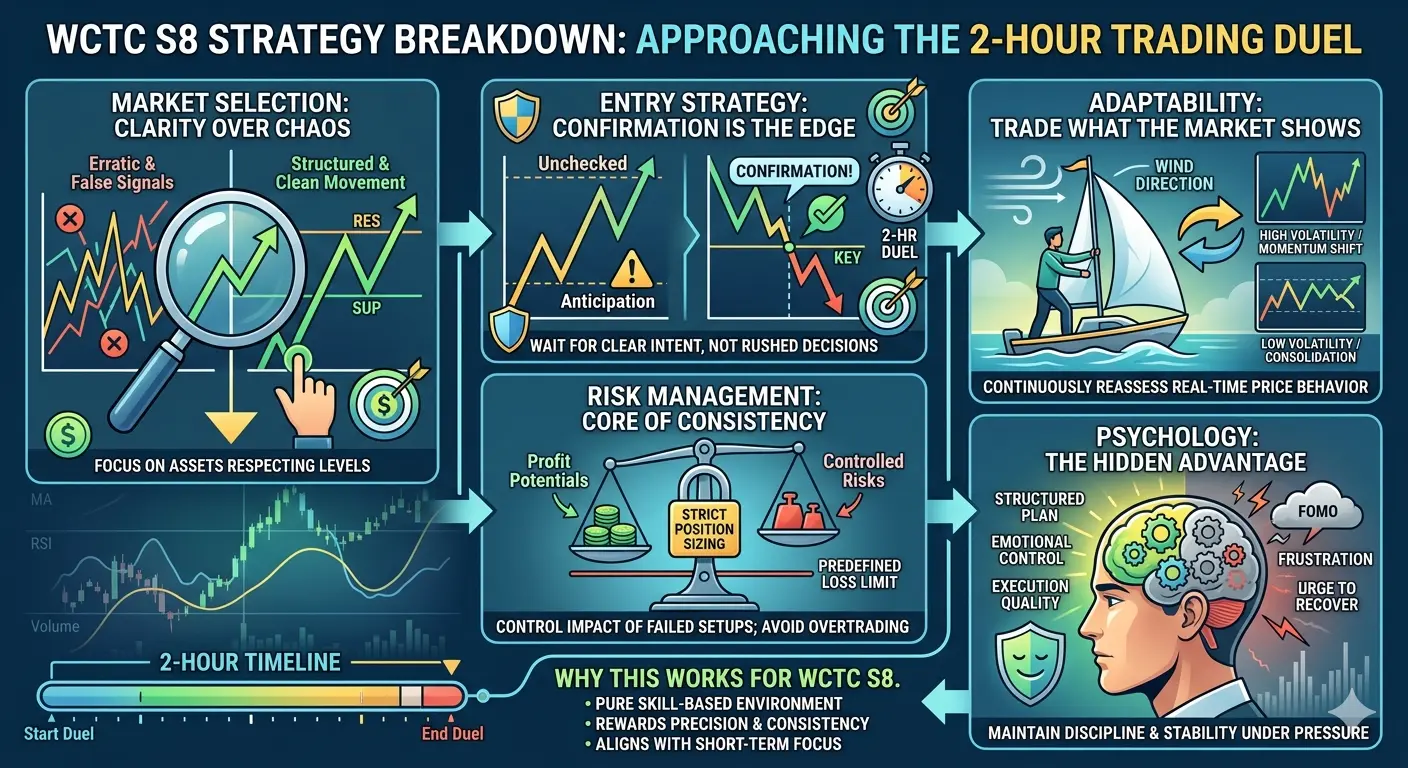
#WCTCTradingKingPK Reflects a broader shift, namely the way modern traders approach financial markets, especially in the rapidly evolving world of cryptocurrencies. Trading is no longer just about charts and indicators — it has evolved into a combination of psychology, discipline, macro awareness, and strategic execution. Under this philosophy, trading becomes a structured craft rather than gambling, with every step calculated and every risk measured.
At its core, the WCTCTradingKingPK mindset emphasizes consistency over hype. Many traders enter the market chasing quick profits, often influ
BTC0.28%
View Original
Yunna
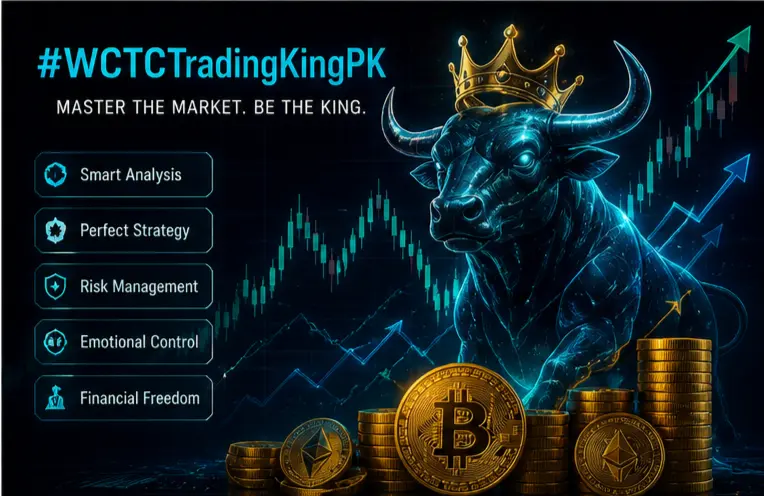
#WCTCTradingKingPK The rise of reflects a broader shift in how modern traders approach financial markets, particularly within the fast-moving world of cryptocurrency. Trading is no longer just about charts and indicators—it has evolved into a combination of psychology, discipline, macro awareness, and strategic execution. Under this philosophy, trading becomes a structured craft rather than a gamble, where every move is calculated and every risk is measured.
At its core, the WCTCTradingKingPK mindset emphasizes consistency over hype. Many traders enter the market chasing quick profits, often influenced by social media noise or sudden price surges. However, sustainable success comes from building a repeatable system—one that can perform across different market conditions. Whether the market is trending upward, consolidating, or experiencing sharp corrections, a disciplined trader adapts rather than reacts emotionally.
Risk management stands as one of the strongest pillars of this approach. In volatile markets like crypto, even the most accurate prediction can fail due to unexpected macro events or liquidity shocks. That is why position sizing, stop-loss placement, and capital preservation are prioritized over aggressive profit chasing. A true trading king is not defined by how much they win in one trade, but by how well they protect their capital over hundreds of trades.
Another key element is market structure understanding. Price does not move randomly—it follows liquidity, order flow, and institutional behavior. Traders aligned with the WCTCTradingKingPK philosophy spend time studying support and resistance zones, trend formations, and breakout confirmations. They avoid entering trades blindly and instead wait for high-probability setups where risk-to-reward ratios are clearly defined.
The psychological aspect of trading cannot be ignored. Fear and greed are the two dominant forces that destroy most traders’ accounts. The ability to stay calm during drawdowns and remain patient during slow market periods separates professionals from amateurs. Emotional control allows traders to stick to their plan, avoid revenge trading, and maintain long-term focus rather than short-term impulses.
In addition, macro awareness plays a critical role in modern trading strategies. Factors such as interest rates, inflation trends, and global liquidity directly impact risk assets like Bitcoin and altcoins. A trader operating under the WCTCTradingKingPK mindset does not isolate crypto from the broader financial system. Instead, they analyze how global economic conditions influence capital flows and market sentiment.
Technology and tools also enhance trading performance. From advanced charting platforms to real-time data analytics, traders now have access to insights that were once limited to institutions. However, tools alone do not guarantee success—it is the ability to interpret and apply data effectively that makes the difference. A strong strategy combined with the right tools creates a powerful edge in competitive markets.
Community and knowledge sharing further strengthen this trading philosophy. Engaging with other traders, discussing setups, and analyzing market conditions collectively can provide new perspectives. However, it is important to filter information carefully and avoid blindly following others. Independent thinking remains a crucial skill for long-term success.
Ultimately, #WCTCTradingKingPK is more than just a hashtag—it represents a disciplined, strategic, and professional approach to trading. It encourages traders to move beyond speculation and build a structured path toward financial growth. In a market filled with noise and uncertainty, those who follow a clear system, manage risk effectively, and maintain psychological strength are the ones who stand out.
repost-content-media
  • Reward
  • 35
  • Repost
  • Share
CryptoSelf:
To The Moon 🌕
View More
#Gate广场五月交易分享 The Federal Reserve kept the benchmark interest rate at 3.5%-3.75% during the April 29 meeting, marking the fourth consecutive pause. The biggest highlight of the meeting was the internal dissent of four votes— the largest divergence since 1992— revealing that cracks are deepening within the FOMC between "maintaining a hawkish stance" and "avoiding choking the economy."
Powell confirmed at this meeting that this will be his last press conference as Fed Chair, with his term officially ending on May 15, 2026.
His successor, Kevin Warsh, publicly criticized the current slow pace
View Original
Ryakpanda
#Gate广场五月交易分享 The Federal Reserve kept the benchmark interest rate at 3.5%-3.75% during the April 29 meeting, marking the fourth consecutive pause. The biggest highlight of the meeting was the internal dissent of four votes against— the largest divergence since 1992, revealing that cracks are deepening within the FOMC between "maintaining a hawkish stance" and "avoiding choking the economy."
Powell confirmed at this meeting that this will be his last press conference as Fed Chair, with his term officially ending on May 15, 2026.
His successor, Kevin Warsh, publicly criticized the current pace of rate cuts as too slow, clearly leaning dovishly. This means the market has reason to expect a policy shift signal at the next FOMC meeting on June 18, but the risk of "disappointment" should not be overlooked— the new official's first move is likely to be closely watched by the market, potentially leading to irrational behavior.
Currently, in the Kalshi prediction market, the probability of zero rate cuts throughout 2026 has risen to about 40%, which is suppressing the overall risk appetite in the market. Meanwhile, conflicts in the Middle East continue, international oil prices remain high around $100 per barrel, exerting structural upward pressure on inflation and further constraining the Fed's policy space.
repost-content-media
  • Reward
  • 43
  • Repost
  • Share
CryptoSelf:
Ape In 🚀
View More
On this beautiful morning in May, I want to extend a heartfelt "Good morning" to everyone, blending the meaningful significance of this day given by the calendar with the dynamic of the financial ecosystem that brings us together every day.
Today is May 1st. Millions of people around the world are celebrating the dignity struggles, rights pursuits, and spirit of solidarity of the working class. This special day originated from a brave strike initiated by workers in Chicago in 1886, demanding an "eight-hour workday" and humane working conditions, and continues to resonate globally as a symbol
View Original
User_any
On this beautiful May morning, I want to extend a heartfelt "Good Morning" to everyone, blending the spirit of this meaningful day offered by the calendar with the dynamics of the financial ecosystem that brings us together every day.
Today is May 1st. Millions of people around the world are celebrating the dignified struggle, the pursuit of rights, and the spirit of solidarity of the working class. This special day, rooted in the courageous strike initiated by workers in Chicago, USA, in 1886 demanding an "8-hour workday" and humane working conditions, still resonates throughout the world as a symbol of labor, justice, and equality, even after 140 years. Declared a "day of solidarity" by international socialist federations and labor unions in 1889, May 1st gained a global character and is now celebrated as a public holiday in over 60 countries.
This year's International Workers' Day theme addresses one of the most pressing issues of our time: "Ensuring Occupational Health and Safety in a Changing Climate." This title points to a brand new universe of risks and opportunities that now encompasses not just factory floors or office environments, but all work models, from physical labor to digital production. May, in particular, looks set to be a month of "labor and strategy" for global markets and for us cryptocurrency investors. We closed April with a volatile but strong crypto performance; now we face a busy agenda including the new head of the Federal Reserve, geopolitical tensions in energy markets, and critical legal processes regarding cryptocurrency regulation. While many traditional markets are closing their doors today, the cryptocurrency world, true to the spirit of decentralization, never stops, 24/7, offering us the opportunity to continue working and trading. Just like the resilience of the working class against adversity, we too are going through periods that test the composure of the markets and the fortitude of informed minds on this journey to financial freedom.
On this meaningful day, I extend my deepest respect to everyone who works hard and strives to build their own financial future, whether in a mine, behind a line of software, or in front of graphics, on May 1st, Labor and Solidarity Day. I hope this day marks a new step towards a fairer and freer world where labor and hard work are rewarded.
May everyone have a prosperous, healthy, and peaceful May.
#GateSquareMayTradingShare
repost-content-media
  • Reward
  • 40
  • Repost
  • Share
CryptoSelf:
To The Moon 🌕
View More
#BitcoinETFOptionLimitQuadruples
Raising the IBIT futures position limit fourfold to 1M contracts (ultimately approved by the SEC on April 27, 2026) marks a decisive shift in Bitcoin's "institutionalization" phase.
This effectively places IBIT in the same league as the most liquid global assets like Apple, NVIDIA, and the S&P 500 ETF.
Below is a detailed analysis of why this move is important and how it balances hedging and risk exposure.
Why the SEC Approved the 4x Increase
The SEC's approval (Notice No. 34-105317) was primarily based on data showing that the previous limit of 250k con
BTC0.28%
View Original
ybaser
#BitcoinETFOptionLimitQuadruples
This quadrupling of the IBIT options limit to 1,000,000 contracts (finalized by the SEC on April 27, 2026) is a definitive shift in the "institutionalization" phase of Bitcoin. It effectively moves IBIT into the same league as the most liquid assets on the planet, like Apple, NVIDIA, and the S&P 500 ETF.
Here is a breakdown of why this move matters and how it balances the scale between hedging and risk exposure.
Why the SEC Approved the 4x Increase
The SEC's approval (Release No. 34-105317) was largely driven by data proving that the previous 250,000-contract limit was "restrictive" for the level of demand IBIT now commands.
As of mid-April 2026, IBIT's market cap sits near $54 billion, representing nearly half of the total U.S. spot Bitcoin ETF market.
Nasdaq’s analysis showed that even if all 1 million contracts were exercised simultaneously, it would represent only about 0.278% of all outstanding Bitcoin. This "virtually unnoticed impact" was key to mollifying regulatory concerns about market manipulation.
The move aligns Bitcoin ETF options with rules applied to major commodity-based funds, eliminating what Nasdaq called "unequal treatment" compared to traditional assets.
Hedging Tools vs. Risk Exposure: The Dual Impact
1. The Case for Better Hedging (Stability)
For massive institutional allocators—like the pension funds and wealth managers recently entering the space—the 250,000 cap was a bottleneck.
Structured Products: With 1 million contracts, institutions can now build more complex "yield-enhancement" or "downside protection" products.
Volatility Compression: Many analysts argue that deeper options markets lead to lower realized volatility over time. When market makers can hedge more effectively, price discovery becomes more efficient rather than purely speculative.
2. The Case for Risk Exposure (Volatility)
On the flip side, quadrupling the limit creates a much larger "gamma" engine.
Larger option positions mean market makers must more aggressively buy or sell the underlying IBIT shares (and by extension, spot Bitcoin) to remain delta-neutral. If a major price level is breached, this "forced" hedging can amplify moves, leading to sharper spikes or crashes.
While intended for institutions, higher limits allow for massive directional bets that can temporarily disconnect the ETF price from the underlying Bitcoin spot price in high-stress environments.
The Strategic Outlook
This development lands just as the market structure for Bitcoin is shifting. In 2026, we’ve seen Bitcoin’s correlation with global easing breadths invert—it's now acting as a more "intelligent" macro sensor.
The increased limit suggests that regulators are no longer treating Bitcoin as a "fragile" niche asset, but as a robust global commodity capable of handling high-velocity institutional capital. Whether this leads to a smoother ride or more violent "gamma" swings will likely be tested the next time we see a major geopolitical shift or Fed policy reversal.
repost-content-media
  • Reward
  • 46
  • Repost
  • Share
CryptoSelf:
2026 GOGOGO 👊
View More
#WCTCTradingKingPK
Bitcoin is currently experiencing one of the most important market phases in this cycle, and understanding this phase correctly could be the key difference between capital growth and losses. The current structure is neither a simple bull trend nor a bear trend. It is a complex consolidation environment driven by liquidity, with prices compressed within major supply and demand zones. This market structure often confuses traders because volatility can trigger emotional reactions, while the bigger picture remains controlled by larger participants. In reality, Bitcoin does not
BTC0.28%
View Original
Yusfirah
#WCTCTradingKingPK
Bitcoin is currently passing through one of the most important market phases of this cycle, and understanding this phase correctly can be the difference between growing capital and losing it. The current structure is not a simple bullish trend or bearish trend. It is a complex liquidity-driven consolidation environment where price is being compressed inside major supply and demand zones. This kind of market structure often confuses traders because volatility creates emotional reactions while the bigger picture remains controlled by larger participants. In reality, Bitcoin is not moving randomly. Every move inside this range has purpose, and that purpose is liquidity collection.
The most important thing traders must understand right now is that Bitcoin is trading inside a macro compression zone. Compression in markets means energy is building. The longer price remains trapped between major support and resistance, the stronger the eventual breakout becomes. This is basic market mechanics. Strong trends are usually born from long consolidations because liquidity accumulates over time, positions become heavier, and market pressure builds on both sides. At the moment, Bitcoin is creating exactly that kind of environment.
From a higher timeframe perspective, the market still remains structurally bullish because major long-term supports have not been broken. However, on lower and mid-timeframes, Bitcoin is behaving in a range-bound and indecisive manner. This means traders must adapt. Trend strategies become less effective during these conditions, while range strategies, liquidity sweep setups, and confirmation-based breakout strategies become more valuable. The market rewards flexibility, not stubbornness.
One of the biggest reasons Bitcoin remains trapped in this zone is macroeconomic uncertainty. Global markets are still highly sensitive to central bank decisions, inflation data, and liquidity policy. The Federal Reserve remains one of the strongest indirect forces behind Bitcoin’s short-term volatility. Interest rate expectations shape liquidity flows across global assets. When rates are uncertain, investors become cautious. This affects Bitcoin because liquidity is the fuel that drives crypto expansion. Less confidence means less aggressive capital deployment.
Inflation data remains another major factor. If inflation remains elevated, monetary tightening expectations increase, which creates pressure on risk assets. If inflation softens, markets price in possible easing, which supports Bitcoin and other growth assets. This relationship is important because Bitcoin traders who ignore macro data are trading incomplete information. Technical analysis without macro context becomes dangerous in this type of environment.
Looking at Bitcoin’s support zones, the 70,000 area remains the strongest immediate psychological and structural support. This level is highly important because it has become the center of market confidence. As long as Bitcoin defends this region, buyers remain in control of larger structure. However, if this support weakens, price can move aggressively into lower liquidity zones. The next major support at 68,500 is critical because it represents a deeper liquidity pool where stop-losses and buy orders are concentrated. This area often becomes a magnet during panic selling. If sellers force a break below that level, the market can quickly test 66,000, which is the major breakdown confirmation zone.
Support levels are not just numbers. They are psychological battlefields. Every support level represents buyers defending positions and sellers trying to break confidence. This is why support tests often produce violent reactions. The stronger the reaction, the more important the level becomes.
On the resistance side, 72,500 remains an important short-term supply wall where Bitcoin has repeatedly faced rejection. This tells us sellers are active there and profit-taking remains strong. The most critical resistance remains 75,000 because this is where market sentiment changes dramatically. A successful breakout above this zone changes trader psychology from defensive to aggressive. That shift in psychology often creates momentum expansion. If Bitcoin clears this level with strong volume, the next immediate target becomes 78,000, followed by 82,000 and potentially 88,000.
Volume remains one of the most important confirmation tools in this market. Price movement without volume is weak movement. A breakout above resistance without strong participation often fails because there is not enough momentum to sustain it. This is where inexperienced traders get trapped. They see price moving and enter emotionally. Smart traders wait for volume confirmation because volume validates intention.
Another critical element in this market is liquidity behavior. Bitcoin is one of the most manipulated assets in terms of liquidity hunting because leverage is extremely high in crypto. This means markets frequently move into stop-loss zones before reversing. These moves are not accidental. They are designed to collect liquidity. For example, a quick move below support can trigger panic selling, allowing larger buyers to accumulate at lower prices. A quick move above resistance can trigger breakout buying, allowing larger sellers to distribute into strength.
This liquidity behavior creates what traders call fakeouts. Fakeouts are among the most dangerous traps because they look like real breakouts or breakdowns. Many traders lose money not because they picked the wrong direction, but because they entered at the wrong time. Timing inside liquidity zones matters more than direction.
Psychology is everything in this market. Fear and greed are strongest during consolidation because uncertainty creates emotional pressure. Traders become impatient. They want movement. They want confirmation. They want action. But the market often delays action specifically to create emotional mistakes. This is why discipline becomes the most valuable skill.
There are currently three types of market participants. The first group consists of aggressive bulls who expect continuation and buy every dip. The second group consists of aggressive bears who expect macro weakness and short resistance. The third group is smart money, and this group waits. They do not react emotionally. They wait for liquidity to be exposed, traps to be formed, and confirmation to appear. This third group usually wins because patience aligns with probability.
Range trading remains one of the strongest strategies in this environment. Buying near support and taking profits near resistance remains effective while the range holds. This strategy works because market behavior remains repetitive inside consolidation. However, execution must be precise. Buying too high or selling too low destroys the edge. Range trading rewards patience and discipline.
Breakout trading remains the second major opportunity, but only when confirmation appears. Traders should not anticipate breakouts. They should react to them. A confirmed breakout above resistance with volume creates expansion potential. A confirmed breakdown below support creates downside momentum opportunities. The key is waiting for the market to prove itself.
Liquidity sweep trading remains the most advanced strategy because it uses market manipulation as an advantage. Instead of fearing stop-loss hunts, professional traders expect them. They wait for them. They use them as signals. A support break followed by immediate recovery often signals strong buying. A resistance break followed by immediate rejection often signals strong selling.
Risk management remains non-negotiable. In volatile environments like this, capital preservation is more important than profit maximization. No setup is guaranteed. Every trade carries uncertainty. Proper risk allocation protects traders from market unpredictability. The strongest traders are not those who make the biggest profits. They are the ones who survive the longest.
Leverage should be used carefully. High leverage during consolidation is extremely dangerous because volatility expands unpredictably. Even correct directional analysis can fail due to temporary liquidity sweeps. This is why lower leverage and stronger confirmation become more important than aggressive positioning.
Looking forward, Bitcoin’s next major move will likely define the next phase of this cycle. If buyers reclaim and break 75,000 with conviction, the bullish expansion phase could accelerate quickly because breakout momentum attracts fresh capital and forces short sellers to cover. That combination creates explosive upside.
If sellers push Bitcoin below 70,000 and maintain pressure, the market could enter a deeper corrective phase. Corrections are normal even in bullish cycles. They reset leverage, create better entries, and restore healthier market structure. Traders must understand that corrections are not market failure; they are market mechanics.
The most likely short-term scenario remains continued range behavior until macro catalysts create stronger conviction. This means patience remains the strongest strategy. Traders who force trades in uncertain environments often become liquidity for stronger hands.
My personal experience in these phases has shown one thing repeatedly: markets punish impatience more than bad analysis. Many times traders know the correct direction but lose because they enter too early. Timing matters. Confirmation matters. Structure matters. The best trade is often the one you wait for, not the one you chase.
My advice for traders right now is simple. Respect the range. Respect liquidity. Respect risk. Focus less on prediction and more on reaction. Let the market show intention before committing capital. In uncertain phases, discipline compounds faster than aggression.
Bitcoin is not weak right now. Bitcoin is preparing. Consolidation is preparation. Liquidity traps are preparation. Market compression is preparation. The expansion phase always comes after patience is tested. The question is not whether the move will come. The question is whether traders will still have capital when it arrives.
WCTC Final Insight:
The market does not reward the fastest trader. It rewards the most disciplined one. In liquidity-driven environments, patience becomes a weapon, risk management becomes protection, and execution becomes everything. Those who understand the trap zone today will be the ones positioned correctly for the expansion tomorrow.
repost-content-media
  • Reward
  • 38
  • Repost
  • Share
CryptoSelf:
To The Moon 🌕
View More
April 2026 The most destructive month in cryptocurrency history
April 2026 Officially becomes the worst month ever for DeFi security vulnerabilities. According to DefiLlama data, total cryptocurrency losses for April reached $629.69 million, setting a monthly record. DeFi protocols accounted for $614.17 million of the total losses, completely dominating the attack landscape. The scale, speed, and complexity of these attacks shook the core of the entire industry.
Two attacks that caused April’s destruction
These two attacks account for about 95% of April’s total losses.
On April 1st, Dr
SOL-0.04%
DRIFT-0.33%
ZRO-2.43%
View Original
Falcon_Official
APRIL 2026 THE MOST DESTRUCTIVE MONTH IN CRYPTO HISTORY
April 2026 has officially become the worst month for DeFi security breaches ever recorded. According to data from DefiLlama, total crypto losses reached $629.69 million across the entire month the highest figure ever recorded in a single month in the history of decentralized finance. DeFi protocols accounted for $614.17 million of total losses, completely dominating the attack landscape. The scale, speed, and sophistication of these attacks have shaken the entire industry to its core.
THE TWO ATTACKS THAT DESTROYED APRIL
Two attacks account for roughly 95% of April's total losses.
Drift Protocol on Solana lost $285 million on April 1. Analysts linked the incident to a social engineering attack connected to North Korea's Lazarus Group. Then on April 18, Kelp DAO lost between $292 and $293 million. The exploit targeted a LayerZero V2 bridge route configured as a single point of failure.
Both incidents have been linked to North Korea's Lazarus Group hackers. The breaches were not caused by code bugs or aggressive cyber intrusions but resulted from months-long operations that combined social engineering with otherwise legitimate actions on the protocols.
Additional losses compounded the damage including an $18.4 million loss at Rhea Finance and a $15 million theft from Grinex bringing the total volume of stolen capital to historically alarming levels.
THE CONTAGION EFFECT HOW ONE HACK DESTROYED THE ECOSYSTEM
The Kelp DAO exploit on April 18, 2026, in which attackers minted 116,500 unbacked rsETH by poisoning a single LayerZero verifier node, catalyzed more than $600 million in sector-wide DeFi losses. Total DeFi TVL collapsed to its lowest point in twelve months, as capital flight accelerated across restaking, lending, and cross-chain bridge protocols.
Unlike historical hacks that often remained isolated to a single platform, these recent breaches effectively weaponized the composability of DeFi. Because assets like rsETH were utilized as collateral or liquidity across at least nine other major platforms, the compromise of a single bridge infrastructure triggered a near-instantaneous liquidity crunch. Major lending protocols, including Aave, were forced to initiate emergency market freezes to prevent further exploitation.
In the initial 48 hours after the attacks, more than $8.4 billion in deposits left Aave, and total DeFi TVL across all protocols dropped by more than $13 billion. Ethereum alone saw $1.6 billion in outflows on April 24 in a single day.
THE SCALE COMPARED TO PREVIOUS MONTHS
According to data from DefiLlama, April's $606.2 million total across 12 incidents has already eclipsed the entire first quarter's $165.5 million combined losses. That makes April roughly 3.7 times larger than January, February, and March put together.
The scale of April's losses stands in sharp contrast to March. CertiK reported approximately $59.5 million in total losses for March 2026, spread across 145 separate incidents. April's losses concentrated around a few large-scale failures pushing the total more than ten times higher in a single month.
Two attacks alone KelpDAO and Drift Protocol account for 95% of April's losses and 75% of 2026's total of $771.8 million.
ATTACK FREQUENCY SURGING 68% YEAR OVER YEAR
Hack frequency is climbing sharply. DeFi recorded 47 incidents in the first 4.5 months of 2026, compared with 28 over the same period in 2025 a roughly 68% year-over-year rise.
What has changed is not just the scale it is the sophistication. Early DeFi exploits typically targeted obvious smart contract bugs. Auditors adapted, code reviews improved, and formal verification became standard for major protocols. But attackers shifted too. The new targets are bridge layers, oracle systems, signing infrastructure, and multisig key holders attack surfaces far harder to audit than a standard smart contract.
REGULATORY RESPONSE
Against this backdrop, regulators are paying close attention. On April 21, SEC Chair Paul Atkins announced that the agency is on the cusp of releasing an "innovation exemption" allowing tokenized securities to trade on-chain for the first time in a compliant framework. This follows a joint SEC-CFTC token taxonomy published in March 2026, which classified most crypto assets as outside securities law entirely.
The ongoing debate around the CLARITY Act is already putting stablecoins under the spotlight, raising concerns around DeFi's potential impact on the traditional financial system. In this context, the recent protocol hacks may be more than just a capital hit "DeFi FUD" could be emerging as a key driver for sentiment this cycle.
Jefferies has already warned that the string of high-profile hacks could temporarily slow Wall Street's appetite for DeFi tokenization projects, even as institutional money continues to arrive.
WHAT THE EXPERTS ARE SAYING
Ledger's head of security stated bluntly: "2026 will most likely be the worst year in terms of hacks, again."
Aave's risk team is now modeling two bad debt scenarios depending on recovery rates for the unbacked rsETH that was used as loan collateral before markets were frozen. Aave's TVL collapsed from $26.4 billion to approximately $18 billion — an $8.45 billion drawdown driven by users de-risking ahead of potential bad debt crystallization.
DeFi, by design, places full responsibility on the user. There are no chargebacks, no fraud protection teams, no account recovery flows. When something goes wrong and in April 2026 things went very wrong there is no safety net.
KEY FACTS:
Total losses in April 2026 $629.69 million highest ever in a single month
DeFi protocol losses specifically $614.17 million of the total
Drift Protocol exploit on April 1 $285 million lost on Solana
Kelp DAO exploit on April 18 — $292 to $293 million lost on Ethereum
Two attacks combined 95% of April's total losses
April losses 3.7 times larger than entire Q1 2026 combined
Total 2026 DeFi losses year-to-date $771.8 million
DeFi hack incidents up 68% year-over-year in 2026
Aave TVL dropped from $26.4B to $18B in 48 hours post-exploit
Total DeFi TVL dropped by $13 billion in 48 hours
Both major attacks linked to North Korea's Lazarus Group
March 2026 losses by comparison only $59.5 million
#DeFiLossesTop600MInApril #DeFi
repost-content-media
  • Reward
  • 29
  • Repost
  • Share
CryptoSelf:
2026 GOGOGO 👊
View More
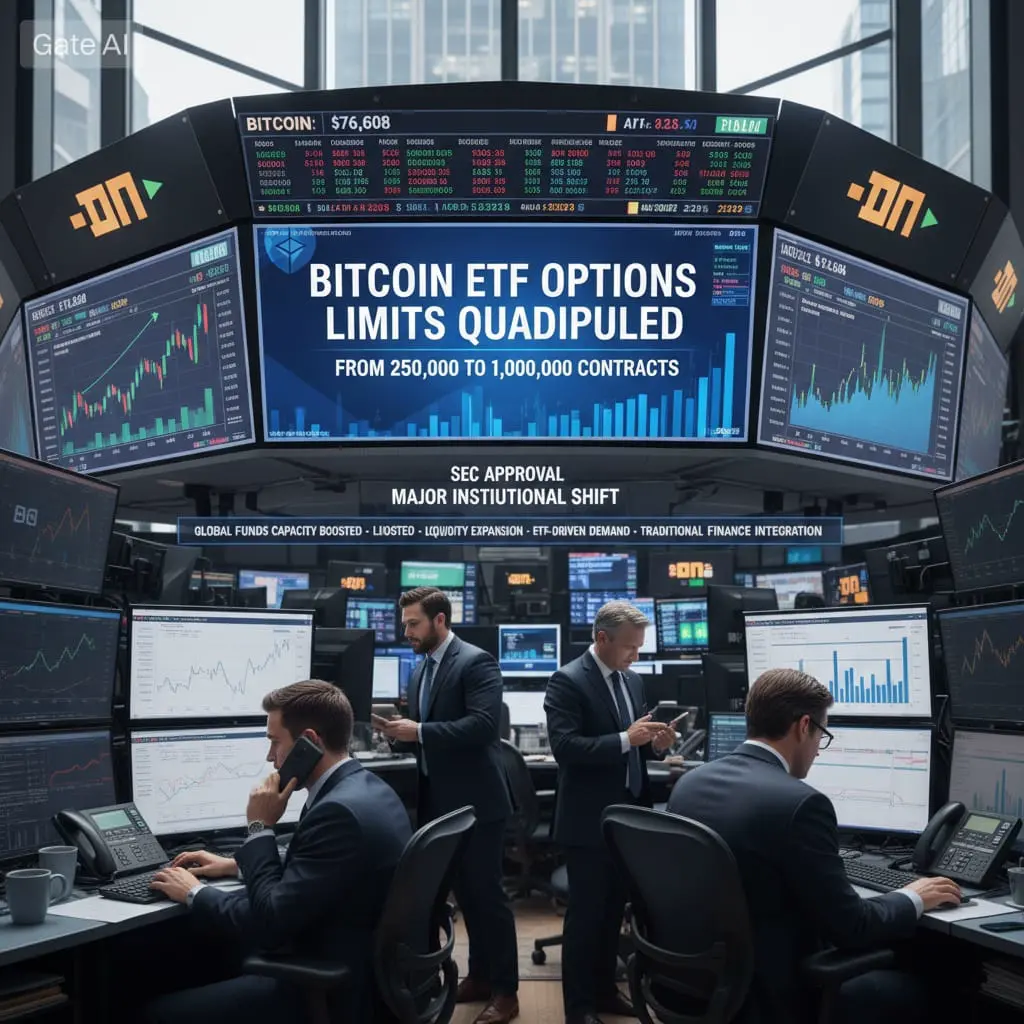
#BitcoinETFOptionLimitQuadruples
Bitcoin ETF futures position limits quadruple growth
Structural shift breaks through in the Bitcoin derivatives market
The U.S. Securities and Exchange Commission (SEC) approved on April 30, 2026, to expand the position limits related to the Bitcoin ETF trust (IBIT) managed by BlackRock by four times, marking one of the most significant structural reforms in Bitcoin financial markets history. This decision increases the permissible options exposure per side from 250k contracts to 1 million contracts, effectively opening a new phase for institutional-scale part
BTC0.28%
ETH0.8%
View Original
HighAmbition
#BitcoinETFOptionLimitQuadruples
Bitcoin ETF Options Limit Quadrupling
BREAKING STRUCTURAL SHIFT IN BITCOIN DERIVATIVES MARKET
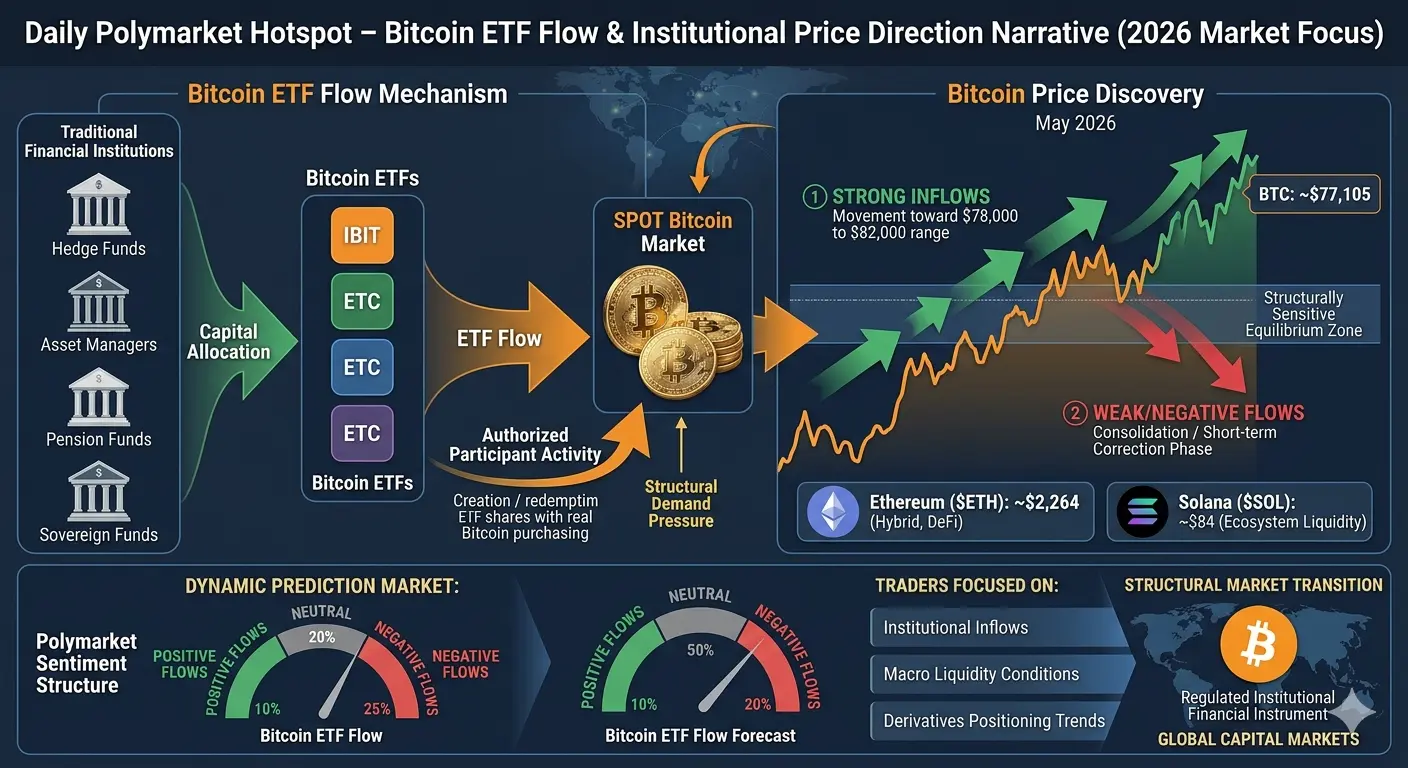
The approval by the U.S. Securities and Exchange Commission (SEC) on April 30, 2026, to quadruple position limits for Bitcoin ETF options tied to BlackRock’s iShares Bitcoin Trust (IBIT) represents one of the most significant structural transformations in the history of Bitcoin financial markets. This decision increases the allowable options exposure from 250,000 contracts to 1,000,000 contracts per side, effectively unlocking a new phase of institutional-scale participation in Bitcoin derivatives trading and fundamentally reshaping liquidity dynamics across the entire ecosystem.
CURRENT MARKET SNAPSHOT (MAY 2026)
Bitcoin is currently trading around $76,608, reflecting a consolidation phase following previous macro volatility cycles where prices fluctuated between broad accumulation and expansion zones. Ethereum is trading near $2,264, continuing to act as a hybrid asset influenced by both smart contract infrastructure demand and broader liquidity conditions in decentralized finance ecosystems. Solana is positioned around $84, showing sensitivity to ecosystem-level flows and risk sentiment in mid-cap blockchain assets. The overall market structure suggests that Bitcoin has entered a phase where ETF flows, institutional derivatives positioning, and macro liquidity conditions dominate price behavior rather than retail-driven speculation.
“BITCOIN ENTERS FULL INSTITUTIONAL DERIVATIVES ERA”
This regulatory expansion is not a routine adjustment but a clear signal that Bitcoin ETF derivatives have reached mainstream financial scale. By allowing IBIT options limits to expand to 1,000,000 contracts per side, regulators have effectively acknowledged that Bitcoin-linked instruments now possess sufficient liquidity depth, trading volume, and market stability to support large-scale institutional positioning without artificial restrictions.
Each IBIT options contract represents exposure to 100 shares of the ETF, meaning the new limit allows theoretical exposure to 100 million IBIT shares per side. This places IBIT options in the same liquidity category as major global ETFs and marks Bitcoin’s transition from an emerging digital asset to a fully integrated institutional financial instrument.
: “WHY REGULATORS UNLOCKED 4X HIGHER LIMITS”
The SEC and Nasdaq ISE approved this expansion due to a combination of structural market maturity and rapidly increasing institutional demand throughout 2025 and early 2026. Trading volumes in IBIT options surged to levels that made previous caps restrictive rather than protective, forcing large institutions to split positions inefficiently and limiting the natural evolution of hedging strategies.
The key regulatory realization was that Bitcoin ETF markets had matured faster than expected, with deep liquidity formation, strong market maker participation, and growing confidence in surveillance systems. As a result, Bitcoin ETFs are no longer treated as experimental instruments but are now considered standard components of regulated capital markets.
: “HOW THIS IMPACTS BITCOIN PRICE DYNAMICS”
The impact of this change on Bitcoin is indirect but structurally powerful. The core transmission mechanism begins with institutional options activity, where large hedge funds and asset managers build call or put positions on IBIT. Market makers then hedge these exposures by buying or selling IBIT shares, which creates ETF-level demand or supply pressure. Since IBIT shares are backed by actual Bitcoin through authorized participants, this flow ultimately translates into real spot Bitcoin transactions in the market.
This means that increased derivatives activity does not remain confined to financial contracts but actively influences Bitcoin demand at the base layer. As a result, stronger options liquidity tends to reinforce Bitcoin’s structural demand profile over time, particularly during periods of sustained institutional inflows.
: “LIQUIDITY SURGE VS VOLATILITY COMPLEXITY”
The expansion of IBIT options limits introduces a dual-layer effect on market behavior. On one side, increased liquidity improves market efficiency by reducing spreads, enhancing execution quality, and allowing large trades to be absorbed without excessive price distortion. This leads to smoother long-term price discovery and more stable institutional participation.
On the other side, it introduces more complex short-term volatility dynamics, particularly around options expiration cycles. Large institutional positions can trigger gamma hedging flows, where market makers adjust exposure dynamically, potentially amplifying intraday price movements. This creates a market environment where long-term stability improves, but short-term price action becomes more structurally reactive to derivatives flows.
: “BITCOIN’S NEW THREE-LAYER MARKET STRUCTURE”
This development reinforces Bitcoin’s evolving classification into a multi-layer financial system. At the macro layer, Bitcoin continues to function as a global liquidity anchor and digital store of value. At the infrastructure layer, Ethereum and similar ecosystems support decentralized computation, tokenization, and smart contract economies. At the derivatives layer, instruments such as IBIT options, futures, and structured products enable sophisticated hedging, leverage, and volatility trading strategies.
This layered structure reflects Bitcoin’s gradual integration into global capital markets, where it is no longer isolated as a speculative asset but embedded within a broader financial architecture.
HEADLINE SHIFT: “FROM ACCESS TO SCALE – THE 2024 TO 2026 TRANSFORMATION”
The evolution of Bitcoin ETFs can be understood as a three-phase institutional expansion cycle. In 2024, the approval of spot Bitcoin ETFs opened regulated access for institutional capital. In 2025, the introduction and rapid expansion of options trading added leverage and hedging capabilities. In 2026, the removal of position constraints through limit expansion marks the final phase of scaling, where institutional demand is no longer constrained by structural barriers.
Each phase has progressively deepened Bitcoin’s integration into traditional financial systems and reduced friction in capital allocation.
MARKET SCALE SIGNAL: IBIT OPTIONS EXPANSION
IBIT options already represent a rapidly growing segment of Bitcoin derivatives markets, with open interest exceeding approximately $27 billion in notional exposure. The quadrupling of limits now positions this market for significantly higher expansion, both in terms of volume and strategic complexity. This makes IBIT one of the most important liquidity hubs in the entire Bitcoin ecosystem, alongside spot ETF flows and global derivatives exchanges.
: “BITCOIN PRICE OUTLOOK AROUND $76K ZONE”
With Bitcoin currently trading at $76,608, the market sits in a structurally sensitive zone where ETF inflows and derivatives positioning are likely to dictate directional bias. In a constructive scenario, continued institutional demand supported by improved hedging infrastructure could sustain upward pressure toward the $78,000 to $82,000 range. In a more volatile scenario, expiration-driven repositioning and dealer hedging activity may create temporary fluctuations, but without necessarily altering the broader structural trend.
Ethereum and Solana remain secondary beneficiaries of liquidity conditions, with Ethereum near $2,264 reflecting hybrid exposure dynamics and Solana near $84 continuing to track ecosystem-level sentiment shifts.
“BITCOIN ENTERS FULL WALL STREET INTEGRATION PHASE”
The quadrupling of IBIT options position limits represents far more than a regulatory update; it marks a structural milestone in Bitcoin’s evolution into a fully integrated global financial asset. The change enhances liquidity depth, expands institutional flexibility, improves hedging efficiency, and reinforces Bitcoin’s position within traditional capital markets.
At the same time, it introduces a more sophisticated and structurally complex market environment where derivatives flows, ETF mechanisms, and institutional positioning increasingly determine price behavior. Bitcoin is no longer simply being traded; it is now being allocated, hedged, structured, and managed at scale within the global financial system.
repost-content-media
  • Reward
  • 29
  • Repost
  • Share
CryptoSelf:
To The Moon 🌕
View More
#xrp
Ripple's native asset XRP entered a convergence point of institutional interest, ETF development, and technical pressure in May 2026. Today’s price is trading around $1.37, with market participants paying attention to regulatory frontlines and key levels on the chart. In this article, we will cover support and resistance zones, market psychology, and points investors should watch based on current data.
1. Current Price and Technical Outlook: May 1, 2026
Over the past 24 hours, XRP's price has fluctuated between $1.3591 and $1.3827, with the current price at $1.3667. 24-hour trading volum
XRP0.07%
BTC0.28%
View Original
discovery
#xrp
Ripple’s native asset XRP enters May 2026 at the intersection of institutional interest, ETF developments, and a technical squeeze. With price trading at the 1.37 dollar level today, market participants are watching both the regulatory front and the critical levels on the chart. In this article, we cover support and resistance zones, market psychology, and the points investors should watch, backed by current data.
1. Current Price and Technical Picture: May 1, 2026
Over the last 24 hours, XRP moved between 1.3591 and 1.3827 dollars and is currently priced at 1.3667 dollars. 24-hour volume stands at 673 million dollars. Technical indicators point to an indecisive short-term balance.
Main Support Zones:
• 1.3585 dollars: The first buyer area on the daily chart. 4-hour closes below this level can accelerate selling. • 1.3189 dollars: Primary support with a strength score of 68. This is where medium-term buyers are concentrated. If it holds, the structure remains intact. • 1.2144 dollars: Weekly chart trend support. The main level where institutional accumulation is expected during deep corrections.
Main Resistance Zones:
• 1.3693 dollars: Coincides with the daily pivot at 1.3688 dollars. The first threshold that needs to be cleared. • 1.4072 dollars: The area where EMA20 sat in the April 27 analysis. A daily close above it shifts the short-term trend in favor of buyers. • 1.4426 dollars: Part of the main resistance cluster with 1.4804. If this band is broken, targets toward 1.70 dollars come onto the table technically.
RSI is at 43.9, in neutral-negative territory. Supertrend still gives a bearish signal and the 1.57 dollar resistance creates short-term pressure. The Long/Short ratio is 72.9 percent long. The funding rate is positive at 0.0024 percent, meaning long positions pay shorts. This shows that upside expectations dominate, but leverage risk is also rising.
2. Market and Investor Psychology
Psychology around XRP is shaped by three main themes:
ETF Expectation: XRP ETFs trading on Nasdaq under tickers XRPI, XRPT, and XRPC gained between 1.3 and 2.6 percent in the past week. The 2X XRP ETF rose to 41.02 dollars. These actively managed products make it easier for traditional portfolios to access XRP. Investors are positioning with the perception that “the case is over, now it is time for institutional products.” This optimism brings buying on every attempt above 1.40.
C-Wave Scenario: Technical analysts point to a possible C-wave after the rejection at the 2.69 dollar resistance. As long as this scenario remains active, the 1.50 dollar area works as a psychological anchor. If price stays below 1.40, fear of “the decline is not over” is triggered. A move above 1.44 triggers excitement that “the trend continues.”
Cybersecurity Sensitivity: News in April that 293 million dollars in assets were stolen put custody security back in focus for XRP holders too. The decline in XRP held on exchanges and the rise in withdrawals to cold storage reflect this psychology on-chain.
3. Six Points Investors Should Watch 1. The 1.4098 – 1.4804 Range Is the Main Battleground: Multi-timeframe analysis shows most of the 9 strong levels are in this band. If 1.4098 breaks down, the correction deepens. If 1.4804 breaks up, a new trend begins. 2. Leverage and Funding Rate: The long ratio is 72.9 percent. Funding is positive. Excessive long buildup can bring rapid liquidations below 1.3585. Using low leverage is critical this month. 3. ETF Inflows and Outflows: XRPI is at 7.68 dollars, XRPT at 41.02 dollars. Daily flows into these products directly impact spot XRP demand. If outflows begin in the ETFs, pressure increases on spot. 4. ODL and Institutional Use: Ripple’s 108 million dollar XRP transfer highlights demand in ODL corridors. If bank-to-bank payment volume grows, the 1.21 support zone becomes even stronger. 5. Regulation Headline: In Europe, the share of crypto investors reached 25 percent. The fact that XRP ETFs trade in the U.S. shows the case impact has diminished. However, a new SEC statement could create volatility. 6. Volume Confirmation: For a sustained move above 1.36, daily volume needs to rise above 800 million dollars. Rallies without volume face selling at 1.4072. 4. Possible Scenarios
Upside Scenario: If price breaks the 1.3693 pivot with volume and posts a daily close above 1.4072, the first target becomes 1.4426. A break of that level opens the door to 1.57 and 1.70. This scenario requires continued ETF inflows and Bitcoin holding above 78,000.
Downside Scenario: If 4-hour closes begin below 1.3585, the 1.3189 primary support gets tested. If that also breaks, a pullback toward the 1.2144 weekly support is technically possible under C-wave perception. In that case, long funding payments would increase, which can accelerate a liquidation chain.
Final Assessment
XRP in May 2026 is no longer a coin that moves only on case headlines. ETFs, ODL usage, and institutional custody solutions are the new catalysts for price. Technically, the squeeze around 1.40 dollars is waiting for news or volume to decide direction.
Investor psychology swings between fear of missing out and fear of decline. In this period, those who consider position sizing, placing stops below 1.3189, and keeping leverage limited can manage volatility more effectively.
This content is for informational purposes and does not constitute financial advice. Crypto assets involve high risk, and there is a possibility of losing all capital.
#GateSquareMayTradingShare
#Gate广场五月交易分享
#GateSquare #CreatorCarnival
repost-content-media
  • Reward
  • 32
  • Repost
  • Share
CryptoSelf:
To The Moon 🌕
View More
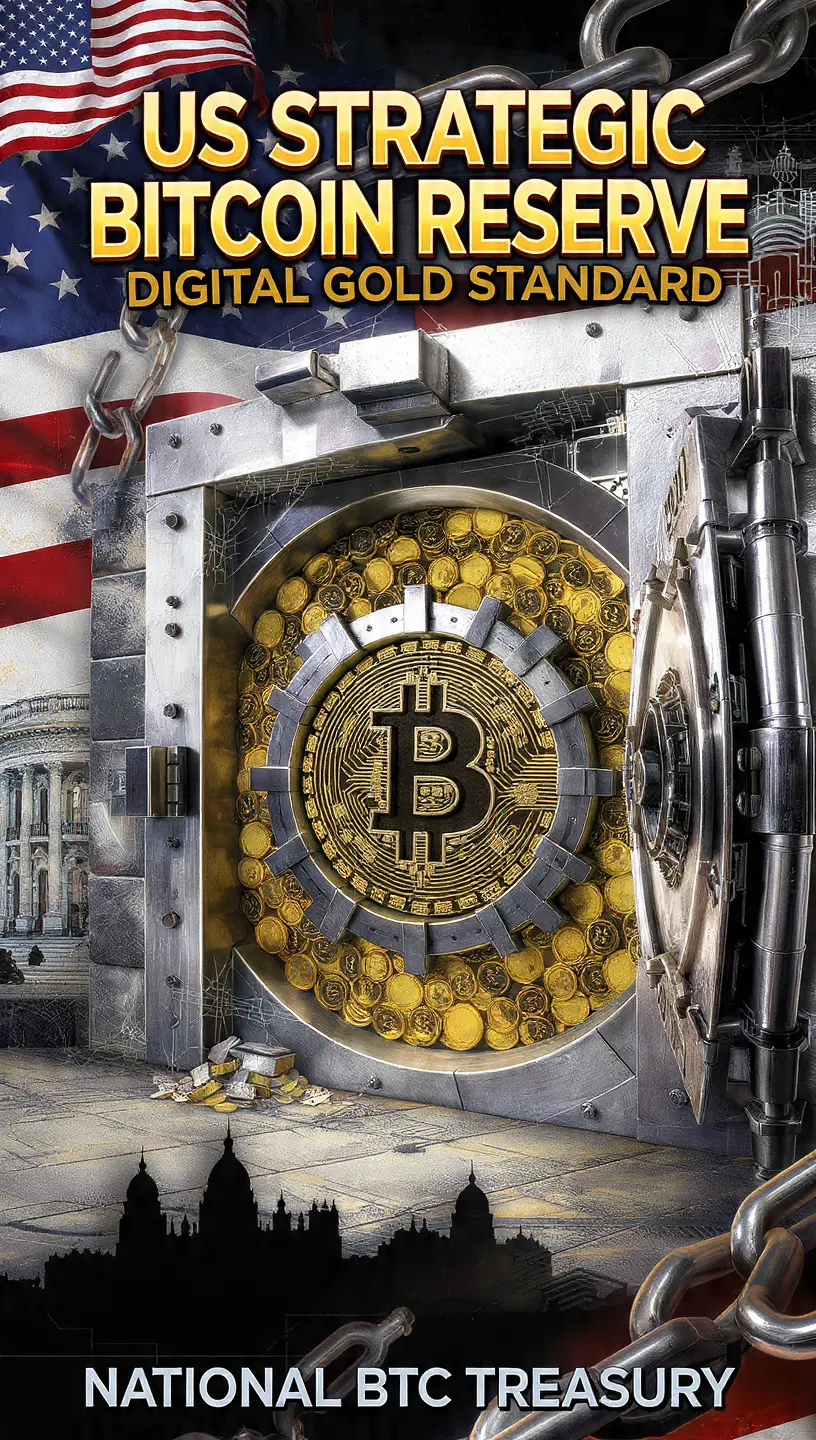
#USSeeksStrategicBitcoinReserve
The narrative of strategic Bitcoin reserves is no longer just a speculative political idea — it is becoming one of the most important structural forces shaping Bitcoin's long-term future. As of today, the White House has signaled that significant updates to the U.S. strategic Bitcoin reserve are expected within weeks, and the market is closely watching because this is not a minor policy event. This could redefine Bitcoin's role in the global financial system. The U.S. government has already seized and confiscated large holdings of Bitcoin, and instead of liquid
BTC0.28%
View Original
Yusfirah
#USSeeksStrategicBitcoinReserve
The Strategic Bitcoin Reserve narrative is no longer just a speculative political idea — it is becoming one of the most important structural forces shaping Bitcoin’s long-term future. As of today, the White House has signaled that a major update on the U.S. Strategic Bitcoin Reserve is expected within weeks, and markets are watching closely because this is not a small policy event. This could redefine Bitcoin’s role in the global financial system. The U.S. government already holds a significant amount of Bitcoin through seizures and forfeitures, and instead of liquidating those holdings into the market as it has done in previous cycles, the reserve framework changes the purpose of those assets from temporary custody to strategic national holding. That changes everything about supply psychology. Bitcoin has always been defined by scarcity, but when sovereign entities begin removing large quantities from circulation for strategic reasons, scarcity becomes stronger than ever.
To understand why this matters, traders need to stop thinking in short-term chart terms and start thinking in macroeconomic layers. Bitcoin’s value is no longer being shaped only by retail speculation, ETF demand, or halving cycles. Now there is a fourth layer — sovereign accumulation. This changes Bitcoin from a market-driven asset into a state-recognized strategic instrument. Historically, when governments classify something as strategic, it means they see future monetary or geopolitical importance in it. Oil reserves, gold reserves, and foreign currency reserves all exist because governments understand their long-term strategic value. Bitcoin entering that category means its perception is evolving from digital speculation into digital reserve infrastructure.
The market impact of this shift is much deeper than many traders realize. If the United States formally operationalizes a Strategic Bitcoin Reserve and holds its Bitcoin long-term, that removes a large amount of sell-side pressure permanently. Every cycle has always had fear around government BTC auctions. Traders used to watch wallet movements and panic over potential dumps. But under a reserve framework, that psychology flips. What was once potential supply becomes locked reserve capital. That transforms bearish pressure into bullish scarcity.
In my experience, this is where most traders make mistakes. They focus too much on daily candles and not enough on structural capital flows. Bitcoin’s biggest bull phases were never driven by retail first. They were driven by structural demand before retail understood the shift. In 2020 it was institutional adoption. In 2024 it was ETF legitimacy. In 2026 it could be sovereign reserve adoption. These phases always begin quietly, with volatility and uncertainty, before exploding into trend continuation.
The deeper issue here is competition between nations. If the United States strengthens its Bitcoin reserve strategy, it creates international pressure. Other governments will not ignore that. Financial competition between states is real. If Bitcoin is increasingly treated as digital gold, reserve diversification becomes logical. Countries facing inflation risks, currency weakness, or sanctions pressure may view Bitcoin as an alternative reserve layer. Once one major power commits, others begin analyzing their own reserve strategies. That creates a chain reaction of long-term demand.
What makes this even stronger is Bitcoin’s fixed supply model. Unlike gold, supply expansion is limited and predictable. Unlike fiat, it cannot be printed. That makes strategic accumulation much more powerful because every reserve purchase directly competes with private holders, ETFs, corporations, and miners for the same fixed asset base. This creates supply compression over time.
Right now, Bitcoin’s current market structure reflects uncertainty, but this kind of uncertainty often hides major opportunities. Price action remains highly reactive because markets are waiting for confirmation. We are in a volatility compression environment where liquidity hunts continue on both sides. That means traders are being trapped by emotional reactions. Strong hands are accumulating while weak hands are reacting.
My personal view is that the Strategic Bitcoin Reserve discussion is bigger than most people understand.
This is not about one announcement.
This is about Bitcoin entering national balance sheets.
That changes valuation models.
That changes risk perception.
That changes institutional confidence.
And most importantly, that changes long-term scarcity.
From my trading experience, whenever a new macro catalyst enters Bitcoin’s ecosystem, the market usually goes through three phases: disbelief, acceptance, expansion. Right now we are still in disbelief. The majority still treats this like temporary political noise. But once implementation details become clearer, the market shifts into acceptance. That acceptance is where capital starts repositioning. The expansion phase comes later — and that is usually where price moves aggressively.
My advice for traders is simple: stop focusing only on intraday noise. Understand what the market is pricing before it happens. Strategic reserves are not short-term news. They are long-term infrastructure decisions. If the U.S. truly builds Bitcoin into its reserve strategy, Bitcoin’s long-term floor becomes stronger because sovereign hands typically hold longer than retail or funds.
Short-term volatility will remain brutal.
Fake breakouts will happen.
Liquidity traps will continue.
But structurally, Bitcoin’s long-term story keeps strengthening.
In my opinion, this reserve narrative may become one of the defining catalysts of the next major Bitcoin expansion cycle.
Years from now, traders may look back at this period and realize it was not just another headline.
It was the moment Bitcoin moved closer to becoming a sovereign-grade reserve asset.
And once that transformation is fully understood by global markets, price discovery may enter a completely new phase.
repost-content-media
  • Reward
  • 27
  • Repost
  • Share
CryptoSelf:
To The Moon 🌕
View More
#DailyPolymarketHotspot
Currently, the most dominant and actively traded themes focus on the inflows of Bitcoin ETFs and their direct impact on Bitcoin price movements. This is not just a simple speculative discussion but reflects how prediction markets are evolving into real-time sentiment engines, tracking institutional capital behavior, macro liquidity expectations, and changes in the crypto market structure. As of May 2026, Bitcoin's trading price is approximately $77,105, and market participants are increasingly concerned about whether ETF capital inflows will continue to support price s
BTC0.28%
ETH0.8%
View Original
HighAmbition
#DailyPolymarketHotspot
The most dominant and actively traded theme currently emerging is centered around Bitcoin ETF flow expectations and their direct impact on Bitcoin’s price direction. This is not a simple speculative discussion but a reflection of how prediction markets have evolved into real-time sentiment engines that track institutional capital behavior, macro liquidity expectations, and crypto market structure changes. As of May 2026, Bitcoin is trading around $77,105, and market participants are increasingly focused on whether ETF inflows will continue to support price stability or whether slowing institutional demand could trigger consolidation or short-term correction phases.
Market Context – Why This Hotspot Matters Now
The reason Bitcoin ETF flow has become the central market hotspot is because it represents the most direct and measurable link between traditional finance and Bitcoin price discovery. Unlike retail sentiment or social media-driven narratives, ETF flows reflect actual capital allocation decisions from institutional investors such as hedge funds, asset managers, pension funds, and sovereign capital allocators. These flows directly translate into Bitcoin demand through ETF creation and redemption mechanisms, making them one of the most powerful structural drivers of price behavior in the current market cycle.
With Bitcoin trading at $77,105, Ethereum near $2,264, and Solana around $84, the broader crypto market is currently in a consolidation phase where directional movement is increasingly dependent on institutional participation rather than speculative retail momentum.
Why Bitcoin ETF Flow Is the Dominant Prediction Theme
The key reason this topic dominates prediction markets is because it offers a real-time proxy for institutional sentiment. When ETF inflows are strong, it indicates that large-scale capital is entering Bitcoin exposure, which typically results in upward pressure on price due to increased demand for spot Bitcoin through authorized participants. When inflows weaken or turn negative, it signals reduced institutional appetite, often leading to consolidation or short-term corrective phases.
This creates a highly dynamic environment where traders are not simply betting on price direction but are instead analyzing capital flow behavior at the institutional level.
Institutional Flow Mechanism – How ETF Activity Drives Bitcoin Price
The mechanism connecting ETF flow to Bitcoin price operates through a structured financial pipeline. When institutional investors purchase Bitcoin ETF shares such as IBIT, authorized participants create new ETF units by acquiring actual Bitcoin in the spot market to back those shares. As a result, ETF inflows translate directly into real Bitcoin purchases, creating structural demand pressure.
Conversely, when institutions reduce exposure or hedge through derivatives markets, market makers adjust positions dynamically, which can temporarily reduce or redistribute demand in the underlying Bitcoin market. This creates a feedback loop where ETF activity directly influences spot liquidity and price formation.
Current Market Behavior – Bitcoin at $77,105
Bitcoin’s current price level around $77,105 reflects a structurally sensitive equilibrium zone where ETF flows, macro liquidity conditions, and derivatives positioning are the primary drivers of price movement. The asset is neither in a strong accumulation phase nor in a distribution phase, but instead in a transitional structure where institutional capital allocation is determining directional bias.
Historically, Bitcoin has moved within broad cycles between approximately $60,000 and $90,000, and the current environment suggests continued range-bound behavior until a strong institutional catalyst emerges.
Ethereum at $2,264 continues to reflect hybrid behavior influenced by infrastructure demand and DeFi cycles, while Solana at $84 remains more sensitive to ecosystem liquidity conditions.
Polymarket Sentiment Structure – What Traders Are Focused On
Traders are increasingly concentrating on whether Bitcoin ETF flows will remain positive, neutral, or negative over the short to medium term. This has become one of the most liquid prediction categories because it directly connects macro capital behavior with crypto price outcomes.
Instead of focusing on isolated price predictions, market participants are now analyzing institutional inflows, macro liquidity conditions, and derivatives positioning trends. This reflects a major evolution in prediction market behavior.
Structural Market Transition – Bitcoin as a Macro Financial Asset
Bitcoin is no longer being treated purely as a speculative digital asset but is instead functioning as a regulated institutional financial instrument embedded within global capital markets. This transition is reinforced by the growing influence of ETF products, particularly IBIT, which has become one of the most important liquidity centers in the crypto ecosystem.
As institutional participation increases, Bitcoin’s price behavior is becoming more closely tied to traditional financial dynamics such as liquidity cycles, interest rate expectations, and portfolio allocation strategies.
Price Sensitivity and Market Outlook
At $77,105, Bitcoin is in a zone where ETF flows and derivatives positioning are likely to determine the next directional move. In a positive flow environment, sustained institutional demand could support movement toward the $78,000 to $82,000 range. In weaker flow conditions, the market may remain in consolidation or experience short-term retracement, although structural liquidity improvements are expected to reduce extreme volatility compared to earlier cycles.
Ethereum and Solana will continue to follow broader liquidity trends, but Bitcoin remains the dominant macro reference asset influencing overall crypto market direction.
Final Conclusion – Why This Is the Core Daily Polymarket Hotspot
The daily Polymarket hotspot centered on Bitcoin ETF flow reflects a fundamental transformation in market structure where institutional capital movement has become the primary driver of price discovery. Traders are now analyzing real financial flows that connect traditional capital markets with digital assets rather than relying on speculative sentiment alone.
Bitcoin at $77,105 is now part of a global financial system where ETF inflows, derivatives positioning, and macro liquidity conditions determine market direction. This makes ETF flow prediction one of the most structurally important themes in today’s market ecosystem, highlighting the deep integration between crypto markets and traditional finance.
repost-content-media
  • Reward
  • 31
  • Repost
  • Share
CryptoSelf:
To The Moon 🌕
View More
#CryptoMarketsDipSlightly #CryptoMarketsDipSlightly
The crypto market is experiencing a slight correction, but beneath the surface, this decline tells a deeper story about market structure, investor psychology, and potential next moves. Smart participants are not panicking but analyzing this phase as part of a broader cycle.
First, it’s important to understand that a minor dip is a natural component of any healthy market. After an upward momentum, assets like Bitcoin and Ethereum typically cool off as a sign of traders taking profits. This is not weakness—it’s a reset. Markets can’t move in a
BTC0.28%
ETH0.8%
View Original
MoonGirl
#CryptoMarketsDipSlightly #CryptoMarketsDipSlightly
The crypto market is experiencing a mild pullback, but beneath the surface, this dip tells a much deeper story about market structure, investor psychology, and the next potential move. Rather than panic, smart participants are analyzing this phase as part of a broader cycle.
First, it’s important to understand that slight dips are a natural component of any healthy market. After periods of upward momentum, assets like Bitcoin and Ethereum often cool down as traders take profits. This is not weakness — it’s a reset. Markets cannot move in a straight line forever, and short-term corrections help build stronger support levels for the next leg up.
One of the primary drivers behind this dip is reduced short-term buying pressure. When momentum slows, leveraged positions begin to unwind, triggering minor liquidations. This creates temporary selling pressure, which can exaggerate the downside. However, long-term holders are largely unaffected and continue to accumulate during these phases.
Another key factor is macro uncertainty. Global economic signals, interest rate expectations, and liquidity conditions still influence crypto markets heavily. When traditional markets show hesitation, crypto often mirrors that sentiment. This correlation highlights how digital assets are increasingly integrated into the broader financial ecosystem.
From a technical perspective, this dip can be seen as a consolidation zone. Price is searching for stability, forming a base before the next directional move. Traders closely watch support levels, trading volume, and order book behavior during such periods. Low volume dips often indicate a lack of strong selling conviction — a bullish sign in disguise.
Sentiment also plays a crucial role. When markets dip slightly, fear tends to rise disproportionately. This is where experienced traders differentiate themselves. Instead of reacting emotionally, they focus on data, structure, and long-term trends. Historically, periods of mild fear have often preceded strong upward movements.
Importantly, institutional activity remains a major pillar of support. Large players rarely react to small fluctuations. Their strategies are built on long-term positioning, and dips provide them with better entry points. This steady accumulation helps prevent deeper crashes and stabilizes the market over time.
For retail traders, this phase is about patience and discipline. Chasing every small movement can lead to losses, while a structured approach — focusing on key levels and risk management — offers better outcomes. The goal is not to predict every move, but to position intelligently.
In conclusion, this slight dip is not a signal of market weakness but a reflection of natural market dynamics. Corrections create opportunities, strengthen trends, and prepare the ground for future growth. The key lies in perspective: those who understand cycles see opportunity, while others see uncertainty.#MoonGirl
repost-content-media
  • Reward
  • 48
  • Repost
  • Share
CryptoSelf:
To The Moon 🌕
View More
#BitcoinSpotVolumeNewLow The Bitcoin market is experiencing one of the most significant and calmest crises in the past two and a half years. As of April 29, 2026, Glassnode data shows that Bitcoin's daily spot trading volume has fallen below $8 billion. This means that the daily trading volume, which peaked at over $25 billion in early February, has dropped to one of the lowest levels in history within just a few months. Even more concerning is that this figure last appeared in October 2023, when the crypto market was in a "bear market," and Bitcoin's price was even below $40k.
Erosion of exc
BTC0.28%
View Original
User_any
#BitcoinSpotVolumeNewLow The Bitcoin market is experiencing one of its most significant and quietest crises in the last two and a half years. As of April 29, 2026, Glassnode data shows that Bitcoin's daily spot trading volume has fallen below $8 billion. This means that the daily volume, which peaked above $25 billion in early February, has fallen to one of its lowest levels in history in just a few months. Even more worrying, this figure was last recorded in October 2023, during a "bear market" when the crypto market was struggling to recover from its lows and Bitcoin was trading even below $40,000.
Volume Erosion Experienced by Exchanges Since February
Every major platform confirms that liquidity is experiencing a widespread contraction in an environment where investors are withdrawing, and even those who want to trade are facing an increasingly thin order book.
Absence of Retail, Institutional Hesitancy
One of the most important architects of this decline is the activity of individual investors, which has fallen to its lowest level in nine years. Retail investors are either choosing a more regulated investment path through spot Bitcoin ETFs or turning to traditional markets (such as stocks and commodities).
The institutional dimension of this overall demand loss for Bitcoin is more complex. According to CryptoQuant's comprehensive analysis, Bitcoin's 30-day net demand in the first three months of 2026 was approximately -63,000 BTC. This contraction occurred despite institutional buyers, such as those in ETFs and Strategy, purchasing a total of close to 94,000 BTC. In other words, while "smart money" and the institutional front continued to accumulate, retail investors, along with former whales and miners from the 2016-2018 period, created an overwhelming sell-off of approximately 157,000 BTC.
Crypto Fear Index at 26 Points
This sell-off and low volume is reflected in all indicators measuring the emotional temperature of the market. As of April 29th, the alternative Crypto Fear and Greed Index is at 26 points, indicating a decline into the "fear" zone. More strikingly, according to LunarCrush data, social media interactions related to Bitcoin (likes, comments, shares, etc.) have fallen to their lowest level in the past year. This indicates not only a lack of trading, but also a lack of discussion. As CryptoQuant analysts put it, the market isn't panic selling; it's simply slowly, quietly evaporating.
The Insidious Danger of Derivative Markets: Virtual Volume, Real Fragility
While the spot side of Bitcoin is drying up, derivative markets are exhibiting a contrasting dynamic. CryptoQuant data confirms that perpetual futures trading volumes reached $3.5 trillion in March, more than four times the spot market ($800 billion). At first glance, this might create the illusion that the market is still alive. However, the dark side of this "growth" means the market has become almost entirely dependent on derivatives markets for price discovery and liquidity. The increasing pricing of spot prices from derivatives markets points to a dangerous structure where physical BTC cannot be quickly exchanged, especially during periods of chain liquidations, and the market is built on "ghost assets" during panic situations.
Hormuz, Warsh, and the Fed: The Geopolitical Architecture of Silence
The roots of this volume collapse lie largely not in the mining sector, but at the very heart of the geopolitical agenda. Rising tensions between Iran and the US, the extension of the naval blockade in the Strait of Hormuz, and oil prices settling above $115 have created a macroeconomic climate dominated by uncertainty and risk aversion. Darkfost, speaking to ForkLog, summarizes why investors are avoiding opening long-term spot positions, saying, "Concerns about persistent inflation have intensified. Under these conditions, it is unlikely that the Fed will have enough room to accelerate policy easing at today's FOMC meeting." Jerome Powell chaired the last FOMC meeting on April 29, and it is known that the new chairman nominee, Kevin Warsh, is open to interest rate cuts. However, rising oil prices remain the biggest obstacle to these cuts. Investors are in a "wait and see" mode, waiting to see what steps the Fed and its Middle East diplomacy will take.
When Does Falling Volume Turn into an Opportunity?
Market history shows that such low-volume periods offer surprising opportunities in the medium to long term. Historically, times when the spot market dries up and interest hits rock bottom have been periods when smart money begins to position itself. While institutional infrastructure, stablecoin supply, and layer-2 developments are on the rise, the current crypto winter, as highlighted in CoinGecko's report, is more of a "sentiment"-driven pullback than a structural collapse. Although the thinness of order books and the potential for sharp fluctuations due to low volume carry significant risks in the short term, all it takes for this evaporation to turn into a recovery might be a small geopolitical or macro catalyst to lift the veil of uncertainty.
However, as of today, the Bitcoin spot market is far from its historical peak of over $126,000 in December 2025. Trading around $77,800, BTC continues to navigate a new era dominated by patience, uncertainty, and waiting on the sidelines.
$BTC
repost-content-media
  • Reward
  • 45
  • Repost
  • Share
CryptoSelf:
To The Moon 🌕
View More
#WCTCTradingKingPK
WCTC S8 Strategy Breakdown: How I Will Respond to the Ultimate Two-Hour Trading Duel
WCTC S8 Trading Competition represents the evolution of modern competitive trading, where speed, precision, and discipline are more important than ever. Even without direct participation, analyzing its structure reveals a profound lesson: success in this environment is not about making multiple trades, but about making smarter decisions under pressure. The two-hour duel format compresses the market into a high-intensity window, where every move is critical, and only structured traders can c
View Original
HighAmbition
#WCTCTradingKingPK
WCTC S8 Strategy Breakdown: How I Would Approach the Ultimate 2-Hour Trading Duel
The WCTC S8 Trading Competition represents a modern evolution in competitive trading, where speed, precision, and discipline matter more than ever. Even without direct participation, analyzing its structure reveals a powerful lesson: success in this environment is not about taking more trades, but about making smarter decisions under pressure. The 2-hour duel format compresses the market into a high-intensity window where every move counts, and only structured traders can consistently perform.
Understanding the 2-Hour Duel Environment
The short duration of each duel completely changes trading behavior. There is no room for long-term holding or waiting endlessly for perfect conditions. Instead, the focus shifts to identifying immediate opportunities and executing with confidence. This format rewards traders who can read price action quickly and avoid unnecessary hesitation. At the same time, it punishes overtrading and emotional decisions, making discipline a critical factor.
In such an environment, time becomes an asset. Every minute spent in an unproductive trade is a lost opportunity. That is why patience before entry and decisiveness after confirmation become essential traits. The goal is not constant activity, but efficient execution.
Market Selection: Clarity Over Chaos
If I were trading in WCTC S8, my first step would be careful market selection. Not all market conditions are suitable for short-term duels.
Highly erratic price action can create false signals, leading to unnecessary losses. Instead, I would focus on assets showing structured movement, where support and resistance levels are respected and reactions are clean.
Clarity provides confidence. When the market behaves in a predictable way, it becomes easier to plan entries and exits. This reduces hesitation and improves overall execution quality. In a competitive setup, choosing the right market is already half the battle.
Entry Strategy: Confirmation is the Real Edge
One of the biggest mistakes traders make in fast environments is entering too early. Anticipation without confirmation often leads to being trapped in weak positions. My approach would focus strictly on confirmation-based entries. Whether it is a breakout above resistance or a rejection from support, the trade must show clear intent before execution.
This approach may reduce the number of trades, but it significantly improves accuracy. In a 2-hour duel, quality always outweighs quantity. A single well-timed entry can outperform multiple rushed decisions.
Risk Management: The Core of Consistency
No strategy can succeed without proper risk control. In a short session, losses can accumulate quickly if not managed carefully. I would prioritize strict position sizing and predefined risk levels for every trade. This ensures that even if a setup fails, the impact remains controlled.
Avoiding overtrading is equally important. The pressure to outperform an opponent can push traders into unnecessary positions. Staying selective and disciplined creates a long-term advantage, especially when combined with consistent execution.
Adaptability: Trading What the Market Shows
Markets do not follow expectations, especially in short timeframes. A rigid mindset can lead to missed opportunities or unnecessary losses. My strategy would include continuous reassessment of market conditions. If momentum shifts, I adjust. If volatility drops, I wait.
This adaptability allows me to stay aligned with real-time price behavior rather than personal bias. In a competitive duel, flexibility is not optional, it is essential.
Psychology: The Hidden Advantage
Trading under time pressure introduces emotional challenges that many underestimate. Fear of missing out, frustration after a loss, and the urge to recover quickly can all disrupt decision-making. Maintaining emotional control becomes just as important as technical analysis.
My focus would remain on execution quality rather than immediate results. By sticking to a structured plan and avoiding impulsive actions, consistency naturally improves. In competitions like WCTC S8, the most stable mindset often outperforms the most aggressive strategy.
Why This Approach Fits WCTC S8
The structure of WCTC S8, especially with anonymous matching and performance-based evaluation, creates a pure skill-based environment. There are no external advantages, no reputation bias, and no team dependency. Every result is a direct reflection of trading ability.
This is why a disciplined, confirmation-based, and risk-controlled strategy becomes so effective. It aligns perfectly with the competition’s design, where consistency and precision are rewarded more than randomness or excessive risk-taking.
Final Perspective: Trading as a Skill, Not a Gamble
WCTC S8 is more than just a competition; it is a real-time test of trading discipline. It highlights an important truth that applies beyond the event itself. Successful trading is not about chasing every move, but about understanding when to act and when to stay out.
If I were to participate, my entire focus would remain on structured execution, controlled risk, and emotional discipline. These elements, combined with a clear understanding of short-term market behavior, create a strong foundation for consistent performance.
In the end, the traders who stand out are not those who take the most risks, but those who manage them the best. That is the real edge in WCTC S8, and that is what separates temporary wins from sustainable success.
repost-content-media
  • Reward
  • 42
  • Repost
  • Share
CryptoSelf:
Ape In 🚀
View More
#美联储利率不变但内部分歧加剧 Powell Era Comes to an End! Federal Reserve Signals in April Rate Meeting
At the early morning of April 30th Beijing time, the Federal Reserve concluded its two-day policy meeting. In this highly symbolic meeting, the Fed announced that the federal funds rate would remain unchanged in the 3.5%–3.75% range, marking the third consecutive pause this year. Equally noteworthy as the policy outcome is that this was Powell’s last regular policy meeting as Chairman—his term will officially end on May 15th this year. As a result, the policy signals from the rate statement combined wit
View Original
Ryakpanda
#美联储利率不变但内部分歧加剧 Powell Era Comes to an End! Federal Reserve Signals at April Rate Meeting
At the early morning of April 30th Beijing time, the Federal Reserve concluded its two-day policy meeting. In this highly symbolic meeting, the Fed announced that the federal funds rate would remain unchanged in the 3.5%–3.75% range, marking the third consecutive pause this year. Equally noteworthy as the policy outcome is that this was Powell’s last regular policy meeting as Chairman—his term will officially end on May 15th this year. As a result, the policy signals from the rate statement combined with Powell’s personal remarks and internal disagreements led the market to view this meeting as a significant turning point for the Fed’s future path.
Internal Disagreements
From the rate statement, the Fed continued its policy tone of “maintaining higher interest rates for longer.” The statement noted that “inflation remains elevated,” specifically mentioning rising global energy prices supporting prices, while emphasizing that the Middle East situation introduces “greater uncertainty about the economic outlook.” The statement showed that out of 12 Federal Open Market Committee members, 8 supported this decision, with four dissenting—marking the highest dissent since over 30 years: one member voted to cut rates by 25 basis points, and three supported keeping rates steady but did not endorse a dovish tone in the statement. This rare split directly reflects internal disagreements within the Fed regarding current inflation trends and economic outlook judgments. The market’s most concerned about the rate cut path was also re-priced after this meeting. Although the Fed did not specify a timetable, Powell’s remarks indicated that rate cuts are still in the toolbox for this year, just with a more cautious pace. He explicitly stated, “It’s not appropriate to cut rates now,” and emphasized the need for “greater confidence that inflation is steadily returning to 2%.” Meanwhile, he pointed out that the U.S. economy “continues to expand at a solid pace,” even describing the economy as “quite resilient.” Major international investment banks quickly interpreted this meeting. Goldman Sachs, in a post-meeting report, noted that the Fed’s current core logic is “being patient before confirming the inflation path,” and expects the first rate cut to be delayed compared to previous expectations. JPMorgan, on the other hand, believes the Fed’s statement “reinforces the tone of maintaining high interest rates for longer,” making it difficult for financial conditions to ease significantly in the short term. In contrast, Citigroup’s view is slightly dovish, suggesting that if inflation data clearly declines in the next two to three months, the Fed may still initiate a rate cut cycle within the year.
Uncertainty Becomes a Key Word
Against the backdrop of unresolved Middle East tensions, Powell repeatedly mentioned that fluctuations in energy prices and geopolitical conflicts could disrupt the inflation trajectory, and the duration and impact of these factors “remain difficult to judge.” Notably, Powell also explicitly stated at the press conference that after his term ends in May 2026, he will continue to serve as a Fed governor for some time. This decision breaks decades of precedent—previously, almost no departing chair chose to “remain in a downgraded role.” Powell candidly said he had planned to retire, but “unprecedented” legal attacks from the Trump administration over the past three months left him with “no choice but to stay.” This statement is personally significant and has been interpreted by the market as a form of institutional “stabilizer.” On the same day as the Fed decision, Kevin Woor, nominated by Trump as the next Fed Chair, was confirmed by the Senate Banking Committee with 13 votes in favor and 11 against, clearing a key hurdle to the chairmanship. The vote was sharply partisan—Republicans supported unanimously, Democrats opposed unanimously. Democratic lawmakers worry Woor might become a political puppet of the White House, weakening the Fed’s independence. After taking office, whether the new Fed Chair will adjust communication strategies or change the outlook on rate cuts remains highly uncertain. Although Powell chose to stay on as a governor, how his role and influence will evolve also remains unclear. Overall, the April Fed meeting did not provide a clear policy direction but instead sent more complex signals: amid intertwined inflation, growth, and political factors, the Fed is entering a more data-dependent, increasingly divided, and uncertain transition period. This uncertainty may become a core variable in global financial markets for some time to come.
repost-content-media
  • Reward
  • 40
  • Repost
  • Share
CryptoSelf:
To The Moon 🌕
View More
  • Pin