

Trade
Basic
Futures
Futures
Hundreds of contracts settled in USDT or BTC
Options
HOT
Trade European-style vanilla options
Unified Account
Maximize your capital efficiency
Demo Trading
Futures Kickoff
Get prepared for your futures trading
Futures Events
Futures Mall
Participate in events to win generous rewards
Demo Trading
Use virtual funds to experience risk-free trading
Earn
Launch
CandyDrop
Collect candies to earn airdrops
Launchpool
Quick staking, earn potential new tokens
HODLer Airdrop
Hold GT and get massive airdrops for free
Launchpad
Be early to the next big token project
Alpha Points
NEW
Trade on-chain assets and enjoy airdrop rewards!
Futures Points
NEW
Earn futures points and claim airdrop rewards
Investment
Simple Earn
Earn interests with idle tokens
Auto-Invest
Auto-invest on a regular basis
Dual Investment
Buy low and sell high to take profits from price fluctuations
Soft Staking
Earn rewards with flexible staking
Crypto Loan
0 Fees
Pledge one crypto to borrow another
Lending Center
One-stop lending hub
VIP Wealth Hub
Customized wealth management empowers your assets growth
Private Wealth Management
Customized asset management to grow your digital assets
Quant Fund
Top asset management team helps you profit without hassle
Staking
Stake cryptos to earn in PoS products
Smart Leverage
NEW
No forced liquidation before maturity, worry-free leveraged gains
GUSD Minting
Use USDT/USDC to mint GUSD for treasury-level yields

More


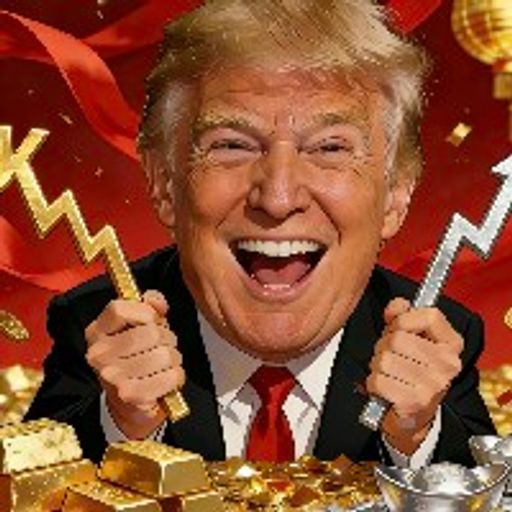




The gold price surpasses the $4,900 mark as the metals rally continues
Source: CritpoTendencia Original Title: The gold price surpasses the $4,900 barrier as the metals rally extends Original Link: This Thursday, the metals rally gained new momentum, with the gold price reaching record highs by trading for the first time above $4,900 per ounce. Meanwhile, other metals such as silver and platinum also show strong performance, consolidating a clearly favorable scenario for safe-haven assets.
Among the factors explaining this new jump are persistent geopolitical uncertainty, the sustained weakening of the dollar, and the upcoming Federal Reserve meeting. This Federal Open Market Committee (FOMC) meeting will be key to market balance in the coming weeks.
For now, market consensus indicates that the central bank will keep interest rates unchanged. This scenario is usually less attractive for equities and cryptocurrencies. Thus, the combination of monetary uncertainty and political tensions keeps investors away from risk.
In this context, capital flowing out of the most volatile assets seeks refuge in reserve-like instruments, such as precious metals. This explains why the gold price advances in line with the increase in global nervousness.
According to CNBC data, during the last hours of this Thursday, gold surpassed $4,946 per ounce, while silver is trading around $96 per ounce.
How far will the gold price rally extend?
It remains difficult to predict the ceiling of the metals rally in general and gold in particular. However, the $5,000 per ounce target seems increasingly close and could be reached in a relatively short period. Until a few months ago, this level was considered an extreme forecast.
The fundamentals supporting this movement, such as the structural weakness of the dollar, continue to favor hard assets. Practically speaking, numerous instruments denominated in U.S. debt are being steadily liquidated.
This phenomenon is partly linked to political factors, such as tensions caused by President Trump’s expansionist stance regarding Greenland.
In this context, the narrative known as “sell America” gains strength, pressuring the dollar and reinforcing the appeal of gold. This trend reflects growing discontent among certain European economic actors, who have begun reducing their exposure to U.S. assets as a form of political and financial protest.
One of the most relevant cases is a Danish pension fund, which reportedly liquidated U.S. bonds worth about $100 million. If this dynamic continues, the effects could deepen.
In fact, major U.S. stock indices, such as the S&P 500 and the Nasdaq Composite, recorded some of their worst days since October and are already trading in negative territory so far in 2026.
In contrast, the cryptocurrency market shows a more contained reaction. For now, BTC remains stable and is trading below $90,000 at the time of writing, reflecting a pause as investors assess the impact of the new macroeconomic scenario.