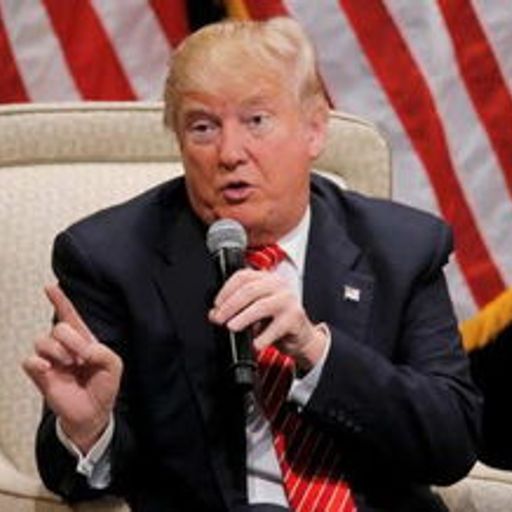
Recently, a major news story has been dominating headlines in Washington—the U.S. Supreme Court may rule certain tariff actions illegal. What does this mean? The U.S. government could face a refund pressure of hundreds of billions of dollars. Trump himself has also acknowledged that this is a "huge and shocking" number.
The problem is, this money has already been spent long ago. The government used it for various projects, and now suddenly needing to refund it is essentially pulling funds back from already allocated fiscal budgets. Once the court makes a final ruling, it could trigger a chain reaction—massive refund waves, market volatility, industry lawsuits, and even political shocks. Global investors are watching quietly.
Behind this event lies a deeper issue: the traditional financial system appears stable but is actually fragile. A single court ruling can shake the entire structure. When systemic risks erupt, stock markets, bond markets, and commodities often decline simultaneously.
In this context, what should our crypto assets do? Can they truly hedge risks or even appreciate amid volatility? The key is that these assets operate based on code, are not directly constrained by the policies of a single country, and have a foundation of global consensus. Compared to traditional assets that are directly affected by political and legal decisions, the crypto ecosystem offers an alternative possibility. When macro uncertainty rises, rational capital tends to flow into asset classes that are independent of the traditional system.
View Original
This page may contain third-party content, which is provided for information purposes only (not representations/warranties) and should not be considered as an endorsement of its views by Gate, nor as financial or professional advice. See Disclaimer for details.
7 Likes
Reward
7
6
Repost
Share
Comment
0/400
TokenDustCollector
· 19h ago
Tens of billions of dollars can't be mined, and the script is really well written.
Another self-destruction of traditional finance, we've seen through it long ago.
Court rulings = market bloodshed, on-chain is the real asset.
The government spends all the money and still wants refunds? LOL, this is the ceiling of centralization.
Code doesn't lie, numbers don't betray, just hold the coins and relax.
Traditional finance always claims stability, but collapses the fastest every time.
This time, you can really see who is swimming naked.
View OriginalReply0
MEVictim
· 19h ago
Hundreds of billions of dollars can be mined just like that, the traditional financial playbook is really outrageous
---
A court ruling can ruin the entire market, no wonder everyone is rushing onto the chain
---
Money was spent already and now refunds are needed? That’s why I only trust BTC
---
The traditional system is so fragile yet still claims to be stable, hilarious
---
Systemic risk hits and the whole market is buried with it, at this point, code is the real golden rule
---
So ultimately, the same old saying: self-custody is always more reliable than trusting the government
---
The US government’s left pocket pays into the right pocket, and in the end, it’s the common people who pay the bill
---
If this really comes to fruition, crypto will usher in a new wave of capital influx
---
one chain to rule them all, others are just garbage contracts
---
With such high political risk, those who don’t get on board should think about why
View OriginalReply0
MiningDisasterSurvivor
· 19h ago
Thousand-billion refunds? Ha, government debts and repayments, I've been through this before, and in the end, it's just cutting leeks to settle accounts.
---
Trying to fool people into thinking crypto can avoid risks? I heard this argument in 2018, and the result was the same crash, no difference.
---
I agree that traditional systems are fragile, but crypto is fragile too, even more fragile. Stop fooling yourself.
---
Wait, are they just making excuses for a coin's sudden surge? I’m too familiar with this kind of rhetoric from project teams.
---
Funds flowing into independent assets? Dream on, if there was real risky capital, it would have already poured in. Now they’re just talking nonsense.
---
History repeats itself, another new generation of leeks about to be harvested, a cyclical show.
View OriginalReply0
digital_archaeologist
· 19h ago
Thousands of billions of dollars in holes, will traditional finance collapse like this? I'm actually quite looking forward to watching this grand spectacle.
View OriginalReply0
Deconstructionist
· 19h ago
Oh my, the traditional financial system is really fragile at the touch.
Tens of billions just disappear, this is what true black swan events look like, while the crypto world remains as stable as a rock.
A court ruling can trigger the entire market, this fragility is comparable to a paper tiger.
Wait, isn't this logic reversed? In the end, retail investors are the ones who suffer the most.
Tariff disputes can be turned into a prelude to a financial crisis, so why are there still people All-in on traditional assets?
Code is law, this phrase now sounds especially valuable.
View OriginalReply0
HashBrownies
· 19h ago
Haha, traditional finance is really becoming more and more like a house of cards.
Tens of billions just disappear, but the crypto world seems to be much more honest.
A court ruling can freeze half a country's economy—that's the real black swan.
Get ready, things are about to get even crazier.
You should have gotten on board earlier. Is it still not too late, everyone?
Oh my, this is the rhythm of a reshuffle.
The old ways of traditional finance are indeed coming to an end. It's time to look at what's happening on the blockchain side.
Recently, a major news story has been dominating headlines in Washington—the U.S. Supreme Court may rule certain tariff actions illegal. What does this mean? The U.S. government could face a refund pressure of hundreds of billions of dollars. Trump himself has also acknowledged that this is a "huge and shocking" number.
The problem is, this money has already been spent long ago. The government used it for various projects, and now suddenly needing to refund it is essentially pulling funds back from already allocated fiscal budgets. Once the court makes a final ruling, it could trigger a chain reaction—massive refund waves, market volatility, industry lawsuits, and even political shocks. Global investors are watching quietly.
Behind this event lies a deeper issue: the traditional financial system appears stable but is actually fragile. A single court ruling can shake the entire structure. When systemic risks erupt, stock markets, bond markets, and commodities often decline simultaneously.
In this context, what should our crypto assets do? Can they truly hedge risks or even appreciate amid volatility? The key is that these assets operate based on code, are not directly constrained by the policies of a single country, and have a foundation of global consensus. Compared to traditional assets that are directly affected by political and legal decisions, the crypto ecosystem offers an alternative possibility. When macro uncertainty rises, rational capital tends to flow into asset classes that are independent of the traditional system.