

Trade
Trading Type
Spot
Trade crypto freely
Pre-Market
Trade new tokens before they are officially listed
Margin
Magnify your profit with leverage
Convert & Block Trading
0 Fees
Trade any size with no fees and no slippage
Alpha
Points
Get promising tokens in streamlined on-chain trading
Leveraged Tokens
Get exposure to leveraged positions simply
Futures
Futures
Hundreds of contracts settled in USDT or BTC
Options
HOT
Trade European-style vanilla options
Unified Account
Maximize your capital efficiency
Demo Trading
Futures Kickoff
Get prepared for your futures trading
Futures Events
Participate in events to win generous rewards
Demo Trading
Use virtual funds to experience risk-free trading
Earn
Launch
CandyDrop
Collect candies to earn airdrops
Launchpool
Quick staking, earn potential new tokens
HODLer Airdrop
Hold GT and get massive airdrops for free
Launchpad
Be early to the next big token project
Alpha Points
NEW
Trade on-chain assets and enjoy airdrop rewards!
Futures Points
NEW
Earn futures points and claim airdrop rewards
Investment
Simple Earn
Earn interests with idle tokens
Auto-Invest
Auto-invest on a regular basis
Dual Investment
Buy low and sell high to take profits from price fluctuations
Soft Staking
Earn rewards with flexible staking
Crypto Loan
0 Fees
Pledge one crypto to borrow another
Lending Center
One-stop lending hub
VIP Wealth Hub
Customized wealth management empowers your assets growth
Private Wealth Management
Customized asset management to grow your digital assets
Quant Fund
Top asset management team helps you profit without hassle
Staking
Stake cryptos to earn in PoS products
BTC Staking
HOT
Stake BTC and earn 10% APR
GUSD Minting
Use USDT/USDC to mint GUSD for treasury-level yields


More
Promotions
Activity Center
Join activities and win big cash prizes and exclusive merch
Referral
20 USDT
Earn 40% commission or up to 500 USDT rewards
Announcements
Announcements of new listings, activities, upgrades, etc
Gate Blog
Crypto industry articles
VIP Services
Huge fee discounts
Proof of Reserves
Gate promises 100% proof of reserves


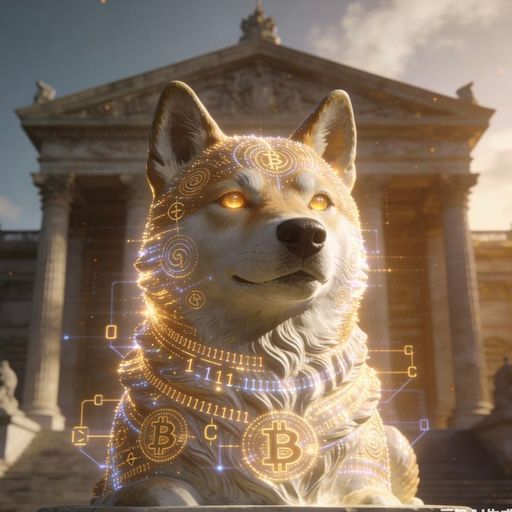



#比特币与黄金战争 Is zero-sum or win-win? The future of Bitcoin and gold is more than one way
Recently, many people have been asking: will Bitcoin replace gold, or will gold crush Bitcoin? Actually, this question is asked the wrong way.
If we look at it from a different perspective, this "war" may not be a life-and-death struggle, but rather two or even multiple parallel evolutionary paths happening simultaneously. Each path has its own logic, and the probabilities vary.
**First possibility: Division of roles between two worlds (40% probability)**
Imagine a scenario: gold returns to its essence, becoming a strategic reserve for nations and large institutions, like installing a physical-level "safe" for the global economy. Meanwhile, $BTC is entirely different; it is a financial self-rescue tool for individuals and fringe economies, a channel toward digital sovereignty.
They are not competitors but divisions of labor. Gold safeguards the stability of the physical world, while Bitcoin protects the freedom of digital territories. They each serve their roles on the balance sheet—like the army and navy—both important and useful.
In this case, their price fluctuations might be loosely correlated. Gold surges due to geopolitical conflicts and rising inflation expectations; Bitcoin rises because of increased capital controls or financial repression. Interestingly, during certain crises, both may rise simultaneously—each responding to its own "apocalyptic scenario."
**Second possibility: Bitcoin's rebirth (30% probability)**
This scenario relies on strict assumptions: global digitalization is truly irreversible; post-00s and post-10s generations have grown up entirely in native digital assets, and no longer need the old gold system. At the same time, Bitcoin must solve its existing issues—transaction speed, energy consumption, user experience.
Once these conditions are met, Bitcoin will no longer be labeled as "digital gold," but will become a genuine monetary network. By then, where will gold stand? At most, it will be relegated to high-end jewelry and extreme backup plans, with its financial attributes significantly diminished. But don’t expect gold to go to zero—after all, it still has physical backing.
**Third possibility: Gold's counterattack (20% probability)**
Conversely, if a global energy crisis worsens, geopolitical conflicts intensify, and humanity begins to crave tangible assets again. Plus, if Bitcoin encounters a technological black swan—catastrophic vulnerabilities, global regulatory clampdowns, or threats from quantum computing—the narrative of "digital currency saving the world" collapses.
In this scenario, Bitcoin becomes a legend—its technological ideas absorbed by later generations, but its store of value dream shattered. Gold reclaims its dominant position.
**Fourth possibility: The dark horse of a third party (10% probability)**
The most interesting is that none of the above three paths account for, and a new player emerges.
For example, central bank digital currencies (CBDCs)—backed by national credit, offering digital payment convenience, but with zero resistance to censorship. Or some new type of algorithmic stablecoin, backed by physical assets like gold or energy, trying to combine the advantages of both worlds. Even more radical ideas include value carriers built on personal data sovereignty, carbon credits, or computing resources—completely new dimensions.
If these new innovations truly appear, the battle between gold and Bitcoin will resemble the old era of horse-drawn carriages versus early automobiles—ultimately, the real winner will be the later aircraft.
**Final observation**
Rather than entangling over who wins or loses, it’s better to accept that this market is large enough to accommodate different beliefs and needs. Some seek the certainty of gold, others value the freedom of Bitcoin, and some are waiting for the next possibility. Behind each choice is a bet on the future—and the future is never limited to just one path.