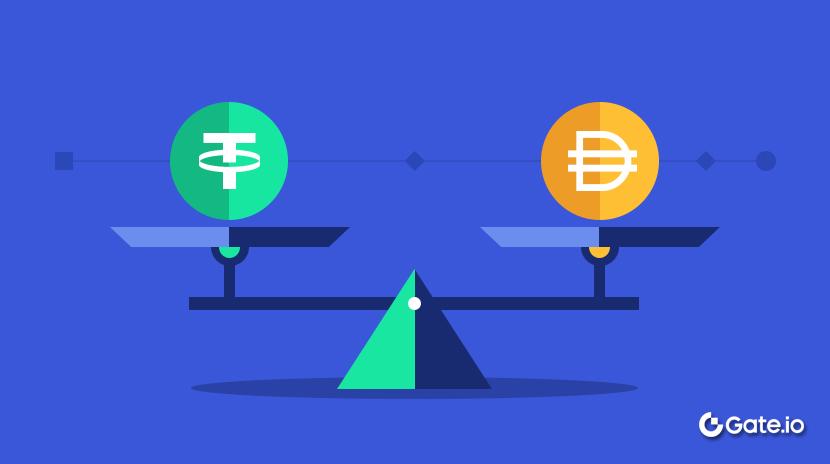
What Does Pegging Mean?
Pegging refers to the practice of anchoring the price of one asset to another. In crypto, this typically means tying the value of a token or certificate to a reference asset—most commonly the US dollar or Bitcoin—so its market price fluctuates around a target value. If the price deviates from this target, mechanisms such as redemption, arbitrage, or algorithmic adjustments are used to restore balance. When these mechanisms fail, the asset becomes “depegged.”
Why Is Pegging Important?
Pegging has a direct impact on the stability and utility of your assets. Whether you’re making payments with stablecoins, investing, or participating in DeFi, you’re relying on these assets to maintain their peg to a dollar. If depegging occurs, both your returns and principal can be affected.
Understanding pegging helps you in three key ways: choosing more stable units of account (like USDT or USDC), identifying real risks in cross-chain certificates (such as whether WBTC is truly redeemable 1:1), and weighing trade-offs between interest rates, exchange fees, and liquidity without being misled by short-term price fluctuations.
How Does Pegging Work?
There are several common methods for maintaining a peg, with different assets using different combinations:
- Fiat Reserve and Redemption Mechanism: Examples like USDC and USDT are backed by cash and short-term government securities held by the issuer. Institutions can redeem tokens for actual dollars. When market price drops below $1, arbitrageurs buy on the market and redeem for dollars, pushing the price up; if above $1, the opposite occurs.
- Crypto Collateralization and Interest Rate Adjustment: DAI is generated by users over-collateralizing with crypto assets. Its interest rates and liquidation rules constrain supply and demand to keep prices near the target. Liquidation occurs when collateral value drops below thresholds, automatically selling assets to repay debt and maintain system stability.
- Soft Pegs: Assets like stETH are pegged to ETH but not strictly equal due to redemption cycles and liquidity constraints. This leads to small discounts or premiums. Soft pegs allow temporary deviation, with prices gradually reverting over time through yield and arbitrage.
- Wrapped Assets and Cross-Chain Certificates: WBTC on Ethereum is pegged to BTC, with custodians holding real BTC and issuing on-chain certificates promising 1:1 redemption. Risks stem from custodian security, cross-chain bridge operations, and the smoothness of redemption channels.
The most typical example is stablecoins pegged to the US dollar, used for trading and as a parking spot for funds. Most trading pairs on exchanges are priced in USDT or USDC for easy comparison and settlement.
For cross-chain and synthetic assets, pegging maps external assets onto target blockchains. WBTC is pegged to BTC, while synthetic gold or stock tokens track respective indices or prices, enabling on-chain trading and strategy building.
In DeFi, many lending and yield products use pegged assets as collateral or settlement units. For example, stablecoin pools expect minimal price fluctuation and offer more predictable fees; soft-pegged assets like stETH enable strategies based on their price difference with ETH.
On exchanges such as Gate, you can purchase dollar-pegged stablecoins with the following steps:
- Register and complete identity verification to open your funding account and fiat gateway.
- Select quick buy or fiat trading to pay in your local currency and purchase stablecoins like USDT or USDC.
- Use USDT/USDC as your trading unit in spot markets, or transfer stablecoins to earning sections for more stable yield management.
How Can You Reduce Pegging Risk?
Diversification and due diligence are key. Avoid concentrating all funds in a single stablecoin or cross-chain certificate; keep a portion diversified across alternative pegged assets and native assets.
Choose assets with transparent reserves and reliable redemption processes. Check for reserve audits, disclosure frequency, 1:1 redemption guarantees, large redemption records, and contingency plans from issuers.
Monitor for signs of depegging: persistent market prices below target, significant discounts in on-chain stablecoin pools, withdrawal queues or pauses on cross-chain bridges, or sudden drops in market depth. If these appear, consider reducing positions or transitioning to more stable assets.
On an operational level, set dual price and time alerts: if a pegged asset deviates more than 0.5% from its target for several hours, automatically reduce holdings or switch to alternatives with better reserve transparency; avoid large trades during low liquidity periods to minimize slippage-related “false depegging.”
Recent Pegging Trends and Notable Data
Over the past year, dollar-pegged stablecoins have continued expanding. As of Q4 2025, industry reports show total stablecoin market cap at hundreds of billions of dollars—with USDT holding about 70% share and USDC 20–30%, together dominating trading settlement.
On-chain settlement volumes have remained high over the past six months. From H2 2025 through year-end, monthly stablecoin transfers consistently reach hundreds of billions of dollars, underscoring pegged assets’ leading role in payments and clearing.
For wrapped assets and cross-chain bridges, total value locked across multichain bridges has steadily increased through 2025, though short-term redemption congestion has occasionally caused minor discounts. Soft-pegged asset price gaps have narrowed overall, commonly fluctuating within ±1%—with more liquid pools showing smaller discounts.
Most depegging events have been short-lived and localized. In Q3 2025, several discounts were linked to low liquidity or stress in single pools; market depth increases and arbitrage participation typically restored prices within hours to days.
What’s the Difference Between Pegging and Stablecoins?
Pegging is a mechanism for pricing and maintaining value; stablecoins are a class of assets that use pegging (often to the US dollar) as their reference point. Put simply, stablecoins usually employ a peg to keep their price close to one dollar, but not all pegged assets are stablecoins.
For example, WBTC is pegged to BTC and synthetic gold tracks gold prices—neither are stablecoins. Some algorithmic stablecoins may call themselves “stable,” but if their peg mechanism is poorly designed or implemented, frequent depegging can occur. Understanding the difference between mechanism and asset type helps you accurately assess risk and use cases.
- Peg: The mechanism by which a stablecoin maintains a fixed value ratio with an asset (such as the US dollar).
- Stablecoin: A cryptocurrency with relatively stable price, typically pegged to fiat currency or another asset.
- Collateral: The underlying asset (crypto or otherwise) used to back the issuance of a stablecoin.
- Depegging: When a stablecoin’s price deviates from its peg target, resulting in a premium or discount.
- Liquidation Mechanism: An automatic risk management process triggered when collateral value drops.
FAQ
How Do Stablecoins Maintain Their Peg?
Stablecoins use various mechanisms to stay pegged to target assets like the US dollar. The most common is reserve backing—platforms hold equivalent USD or other assets as collateral. There are also algorithmic adjustment mechanisms that dynamically change supply to stabilize prices. On Gate, coins like USDT and USDC use real reserves to guarantee users can redeem 1:1 at any time.
What Happens If a Peg Fails?
When an asset loses its peg—known as depegging—market prices diverge sharply from the target value. This can cause losses for holders, erode market confidence, and trigger systemic risks. For example, some stablecoins have depegged due to insufficient reserves, leading to major investor losses. Choosing projects with adequate reserves and transparent mechanisms is essential for risk mitigation.
How Can You Judge Whether a Stablecoin’s Peg Is Reliable?
Assess stability using several criteria: review reserve proofs for independent audits; observe price volatility (stablecoins should trade near $1); check issuer credibility; use reputable platforms like Gate for adequate liquidity. Weighing these factors can significantly reduce depegging risk.
What’s the Difference Between Decentralized and Centralized Stablecoin Pegs?
Centralized stablecoins (e.g., USDT) rely on issuer reserves and reputation; risk is concentrated with one institution. Decentralized stablecoins use smart contracts and on-chain mechanisms such as overcollateralization—users must provide excess collateral as backing. Each model has trade-offs: centralized coins are typically more stable but require greater trust; decentralized coins offer transparency but involve complex mechanisms that may be vulnerable under extreme market conditions.
Why Do Some Projects Use Multiple Pegging Mechanisms?
Multiple peg mechanisms enhance stability and resilience. Projects may combine reserve backing, algorithmic adjustments, and collateral pools for multi-layer protection. If one mechanism fails, others can take over—lowering the risk of total depegging. While this redundancy adds complexity, it better safeguards user assets during extreme volatility in crypto markets.