What Is Decentralized Money (DecentralizedMoney)?
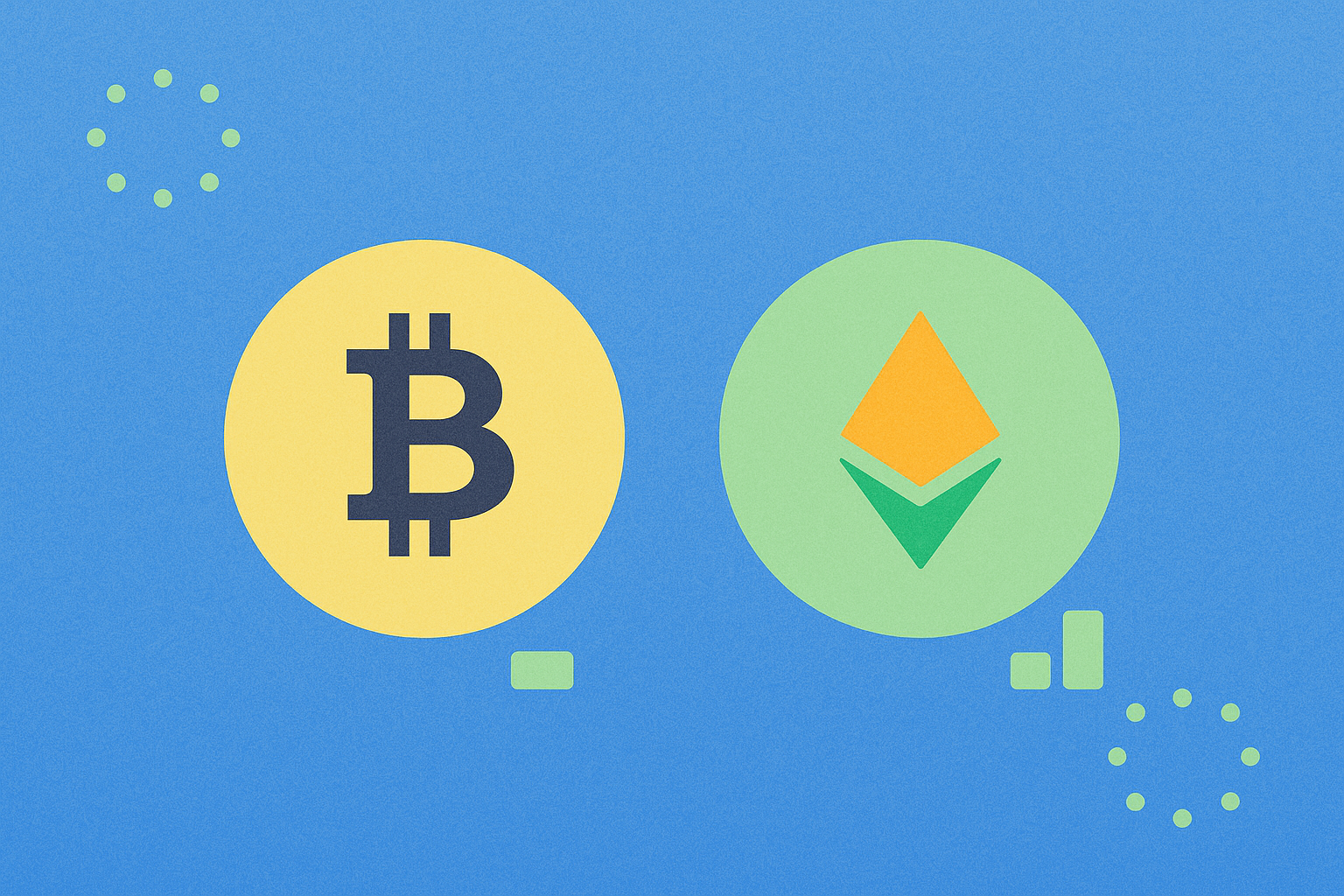
Decentralized money refers to digital assets that do not rely on intermediaries for issuance, transfer, or settlement. These currencies operate on blockchain technology—an online ledger shared across multiple participants—without the need for central banks or commercial banks to facilitate transactions. Global network nodes work together through consensus mechanisms to maintain the ledger. Users control their assets via private keys, and once transactions are recorded in a block, they are nearly impossible to alter or reverse. Notable examples include Bitcoin, as well as native currencies on Ethereum used for paying network fees and transferring value.
Why Should You Understand Decentralized Money?
Decentralized money transforms value transfer into an internet-native action, similar to sending an email.
Cross-border transactions can settle within minutes, often at lower fees than traditional remittance methods, with 24/7 availability. For migrant workers, small businesses, and freelancers operating across borders, decentralized currencies significantly reduce barriers and waiting times for receiving payments. For long-term holders, assets like Bitcoin—with transparent issuance rules and capped supply—are frequently seen as tools for hedging against inflation and currency devaluation.
However, decentralized money introduces new responsibilities and risks. Price volatility can be substantial, and losing a private key means assets cannot be recovered. Since transactions are irreversible, mistaken transfers cannot be undone. In certain jurisdictions, there may be compliance reporting and tax requirements. Understanding these boundaries helps users make balanced decisions between potential returns and risks.
How Does Decentralized Money Work?
Decentralized money relies on cryptography and distributed networks to maintain a public ledger.
For accounts and keys, users’ wallets generate private keys and public keys. The private key acts as the key to a safe, authorizing transactions; the public key is transformed into an address for receiving payments. A wallet is a software or hardware tool for managing keys—not a “bank account” that holds funds.
At the network and consensus layer, global nodes reach agreement on transaction records through consensus mechanisms. Common methods include Proof of Work (PoW), where miners compete to validate and package transactions using computing power, and Proof of Stake (PoS), where validators stake tokens and take turns producing blocks under mutual supervision. These systems prevent double-spending and ensure only valid transactions enter the ledger.
Regarding issuance and security, Bitcoin enforces a fixed supply cap and predictable issuance schedule that decreases over time; Ethereum adjusts supply via protocol parameters and burning mechanisms. Transactions are signed by private keys to ensure only legitimate holders can spend assets. The blockchain secures historical records by linking blocks through cryptographic hashes, making tampering extremely costly.
Key Use Cases of Decentralized Money in Crypto
Decentralized money plays various roles in payments, store of value, financial services, and application ecosystems.
As a store of value, Bitcoin is often called “digital gold.” Long-term holders may keep assets in offline hardware wallets for enhanced security; others store part of their holdings on exchanges to provide liquidity or earn trading fees—though this comes with counterparty and market risks.
For payments and remittances, merchants can receive funds directly to wallet addresses without relying on centralized approval processes. Solutions like the Lightning Network batch frequent microtransactions off-chain before final settlement on-chain, reducing fees to a fraction of traditional cross-border costs—ideal for tipping, content monetization, and similar scenarios.
In decentralized finance (DeFi), users collateralize decentralized money in lending protocols to obtain stablecoins or liquidity—accessing working capital or yield opportunities. For example, BTC or ETH can be pledged to borrow USD-pegged stablecoins for further investment. The risk lies in price drops triggering liquidation events; maintaining healthy collateral ratios is crucial.
On exchanges like Gate, users trade spot markets or provide liquidity for pairs such as BTC/USDT and ETH/USDT to earn fees and incentives. Exchanges offer market depth and matching efficiency but require disciplined risk management regarding platform reliability and asset safety.
How to Buy Decentralized Money
Start by choosing a secure wallet and a compliant entry point, then follow these steps for purchase and custody:
Step 1: Prepare a reliable wallet. Beginners may start with mobile hot wallets for small amounts, learning how to receive funds, back up keys, and send transactions. For long-term holding, use hardware wallets for cold storage and write down recovery phrases offline.
Step 2: Create and verify an account on Gate. Complete registration and KYC verification; depending on your region, deposit fiat currency or purchase stablecoins first, then transfer funds to your spot account.
Step 3: Place an order in Gate’s spot market. Select trading pairs like BTC or ETH; use market orders for immediate execution or limit orders to wait for your desired price. Confirm order