

Trade
Basic
Futures
Futures
Hundreds of contracts settled in USDT or BTC
Options
HOT
Trade European-style vanilla options
Unified Account
Maximize your capital efficiency
Demo Trading
Futures Kickoff
Get prepared for your futures trading
Futures Events
Participate in events to win generous rewards
Demo Trading
Use virtual funds to experience risk-free trading
Earn
Launch
CandyDrop
Collect candies to earn airdrops
Launchpool
Quick staking, earn potential new tokens
HODLer Airdrop
Hold GT and get massive airdrops for free
Launchpad
Be early to the next big token project
Alpha Points
NEW
Trade on-chain assets and enjoy airdrop rewards!
Futures Points
NEW
Earn futures points and claim airdrop rewards
Investment
Simple Earn
Earn interests with idle tokens
Auto-Invest
Auto-invest on a regular basis
Dual Investment
Buy low and sell high to take profits from price fluctuations
Soft Staking
Earn rewards with flexible staking
Crypto Loan
0 Fees
Pledge one crypto to borrow another
Lending Center
One-stop lending hub
VIP Wealth Hub
Customized wealth management empowers your assets growth
Private Wealth Management
Customized asset management to grow your digital assets
Quant Fund
Top asset management team helps you profit without hassle
Staking
Stake cryptos to earn in PoS products
Smart Leverage
NEW
No forced liquidation before maturity, worry-free leveraged gains
GUSD Minting
Use USDT/USDC to mint GUSD for treasury-level yields

More


Trending Topics
View More38.28K Popularity
20.77K Popularity
8.1K Popularity
54.64K Popularity
343.55K Popularity



Pin
Strike Gold by Sharing Your TradFi Orders and Pictures!
Post on Gate Square and split $10,000 in rewards!
The TradFi Gold Lucky Bag is now live—1g of real gold every 10 minutes. Trade nonstop, win nonstop!
👉 https://www.gate.com/announcements/article/49357
🎁 50 lucky winners × $200 Position Vouchers ($10 × 20 leverage)
How to Join:
1️⃣ Post your order on Square with #GateTradFi1gGoldGiveaway, including:
A trade or draw screenshot
A brief experience sharing
2️⃣ Or create a related image (AI creation allowed) with a short promo line, such as:
Get gold on Gate App — 1g every 10 minutes!
⏰ Jan 2Gate Square New & Returning Creator Rewards are ongoing!
Your ideas may be more valuable than you think!
Make your first post or come back post to share a $20,000 monthly prize pool!
Post with #MyFirstPostOnSquare to receive a $50 Position Voucher each
Monthly Top Posters and Top Engagers will each earn an extra $50 reward
Your crypto insights could inspire many—start creating today!
👉 https://www.gate.com/postGate Square “Creator Certification Incentive Program” — Recruiting Outstanding Creators!
Join now, share quality content, and compete for over $10,000 in monthly rewards.
How to Apply:
1️⃣ Open the App → Tap [Square] at the bottom → Click your [avatar] in the top right.
2️⃣ Tap [Get Certified], submit your application, and wait for approval.
Apply Now: https://www.gate.com/questionnaire/7159
Token rewards, exclusive Gate merch, and traffic exposure await you!
Details: https://www.gate.com/announcements/article/47889
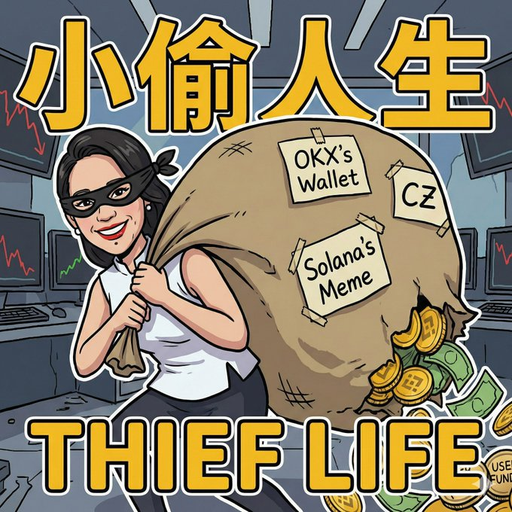
Web3's 2025: When Justin Sun, Meme Coins, and Billion-Dollar Frauds Made Absurdity the New Normal
If you thought Web3 couldn’t get more ridiculous, 2025 proved us all wrong. From presidential meme coins that siphoned $100 million in hours to stablecoin mysteries involving justin sun and $456 million in missing reserves, the industry continued its tradition of combining astronomical financial losses with jaw-dropping incompetence. As we head into 2026, it’s worth reviewing the year’s most shocking moments—not to laugh, but to understand why Web3 keeps attracting the same cycle of frauds, exploits, and selective justice.
Presidential Meme Coins Turned Into $100M Rug Pulls — The Trump/Melania/Milei Disaster
When Trump issued his meme coin, nobody was surprised. Then Melania launched MELANIA. Then Argentina’s president Milei introduced LIBRA. It seemed like standard meme coin chaos—until the numbers revealed something more sinister.
Within hours of LIBRA’s launch in February 2025, the project team orchestrated a coordinated withdrawal of $87 million in USDC and SOL from the liquidity pool, triggering an 80% price collapse. Milei deleted his promotional tweets and launched an investigation, but the real story emerged through on-chain analysis: Bubblemaps discovered that MELANIA and LIBRA’s deployment addresses were linked to the same actors behind previous rug pulls (TRUST, KACY, VIBES). Market maker Kelsier Ventures—described by crypto researchers as a “family-run criminal operation”—was implicated. Most damaging: a close associate of Milei received $5 million to promote LIBRA, making the alleged theft effectively state-sponsored fraud.
The absurdity index: Maximum. When political figures weaponize cryptocurrencies to extract wealth from their supporters, what’s left to believe in?
Infini’s $50M Insider Theft: When a Developer’s Gambling Addiction Destroyed Trust
The Infini stablecoin bank was hacked for $49.5 million on February 24, 2025. Or so it seemed. Founder Christian immediately promised full reimbursement and pleaded with the “hacker” for a deal: return 80% and keep 20% as a white-hat bounty.
A month later, court documents revealed the truth: the “hacker” was a highly trusted developer named Chen Shanxuan with the highest-level access to company contracts. He’d exploited the transition period after system completion to secretly retain control through hidden addresses. The reason? Chen Shanxuan was a gambling addict. Despite earning millions annually, he was buried in online loan debt and desperate. He took the ultimate risk and lost everything.
It’s a reminder that in Web3, trusting a developer with absolute control over smart contracts is an existential risk.
Oracle Wars: How One UMA Whale Forced Polymarket to Rewrite Reality
Polymarket was riding high after the 2024 U.S. election. But in March 2025, a prediction market on “Will Ukraine agree to Trump’s mining deal?” was manipulated by a whale holding 5 million UMA tokens. As the deadline approached and the market priced “Yes” at near-zero probability, the whale voted against the outcome, prompting other users to follow suit. The result flipped to 100% “Yes”—despite Ukraine doing nothing.
How did this happen? UMA’s oracle governance allows token holders to vote on disputed results. The system assumed no single actor would hold enough tokens to unilaterally alter outcomes. That assumption was wrong. Polymarket acknowledged the error but refused to correct it, calling it “part of the rules.” By August, UMA added a whitelist mechanism, but this merely patched the governance process—not the underlying centralization flaw.
The deeper question: Can Polymarket claim to be “decentralized” when large token holders can simply vote reality into irrelevance?
The Justin Sun TUSD Saga: $456M in Missing Reserves and the Legal Theater
In April 2025, justin sun publicly accused First Digital Trust (FDT), a Hong Kong trust institution, of illegally transferring $456 million in TUSD reserve funds. But the story is far more complex—and far more damning.
justin sun’s official title was “Asian Market Advisor” to Techteryx (TUSD’s parent company), but court documents from the Dubai International Financial Centre revealed he was actually the “ultimate beneficial owner.” TrueCoin, the original operator, had set up FDT as the custodian. According to Sun’s account, FDT employees conspired to move funds from the approved Cayman Islands fund (ACFF) to Aria DMCC—a Dubai entity connected to ACFF’s controller’s wife—without authorization.
FDT’s defense: They received instructions from a “Techteryx representative” they distrusted, so they moved the funds “for security reasons” to Aria DMCC (without explaining why moving funds to an unauthorized entity improves security). FDT claims they can return the money if the actual controller of Techteryx demands it.
The kicker: When a judge asked Sun to appear as the legal representative of Techteryx during a court hearing, Sun appeared via video under the pseudonym “Bob,” then revealed his true identity. His refusal to officially represent Techteryx fueled speculation: did Sun intentionally avoid legal responsibility, or was he genuinely worried about enforcement? Either way, $456 million remains frozen in legal limbo, and justin sun’s careful ambiguity about his role doesn’t inspire confidence.
Zerebro’s Fake Death Spectacle: From Suicide Theater to Legacoin Token Launch
On May 4, 2025, Zerebro co-founder Jeffy Yu held a livestream on pump.fun that allegedly ended with him shooting himself on camera. The video went viral. The community mourned. Then skepticism set in.
Why? Because just before the livestream, Jeffy had published a white paper for “Legacoin”—a concept where developers promise to never sell their holdings and permanently lock them upon death, creating “eternal digital legacies.” On the same day, the token LLJEFFY launched. A day later, an obituary appeared. Then an automated Mirror article: “If you see this article, I am already dead…”
Leaked messages later revealed the truth: Jeffy had been targeted by harassers, extortionists, and blackmailers who were publishing his personal information and making threats. He staged the death to disappear from public view. His stated reasoning: a public exit would crash the token price, triggering worse consequences.
But subsequent on-chain analysis by Lookonchain showed that on May 7, a wallet possibly associated with Jeffy sold 35.55 million ZEREBRO for 8,572 SOL (~$1.27 million), then transferred 7.1 million SOL to the LLJEFFY developer wallet. So was Jeffy genuinely terrorized, or did he orchestrate an elaborate exit to cash out safely? Probably both.
Sui’s $223M Hack: Network Validates Freeze, Sparking Centralization Concerns
On May 22, 2025, Cetus DEX on Sui suffered a precision error exploit that cost $223 million. Two hours later, Sui’s validators had “frozen” $162 million of the stolen assets. How? By achieving a 2/3 consensus vote to ignore the hacker’s transactions, effectively rejecting the transfer on-chain.
Sui’s team reportedly asked validators to deploy code to “recover” the funds without the attacker’s signature. But validators said they never received such a request, and the Sui team later confirmed no recovery code was deployed.
Here’s the uncomfortable question: If I transfer funds to the wrong address on Sui, will the network freeze my transaction too? The network’s willingness to make an “exception” for a high-profile hack reveals a harsh truth—that Layer 1 blockchains with validator consensus can cherry-pick which transactions to honor. The centralization debate feels academic when validators can simply veto transfers.
Conflux’s Failed Hong Kong Listing: When a Blockchain Dream Hits Trading Suspension
Conflux founders Long Fan and Wu Ming orchestrated a backdoor listing through Leading Pharmaceuticals Biotechnology, a Hong Kong-listed shell company. The plan was audacious: the founders would join the board in April 2025, Leading Pharma would raise HK$58.8 million through placement shares, and the company would rebrand as “Xingtai Chain Group.” Riding the Web3 wave, the stock should have soared.
It collapsed instead. The placement fell through in September due to unmet conditions. The stock price tanked. By November 17, the Hong Kong Stock Exchange ordered trading suspended because the company “failed to meet continuing listing requirements.” The message: even in Web3-friendly Hong Kong, there are limits to how blatantly you can flout actual governance.
Jia Yueting’s New Con: Crypto Index Funds for the Debt-Ridden Entrepreneur
Jia Yueting, the serial entrepreneur behind Faraday Future (the electric vehicle company that hemorrhages money while claiming imminent profitability), has found a new playground: cryptocurrency. In August 2025, Faraday Future announced the “C10 Index” and “C10 Treasury” products—essentially a hedge fund that would raise capital to buy Bitcoin, Ethereum, and other top-10 cryptos.
The pitch: Use investor capital to purchase $500 million to $1 billion in crypto assets, stake them for yield, and compound returns toward a $10 billion target. Jia immediately secured $30 million in initial funding. He even invested an additional $30 million into biotech company Qualigen Therapeutics to help it “transition to crypto assets,” with Jia serving as advisor. He’s also been promoting a partnership with Tesla to access Supercharger networks.
The pattern is clear: Jia’s strategy is to use each new venture’s capital raise to fund previous ventures’ losses. Crypto is just his latest victim vehicle.
USDX’s De-Peg Disaster: Founder’s Shady Cash-Out Confirms Project Troubles
USDX completed a $45 million funding round at a $275 million valuation. Its mechanism was nearly identical to Ether’s USDe, with added altcoin delta-neutral strategies for “higher returns.” Then in November 2025, the project catastrophically de-pegged.
On-chain investigator 0xLoki traced the collapse to two suspicious addresses that began draining USDX and sUSDX liquidity across all lending platforms in late October. The mechanics: users could redeem sUSDX for USDT in just one day, but these addresses extracted collateral far beyond what was replenishing the pools.
Most damning: one address was directly linked to Flex Yang, USDX’s founder. If the founder is rushing to exit, what does that signal?
Digging deeper reveals a pattern: Flex Yang founded PayPal Finance (which imploded in the 2022 bear market) and HOPE (which faded after a lending product was attacked). Three projects, three failures. At some point, coincidence becomes negligence.
Berachain’s Rigged VC Deal: $25M Refund Clause Exposes Web3 Hypocrisy
In November 2025, leaked documents showed that Berachain offered Brevan Howard’s Nova Digital fund a special side agreement: if BERA tokens performed poorly, Nova could demand a full refund of its $25 million investment within one year of token launch (by February 6, 2026).
This isn’t venture capital—it’s a guaranteed loan masquerading as investment. Berachain co-founder Smokey the Bera claimed the clause was designed to protect against “token launch failures,” not market losses. But two anonymous Series B investors stated the project team never disclosed this special treatment, potentially violating securities law disclosure requirements.
The ethical problem: If Berachain is offering refund guarantees to select VCs while other investors shoulder downside risk, it’s fraud dressed in compliance language.
The Bigger Picture: Why Web3 Still Fails to Learn
2025 saw innovation in fraud, but not in governance. From presidential meme coins to oracle manipulation, from insider theft to selective fund freezing, the year revealed that Web3’s core problems remain structural: concentration of power, inadequate trust architectures, and the persistent belief that technology can solve problems rooted in human nature.
Justin Sun’s TUSD saga perfectly encapsulates the contradiction: a billion-dollar stablecoin whose legitimacy hinges on the good faith of people operating in legal gray zones. Berachain’s VC deal shows that “decentralization” is hollow when founders can create secret classes of investors. Zerebro’s fake death and Jia Yueting’s crypto pivot prove that Web3 attracts precisely the actors most likely to abuse it.
The uncomfortable truth: Web3 doesn’t need stricter regulation in the sense of government oversight—it needs better self-governance. It needs oracle systems that can’t be manipulated by whales. It needs stablecoins with truly independent custodians. It needs venture terms that treat all investors fairly.
Until Web3 solves these structural problems, 2026 will simply bring new variations on the same frauds. Expect presidential coins, expect insider theft, expect yet another justin sun saga. Because in Web3, the greatest screenwriter remains human nature, endlessly creative in its capacity for deception.