

Trade
Basic
Futures
Futures
Hundreds of contracts settled in USDT or BTC
Options
HOT
Trade European-style vanilla options
Unified Account
Maximize your capital efficiency
Demo Trading
Futures Kickoff
Get prepared for your futures trading
Futures Events
Participate in events to win generous rewards
Demo Trading
Use virtual funds to experience risk-free trading
Earn
Launch
CandyDrop
Collect candies to earn airdrops
Launchpool
Quick staking, earn potential new tokens
HODLer Airdrop
Hold GT and get massive airdrops for free
Launchpad
Be early to the next big token project
Alpha Points
NEW
Trade on-chain assets and enjoy airdrop rewards!
Futures Points
NEW
Earn futures points and claim airdrop rewards
Investment
Simple Earn
Earn interests with idle tokens
Auto-Invest
Auto-invest on a regular basis
Dual Investment
Buy low and sell high to take profits from price fluctuations
Soft Staking
Earn rewards with flexible staking
Crypto Loan
0 Fees
Pledge one crypto to borrow another
Lending Center
One-stop lending hub
VIP Wealth Hub
Customized wealth management empowers your assets growth
Private Wealth Management
Customized asset management to grow your digital assets
Quant Fund
Top asset management team helps you profit without hassle
Staking
Stake cryptos to earn in PoS products
Smart Leverage
NEW
No forced liquidation before maturity, worry-free leveraged gains
GUSD Minting
Use USDT/USDC to mint GUSD for treasury-level yields

More


Trending Topics
View More21.26K Popularity
335.02K Popularity
45.66K Popularity
7.96K Popularity
6.33K Popularity
Hot Gate Fun
View More- MC:$0.1Holders:10.00%
- MC:$3.47KHolders:10.00%
- MC:$3.61KHolders:30.50%
- MC:$3.47KHolders:10.00%
- MC:$3.47KHolders:10.00%




Pin
🎉 Gate 2025 Gala | Year-End Selection
Congratulations! You’ve unlocked a no-threshold chance to win an iPhone 17 Pro Max!
🎁 Free lucky draw | 100% guaranteed win
🔥 More prizes added to the pool:
GT, Gate × Red Bull tote bag, Gate VIP Premium Gift Box, $100 position voucher, and more!
👉 Support your favorite streamers & content creators
Vote to join the lucky draw
30 support points = 1 draw entry
✨ Check your support points now
https://www.gate.com/activities/community-vote-2025Gate Square New & Returning Creator Rewards are ongoing!
Your ideas may be more valuable than you think!
Make your first post or come back post to share a $20,000 monthly prize pool!
Post with #MyFirstPostOnSquare to receive a $50 Position Voucher each
Monthly Top Posters and Top Engagers will each earn an extra $50 reward
Your crypto insights could inspire many—start creating today!
👉 https://www.gate.com/postGate Square “Creator Certification Incentive Program” — Recruiting Outstanding Creators!
Join now, share quality content, and compete for over $10,000 in monthly rewards.
How to Apply:
1️⃣ Open the App → Tap [Square] at the bottom → Click your [avatar] in the top right.
2️⃣ Tap [Get Certified], submit your application, and wait for approval.
Apply Now: https://www.gate.com/questionnaire/7159
Token rewards, exclusive Gate merch, and traffic exposure await you!
Details: https://www.gate.com/announcements/article/47889Gate 2025 Year-End Gala Square TOP50 List Announced!
The final ranking phase is now live.
Earn Votes by watching live streams and posting.
30 Votes = 1 chance — support your favorite creators now!
👉 https://www.gate.com/activities/community-vote-2025
iPhone 17 Pro Max, JD gift cards, Mi Band, Gate merch await you!
Creators are welcome to rally fans to climb the rankings and win rewards!
Voting ends: Jan 20, 02:00 UTC
Details: https://www.gate.com/announcements/article/48693
The Mechanics Behind Musk's Per-Second Wealth: Understanding Ultra-Billionaire Economics
Why Billionaires Don’t Earn Like You And Me
Before diving into numbers, we need to dismantle a fundamental misconception: billionaires don’t earn per second the way regular employees do. When Elon Musk’s wealth accelerates by thousands of dollars every second, he’s not receiving a paycheck or bonus. Instead, his net worth expands automatically through asset appreciation—primarily Tesla stock holdings and SpaceX valuations.
This distinction matters because it reveals how modern capitalism operates at its extremes. While ordinary workers trade hours for wages, ultra-wealthy individuals accumulate riches through ownership stakes in growing enterprises. Musk famously rejected Tesla’s CEO salary entirely, restructuring his compensation to align with company performance rather than time-based compensation.
How Much Does Elon Musk Actually Earn Per Second?
The numbers are legitimately staggering. Conservative 2025 estimates place Musk’s per-second earnings between $6,900 and $10,000 on average days, with peaks exceeding $13,000 per second during major Tesla rallies or SpaceX contract announcements.
To contextualize: if we assume a $600 million daily net worth increase—entirely plausible during bullish market periods—the mathematical breakdown reveals:
By the time you finish reading this paragraph, Musk accumulates wealth equivalent to median annual household income in most developed nations. This isn’t exaggeration; it’s arithmetic applied to ownership mechanics.
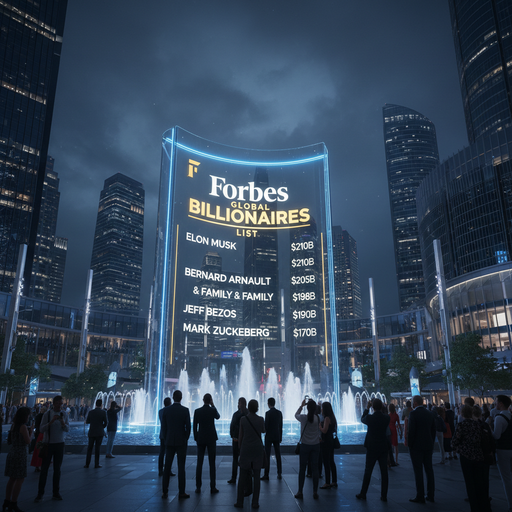
The Unconventional Path to $220 Billion
Musk didn’t inherit wealth or win a lottery. His fortune emerged through sequential high-risk ventures, calculated reinvestment, and decades of compounding returns. The trajectory tells an instructive story:
Early ventures laid the foundation. Zip2, his initial entrepreneurial effort, sold in 1999 for $307 million. Rather than retire, Musk immediately pivoted to X.com, which merged with another payment processor and eventually became PayPal—ultimately acquired in 2002, generating substantial liquidity.
Tesla represented the pivotal inflection point. Though not a founder, Musk joined early and transformed the company from automotive curiosity into the world’s most valuable car manufacturer. As of 2025, Tesla’s valuation alone accounts for a massive portion of his net worth.
SpaceX, founded in 2002, now commands valuations exceeding $100 billion. The company’s recent contracts and technological breakthroughs have multiplied Musk’s stake exponentially.
Parallel ventures including Neuralink, The Boring Company, xAI, and Starlink diversify his portfolio while maintaining concentrated exposure to transformational technologies.
The critical variable: Musk reinvested nearly everything. Instead of accumulating traditional luxury assets, he funneled capital into increasingly ambitious projects. This aggressive, compounding strategy explains why his wealth grew from millions to hundreds of billions within a generation.
Why Does This Wealth Growth Accelerate?
Stock-based wealth operates through fundamentally different dynamics than salary-based income. When Tesla’s market capitalization surges—driven by earnings reports, manufacturing milestones, or sector-wide enthusiasm—Musk’s holdings appreciate in nominal terms without corresponding effort or time investment on his part.
This mechanism creates wealth acceleration: a company worth $500 billion growing to $600 billion represents a $100 billion appreciation event. If Musk controls 20% of that company, his personal net worth increases by $20 billion—distributed across seconds, minutes, and hours regardless of his activities.
Conversely, market downturns compress this wealth proportionally. During bearish periods, his per-second earnings decline dramatically, sometimes shifting into negative territory as stock prices contract.
The Lifestyle Paradox: Extreme Wealth, Minimal Consumption
Surprisingly, Musk exemplifies a distinctive billionaire profile: accumulator rather than consumer. Public accounts suggest he inhabits a modest prefab residence near SpaceX headquarters rather than palatial estates. He reportedly eschews yachts, private islands, and traditional luxury signifiers.
Instead, his capital allocation reflects a philosophical commitment to technological advancement. Mars colonization, renewable energy infrastructure, artificial intelligence development, and underground transportation networks represent his actual expenditure priorities. In this framework, capital functions as innovation fuel rather than lifestyle enablement.
The Philanthropy Question: Giving at Scale Remains Contested
With $220 billion in net worth, Musk’s charitable contributions invite scrutiny. While he’s publicly committed to the Giving Pledge—pledging to donate most of his fortune—the actual philanthropic output remains ambiguous relative to his wealth scale.
Critics note that billions in pledges constitute relatively small percentages of his total net worth. At $6,900 per second in earnings, even substantial donations feel proportionally modest.
Musk counters that his contributions take non-traditional forms: developing sustainable transportation systems, advancing space exploration, and pursuing artificial general intelligence research constitute philanthropy through technology rather than traditional charity mechanisms.
Whether this interpretation satisfies ethical obligations remains contested across different ideological frameworks.
Reflections on Extreme Wealth Inequality
The fundamental question persists: should anyone accumulate wealth at this scale? Musk’s financial trajectory illustrates both entrepreneurial achievement and systemic inequality’s mathematical extremes.
Proponents highlight his innovation catalyzing genuine technological breakthroughs. Skeptics emphasize how someone can earn in a single second what median workers accumulate annually—a disparity reflecting structural imbalances in modern capitalism.
The data itself remains neutral. The interpretation depends on which aspects of this economic reality you emphasize.
Final Perspective
How much does Elon Musk earn per second? Somewhere between $6,900 and $13,000, fluctuating with market conditions and company performance metrics. This figure doesn’t represent active income but rather the continuous appreciation of massive ownership stakes in transformational companies.
The mechanisms enabling such accumulation reveal deeper truths about contemporary wealth dynamics: passive ownership generates exponentially greater returns than active labor; stock-based compensation dwarfs traditional salary structures; and compounding effects create mathematical outcomes that defy intuitive understanding.
Whether you find this system ingenious, exploitative, or simply fascinating, one certainty remains: we inhabit an era where financial inequality has reached scales previously unimaginable. Musk’s per-second earnings serve as a quantifiable reminder of how extreme those disparities have become.