What is SUSD: Understanding the Stablecoin's Role in Decentralized Finance

9-30-2025, 8:37:06 AM
Blockchain
Crypto Insights
DeFi
Ethereum
Stablecoin
Article Rating : 3.6
half-star
0 ratings
The article "What is SUSD: Understanding the Stablecoin's Role in Decentralized Finance" provides an in-depth analysis of sUSD's significance within the DeFi space, particularly through its integration with the Synthetix protocol. It covers sUSD's origins, technical infrastructure, market performance, and its pivotal role in facilitating stable transactions without central authority. Aimed at crypto enthusiasts and professionals, the article addresses issues like scalability, regulatory risks, and competitive pressures. Structurally, it flows from sUSD's historical development to its technical functionality, market analysis, strategic partnerships, and future roadmap, making it a comprehensive guide for anyone keen on understanding sUSD's impact and potential within the cryptocurrency sphere.
What is SUSD: Understanding the Stablecoin's Role in Decentralized Finance

sUSD's Positioning and Significance

In 2018, the Havven Foundation launched sUSD (SUSD), aiming to address the need for a stable cryptocurrency within the Synthetix ecosystem. As a decentralized stablecoin, sUSD plays a crucial role in the DeFi sector, particularly within the Synthetix protocol.

As of 2025, sUSD has become an integral part of the Synthetix ecosystem, with a market cap of $47,253,214 and a circulating supply of 48,276,680 tokens. This article will delve into its technical architecture, market performance, and future potential.

Origins and Development History

Birth Background

sUSD, originally known as nUSD, was created by the Havven Foundation in 2018 to provide a stable unit of account within the Synthetix ecosystem. It emerged during the rise of decentralized finance (DeFi), aiming to offer a stable cryptocurrency that could facilitate trading and borrowing on the Synthetix platform.

The launch of sUSD brought new possibilities for traders and liquidity providers in the Synthetix ecosystem, enabling more efficient and stable transactions.

Important Milestones

  • 2018: sUSD (then nUSD) launched as part of the Synthetix protocol.
  • 2020: Reached its all-time high price of $2.45 on February 18.
  • 2020: Experienced its all-time low of $0.429697 on March 18, demonstrating resilience during market volatility.

With support from the Synthetix community and ongoing development, sUSD continues to improve its stability and utility within the DeFi ecosystem.

How Does sUSD Work?

Decentralized Control

sUSD operates on the Ethereum blockchain, leveraging its decentralized network of nodes. This structure eliminates the need for central bank or government control, providing users with greater autonomy and enhancing network resilience.

Blockchain Core

sUSD utilizes Ethereum's blockchain, a public, immutable digital ledger that records every transaction. Transactions are grouped into blocks and linked through cryptographic hashes, forming a secure chain. Anyone can view the records, establishing trust without intermediaries.

Ensuring Fairness

As an ERC-20 token on the Ethereum network, sUSD benefits from Ethereum's consensus mechanism. The stability of sUSD is maintained through the Synthetix protocol's mechanisms and the foundation's market interventions when necessary.

Secure Transactions

sUSD employs public-private key encryption technology to secure transactions:

  • Private keys (similar to secret passwords) are used to sign transactions
  • Public keys (similar to account numbers) are used to verify ownership

This mechanism ensures fund security while maintaining pseudonymity for transactions. Additionally, sUSD's value is pegged to the US dollar, providing stability in the volatile cryptocurrency market.

SUSD Market Performance

Circulation Overview

As of September 30, 2025, SUSD's circulating supply is 48,276,680.23772181 coins, which is equal to its total supply.

Price Fluctuations

SUSD reached its all-time high of $2.45 on February 18, 2020. Its lowest price was $0.429697, occurring on March 18, 2020. These fluctuations reflect market sentiment, adoption trends, and external factors.

Click to view the current market price of SUSD
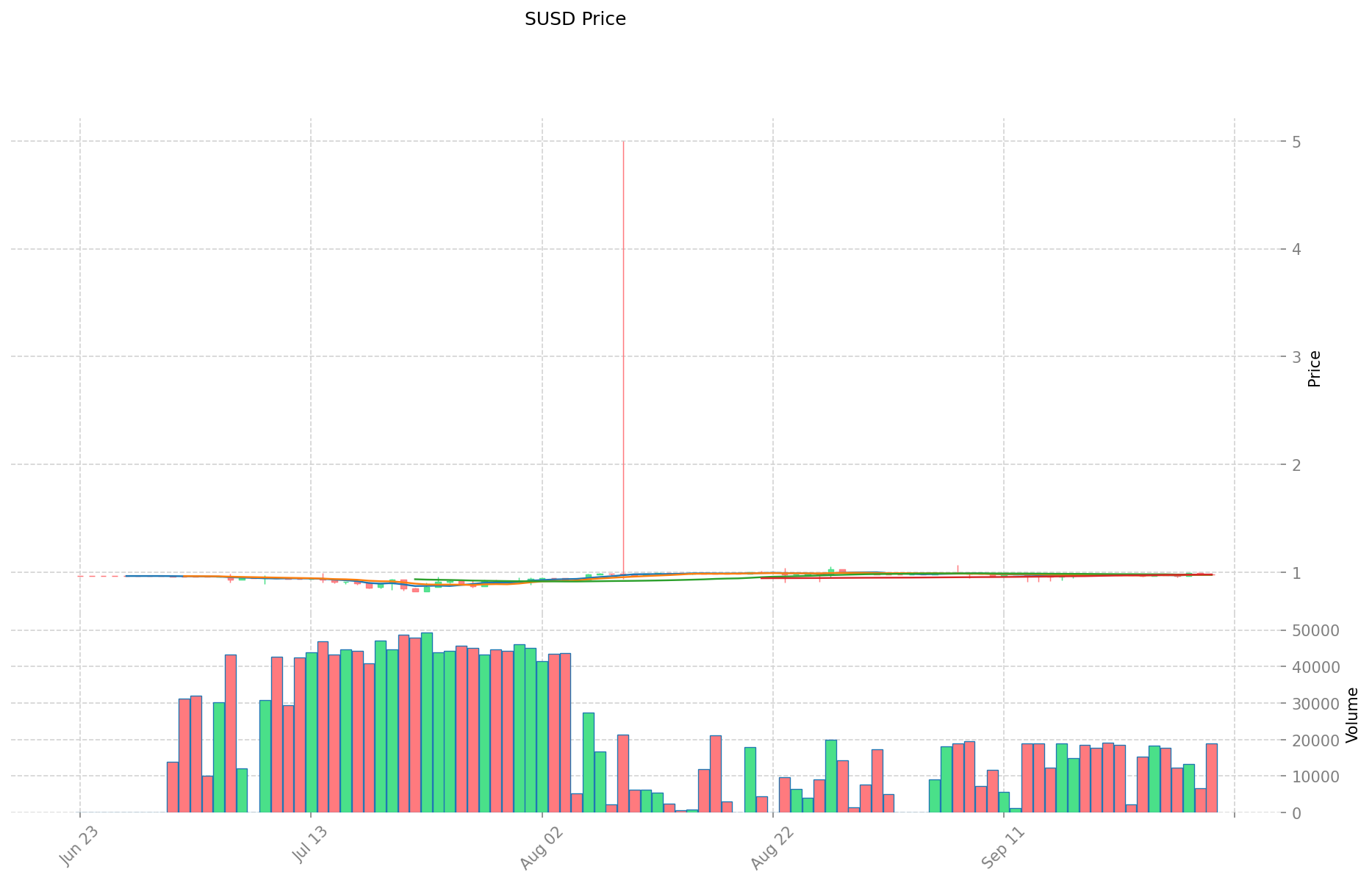
price-image

On-Chain Metrics

  • Daily Transaction Volume: $17,974.254778 (indicates network activity)
  • Active Addresses: 14,309 (reflects user engagement)

sUSD Ecosystem Applications and Partnerships

Core Use Cases

sUSD's ecosystem supports various applications:

  • DeFi: Synthetix, providing synthetic asset trading.
  • Stablecoin: sUSD serves as a USD-pegged stablecoin in the Synthetix ecosystem.

Strategic Collaborations

sUSD has established partnerships with Ethereum and Optimism networks, enhancing its technological capabilities and market influence. These partnerships provide a solid foundation for sUSD's ecosystem expansion.

Controversies and Challenges

sUSD faces the following challenges:

  • Technical Issues: Scalability and transaction speed on Ethereum
  • Regulatory Risks: Potential stablecoin regulations
  • Competitive Pressure: Other stablecoins like USDC and USDT

These issues have sparked discussions within the community and market, driving continuous innovation for sUSD.

sUSD Community and Social Media Atmosphere

Fan Enthusiasm

sUSD's community shows moderate activity, with 48,276,680 tokens in circulation. On X platform, posts and hashtags related to sUSD occasionally gain traction. Price stability and integration with Synthetix fuel community interest.

Social Media Sentiment

Sentiment on X presents a mixed picture:

  • Supporters praise sUSD's stability and integration with Synthetix, viewing it as a "reliable DeFi stablecoin".
  • Critics focus on limited adoption outside the Synthetix ecosystem.

Recent trends show cautious optimism amidst broader crypto market conditions.

Hot Topics

X users discuss sUSD's role in DeFi, stablecoin regulations, and integration with other protocols, highlighting both its potential and challenges in mainstream adoption.


More Information Sources for sUSD

  • Official Website: Visit sUSD official website for features, use cases, and latest updates.
  • Whitepaper: Synthetix Litepaper details its technical architecture, goals, and vision.
  • X Updates: On X platform, sUSD updates are shared through @synthetix_io, with 368.7K followers as of September 30, 2025, Posts cover protocol upgrades, community events, and integration news, generating significant engagement.

sUSD Future Roadmap

  • Ongoing: Enhance integration with layer 2 solutions to improve scalability and reduce transaction costs
  • Ecosystem Goals: Expand adoption across various DeFi protocols
  • Long-term Vision: Become a leading decentralized stablecoin in the DeFi ecosystem

How to Participate in sUSD?

  1. Purchase Channels: Buy sUSD on Gate.com
  2. Storage Solutions: Use Web3 wallets compatible with Ethereum for secure storage
  3. Participate in Governance: Through Synthetix governance platform
  4. Build Ecosystem: Visit Synthetix developer docs to integrate or develop with sUSD

Summary

sUSD redefines stablecoins through blockchain technology, offering stability, transparency, and DeFi integration. Its active community, rich resources, and strong market performance make it stand out in the cryptocurrency field. Despite facing regulatory uncertainties and adoption challenges, sUSD's innovative spirit and clear roadmap secure its important position in the future of decentralized finance. Whether you're a newcomer or an experienced player, sUSD is worth watching and participating in.

FAQ

How does sUSD work?

sUSD is a synthetic stablecoin pegged 1:1 to USD, using algorithmic backing to maintain value. It's issued and redeemed based on collateral, ensuring stability without direct fiat reserves.

Is sUSD safe?

sUSD is designed with robust security measures and is backed by collateral, making it generally considered safe. However, like all cryptocurrencies, it carries inherent risks.

What does the acronym sUSD stand for?

sUSD stands for Synthetic USD, a stablecoin pegged to the US dollar in the Synthetix ecosystem.

How much is sUSD?

As of 2025-09-30, sUSD is worth $0.9946, showing a slight decline from the previous hour but a minor increase over the last day.

* The information is not intended to be and does not constitute financial advice or any other recommendation of any sort offered or endorsed by Gate.
Related Articles
What is ENA: A Comprehensive Guide to the European Nucleotide Archive

What is ENA: A Comprehensive Guide to the European Nucleotide Archive

The article "What is ENA: A Comprehensive Guide to the European Nucleotide Archive" delves into Ethena (ENA), a crypto-native solution launched by Ethena Labs in 2024, designed for decentralized finance and stablecoin sectors. It explores Ethena's technical architecture, market performance, and its pivotal role as a synthetic dollar protocol on Ethereum. Aimed at crypto users seeking stable, dollar-denominated assets, the article also addresses Ethena's market dynamics, ecosystem applications, regulatory challenges, and community sentiments. Readers will gain insights into Ethena's growth, strategic collaborations, and innovative approach in revolutionizing digital finance.
9-11-2025, 5:49:28 AM
What is USDE: Understanding the United States Department of Education and Its Role in American Education

What is USDE: Understanding the United States Department of Education and Its Role in American Education

This article explores USDE, a stablecoin initiative launched by Ethena Labs to provide a censorship-resistant, scalable cryptocurrency solution in the DeFi space. Tracing USDE's journey, it discusses key milestones since 2024, its decentralized control mechanisms, and secure transaction technologies. The article also analyzes USDE's market performance, ecosystem applications, and strategic partnerships. Further, it addresses controversies such as regulatory challenges and competition while detailing community engagement and future roadmap strategies. Readers are informed about how to participate in USDE and its significance in decentralized finance.
9-11-2025, 3:14:03 AM
What is USDP: Understanding the Stablecoin Backed by US Dollar Deposits

What is USDP: Understanding the Stablecoin Backed by US Dollar Deposits

The article provides an in-depth analysis of USDP, also known as Pax Dollar, emphasizing its status as the world's first regulated stablecoin. It highlights Paxos's response to the demand for transparency and compliance in the crypto market since 2018. Readers will explore USDP's technical framework, market dynamics, and adoption within the financial system. It addresses challenges like regulatory scrutiny and market competition, making it ideal for crypto enthusiasts and traders seeking a stable investment. Structured sections guide readers through USDP's development, functionality, market presence, and future prospects, offering insight into its application in DeFi and beyond.
9-29-2025, 8:18:15 AM
USDe Explained: How Ethena's Stablecoin Stays Pegged Without Fiat

USDe Explained: How Ethena's Stablecoin Stays Pegged Without Fiat

The article delves into Ethena's innovative USDe stablecoin, which maintains its dollar peg without relying on fiat reserves, offering a decentralized and resilient alternative to traditional stablecoins. It explores USDe's dynamic supply mechanism, collateralized debt positions in Ethereum, and risk management strategies that enhance stability and transparency. The non-collateralized approach positions USDe as a scalable solution, reducing regulatory risks and fostering DeFi innovation, with Gate showing interest in its listing. Ideal for crypto enthusiasts, investors, and those seeking financial sovereignty, the piece highlights USDe's impact on the evolving DeFi landscape.
10-13-2025, 5:43:07 PM
What Is ENA and How Does It Support the $1.3 Billion USDe Ecosystem?

What Is ENA and How Does It Support the $1.3 Billion USDe Ecosystem?

This article explores the Ethena ecosystem, focusing on the ENA token and its connection to the $1.3 billion USDe stablecoin. It highlights the innovative use of Ethereum technology for monetary transactions and autonomous pricing in Web3. Readers will understand the benefits of Ethena's Proof of Reserves system, community engagement strategies, and the challenges ENA faces due to structural oversupply. Additionally, the article discusses Ethena's plans to expand token economics through Bitcoin-backed products, aiming to enhance ENA utility and market demand. This content is ideal for crypto enthusiasts and investors interested in decentralized finance.
10-20-2025, 2:43:17 PM
What is SLICE: A Comprehensive Guide to the Software Development Lifecycle Enhancement Method

What is SLICE: A Comprehensive Guide to the Software Development Lifecycle Enhancement Method

This article delves into SLICE, an innovative method enhancing the Software Development Lifecycle through the lens of Tranche Finance. Launched as a decentralized protocol in 2021, Tranche Finance revolutionizes DeFi lending with structured finance concepts on the blockchain, capitalizing on Ethereum’s decentralized features. The piece highlights crucial milestones, market performance, and strategic partnerships influencing its ecosystem. It discusses scalability, regulatory challenges, and competitive pressures that shape its trajectory, offering insights into community sentiment and participation. Key terms are optimized for clarity and quick scanability, enriching understanding of decentralized finance's potential.
10-30-2025, 12:42:02 AM
Recommended for You
What is VIRTUAL Token's Current Market Cap, Price, and Trading Volume in 2025?

What is VIRTUAL Token's Current Market Cap, Price, and Trading Volume in 2025?

The article provides a comprehensive overview of VIRTUAL Token's financial metrics as of December 2025, focusing on its market capitalization, price, and trading volume. It highlights the token's market presence with a cap of $609.19 million, ranking at #82 amidst significant market activity and volatility. The 24-hour trading volume of $63.53 million underscores active engagement, reflecting its strong appeal in the gaming AI sector. VIRTUAL is available on 46 platforms, including Gate, facilitating widespread accessibility and liquidity. The analysis caters to investors and developers interested in the protocol's AI gaming infrastructure.
12-18-2025, 2:03:05 AM
How Does Fed Policy and Inflation Data Impact Cryptocurrency Prices in 2025?

How Does Fed Policy and Inflation Data Impact Cryptocurrency Prices in 2025?

In 2025, the Federal Reserve's policies and inflation data crucially affect cryptocurrency prices, driving significant market volatility. This article explores how interest rate decisions influence digital assets, particularly Bitcoin and Ethereum, through various policy transmission channels and market expectations. It analyzes the impact of CPI releases on crypto price swings, noting investor sentiment's reaction to inflation readings. Additionally, the growing correlation between traditional markets and cryptocurrencies is addressed, highlighting their integrated market dynamics. Ideal for traders and investors seeking insights into crypto responses to macroeconomic shifts, it enhances strategy formulation using key traditional indicators.
12-18-2025, 2:01:40 AM
What are the compliance and regulatory risks of PEPE crypto in 2025?

What are the compliance and regulatory risks of PEPE crypto in 2025?

This article examines PEPE crypto's compliance and regulatory risks in 2025, highlighting SEC regulatory ambiguity, delisting threats from exchanges like Gate due to stricter KYC/AML requirements, transparency issues, and market manipulation concerns. It addresses challenges such as undefined security classification, lack of a compliance framework, and anonymous developer identity that impact PEPE's market potential. By providing insights into systemic risks and the evolving regulatory landscape, this article serves investors and crypto enthusiasts seeking to understand PEPE's position and future viability.
12-18-2025, 1:59:35 AM
What Are Technical Indicators: How to Use MACD, RSI, and Moving Averages for Crypto Trading in 2025

What Are Technical Indicators: How to Use MACD, RSI, and Moving Averages for Crypto Trading in 2025

The article explores the use of MACD, RSI, and moving averages to navigate the crypto markets in 2025, focusing on identifying overbought/oversold signals and trend reversals. It addresses common challenges in crypto trading by enhancing trade accuracy with multi-indicator strategies and volume-price divergence analysis. Targeting traders aiming for improved risk management, it details technical setups like golden and death crosses. The article is structured into sections on indicator synergy, crossover patterns, and divergence signals, offering practical insights with data-backed strategies to optimize trading outcomes.
12-18-2025, 1:54:50 AM
What is AIOT Price Volatility: Historical Trends, Support and Resistance Levels in 2025?

What is AIOT Price Volatility: Historical Trends, Support and Resistance Levels in 2025?

The article analyzes AIOT token's price volatility in 2025, highlighting its significant fluctuations from $0.1413 to $5.16 with a daily volatility of 3.54%. It delves into historical trends, discussing the support and resistance levels between $4.53 and $5.74 for strategic trading. Extreme volatility metrics are examined, emphasizing daily swings up to 33.65% and market correlations. The piece provides insights into the current market capitalization of $58.5 million with 111.2 million tokens circulating, valuable for traders and investors seeking a comprehensive understanding of AIOT's market behavior and trading opportunities.
12-18-2025, 1:53:35 AM
# What is WLFI: Understanding World Liberty Financial's Core Fundamentals, USD1 Stablecoin, and RWA Strategy

# What is WLFI: Understanding World Liberty Financial's Core Fundamentals, USD1 Stablecoin, and RWA Strategy

The article delves into World Liberty Financial's (WLFI) key offerings, focusing on its USD1 stablecoin and RWA strategy that bridges traditional finance with Web3. It addresses the decentralized dollar infrastructure's trajectory involving tokenized financial products, underlining institutional support from Trump family holdings. The risks related to USD1's reserve management across blockchains and regulatory scrutiny are critically analyzed, highlighting the influence of political risk and centralization concerns. The content is pertinent for investors and financial analysts interested in the intersection of decentralized finance, stablecoins, and real-world assets.
12-18-2025, 1:51:34 AM

